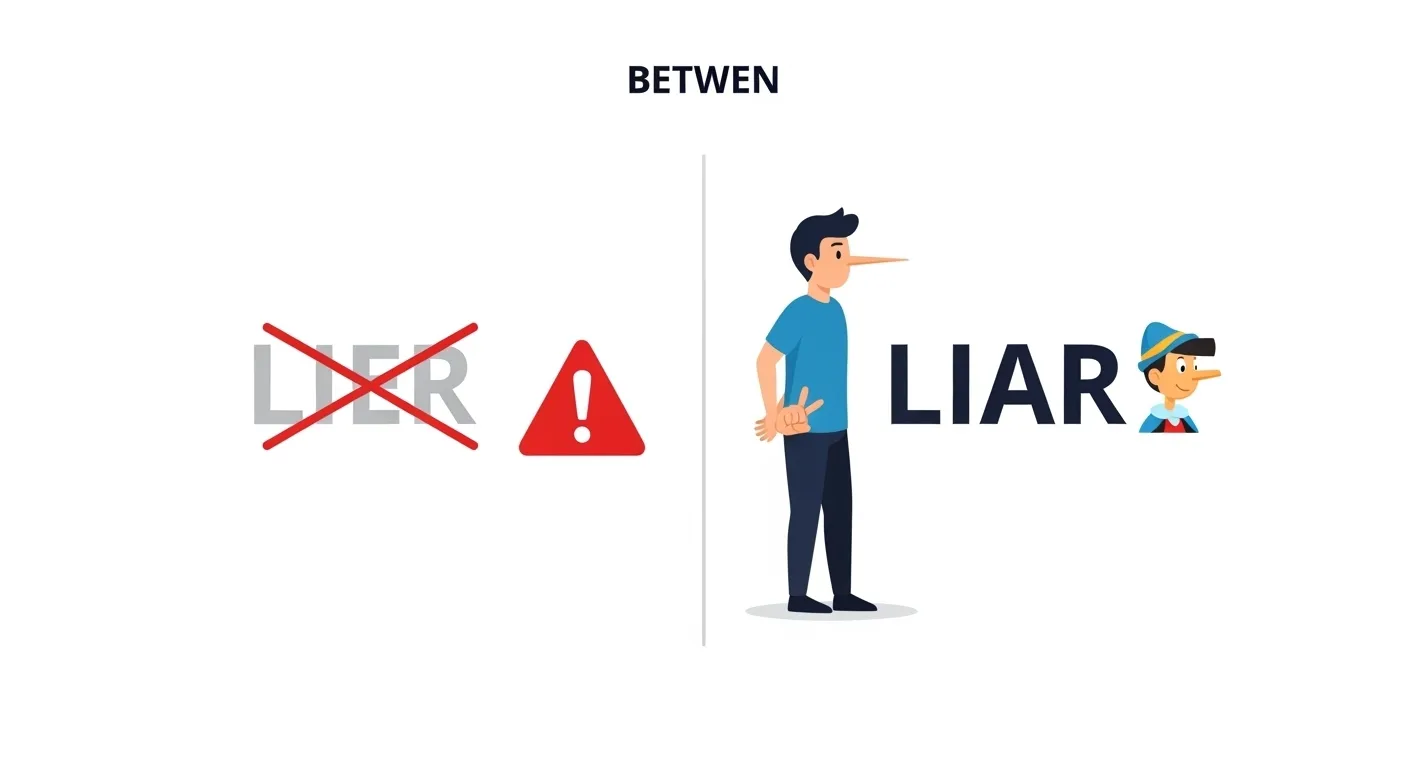
Liar is the correct spelling for a person who tells lies, while lier is usually a spelling mistake, and this simple answer clears most confusion instantly. Many people search for “lier or liar” because both words look similar, sound the same when spoken, and often
appear in quick writing like emails, exams, social media posts, and comments. Spellcheck tools sometimes miss the error, which makes writers unsure. Learners of English especially
struggle with this pair because English spelling does not always match pronunciation. This article explains the difference in clear language, shows correct usage with real examples,
explores the origin of the words, compares British and American English, and gives professional advice so you always choose the right spelling.
Lier or Liar: Quick Answer
Liar is correct when you mean a person who tells lies.
Lier is usually incorrect and is considered a spelling error in modern English.
Examples:
- He is a liar and cannot be trusted. ✅
- Calling someone a liar is serious. ✅
❌ He is a lier.
Simple rule:
If you mean someone who tells lies, always use liar.
The Origin of Lier or Liar
Origin of “Liar”
The word liar comes from the verb lie, meaning to say something that is not true. It entered English from Old English lēogan and later Middle English forms. Over time, English added the suffix -ar to form a noun that means a person who performs an action. That is how liar came to mean a person who lies.
This pattern exists in many English words:
- teach → teacher
- beg → beggar
- lie → liar
Where “Lier” Comes From
Lier is not standard English when referring to a person who tells lies. It sometimes appears because writers assume the noun should be formed by simply adding -er to lie. However, English does not follow that rule here.
In rare technical contexts, lier can appear as a very uncommon term related to layer or one who lies down, but this usage is extremely rare and not relevant for everyday English.
Why the Confusion Exists
- Both words sound the same
- English spelling rules are inconsistent
- Writers rely on pronunciation rather than spelling
- Quick typing leads to errors
Despite this confusion, dictionaries clearly list liar as the correct word.
British English vs American English Spelling
Unlike words such as colour/color or organise/organize, lier and liar are not British vs American spellings. Both British and American English follow the same rule.
British English
- ✅ liar (correct)
- ❌ lier (incorrect)
Example:
- He was exposed as a liar in court.
American English
American English also uses liar as the only correct spelling.
Example:
- The report proved the witness was a liar.
Comparison Table
| Feature | Liar | Lier |
| British English | Correct | Incorrect |
| American English | Correct | Incorrect |
| Dictionary status | Standard | Nonstandard |
| Professional writing | Recommended | Avoid |
Which Spelling Should You Use?
For US Audiences
Always use liar in emails, articles, exams, and professional writing.
For UK and Commonwealth Audiences
The rule is the same. Liar is the expected and correct spelling.
For Global English Users
If you write for an international audience, liar is the safest and universally accepted choice.
For Students and Exams
Using lier may be marked wrong. Liar shows correct grammar and spelling control.
Common Mistakes with Lier or Liar
Mistake 1: Using “Lier” Because It Looks Logical
❌ He is a lier. ✅ He is a liar.
Mistake 2: Confusing the Verb and the Noun
- Verb: lie
- Noun: liar
❌ He likes to lier. ✅ He likes to lie.
Mistake 3: Relying on Spellcheck Alone
Some tools fail to catch lier, so manual checking is important.
Mistake 4: Mixing Up Other Forms of “Lie”
- lie (verb : not tell the truth)
- lie (verb : to rest)
- lay (verb : to place something)
These meanings increase confusion for learners.
Liar in Everyday Examples
Emails
- Please be honest. No one likes a liar.
- Calling a colleague a liar can create conflict.
News Writing
- The politician denied being a liar.
- Evidence revealed the suspect was a liar.
Social Media
- Stop spreading rumors, you liar 😡
- Being a liar online ruins credibility.
Formal and Academic Writing
- The study discusses how being labeled a liar affects reputation.
- False testimony can result in someone being identified as a liar.
Lier or Liar: Google Trends & Usage Data
Search data shows that “lier or liar” is a common query worldwide, especially among students and non-native speakers.
Countries Where the Query Is Popular
- United States
- United Kingdom
- India
- Pakistan
- Canada
- Australia
Usage by Context
- Liar dominates books, newspapers, legal writing, and academic texts
- Lier appears mostly in typos, informal comments, and learner writing
This confirms that liar is the accepted standard in real-world English.
Comparison Table: Lier vs Liar
| Word | Correct? | Meaning | Example |
| liar | Yes | a person who tells lies | He is a liar |
| lier | No | — | incorrect usage |
FAQs About Lier or Liar
Is “lier” ever correct?
In normal English, no. Lier is almost always a spelling mistake.
Why does “liar” not follow normal spelling rules?
English has many irregular forms influenced by history and sound changes.
Can “lier” be a word in any context?
Only in very rare, technical, or outdated usage. Not recommended.
Is “liar” offensive?
It can be strong or insulting depending on context.
Do British and American English spell it differently?
No. Both use liar.
Will exams mark “lier” wrong?
Yes, in most cases.
How can I remember the correct spelling?
Remember that liar ends with -ar, like beggar or scholar.
Conclusion
The confusion between lier or liar is understandable, but the correct choice is clear. Liar is the standard, dictionary-approved word used to describe a person who tells lies.
It has a long history in English and is used across British English, American English, and global English without any spelling variation.
Lier, on the other hand, is usually a spelling mistake that appears because English pronunciation does not always match spelling.
While it may look logical, it is not accepted in professional, academic, or formal writing. Using lier in emails, exams, articles, or reports can weaken your credibility and distract readers.
There is no regional difference to worry about. If you are writing for school, work, social media, or a global audience, liar is always the safe and correct option. If you remember that the noun form of lie becomes liar, the confusion disappears.
Mastering small distinctions like this greatly improves writing clarity and confidence. Choosing the correct spelling shows attention to detail and strong command of English.
Related posts!
Into or In To: Meaning and Examples

