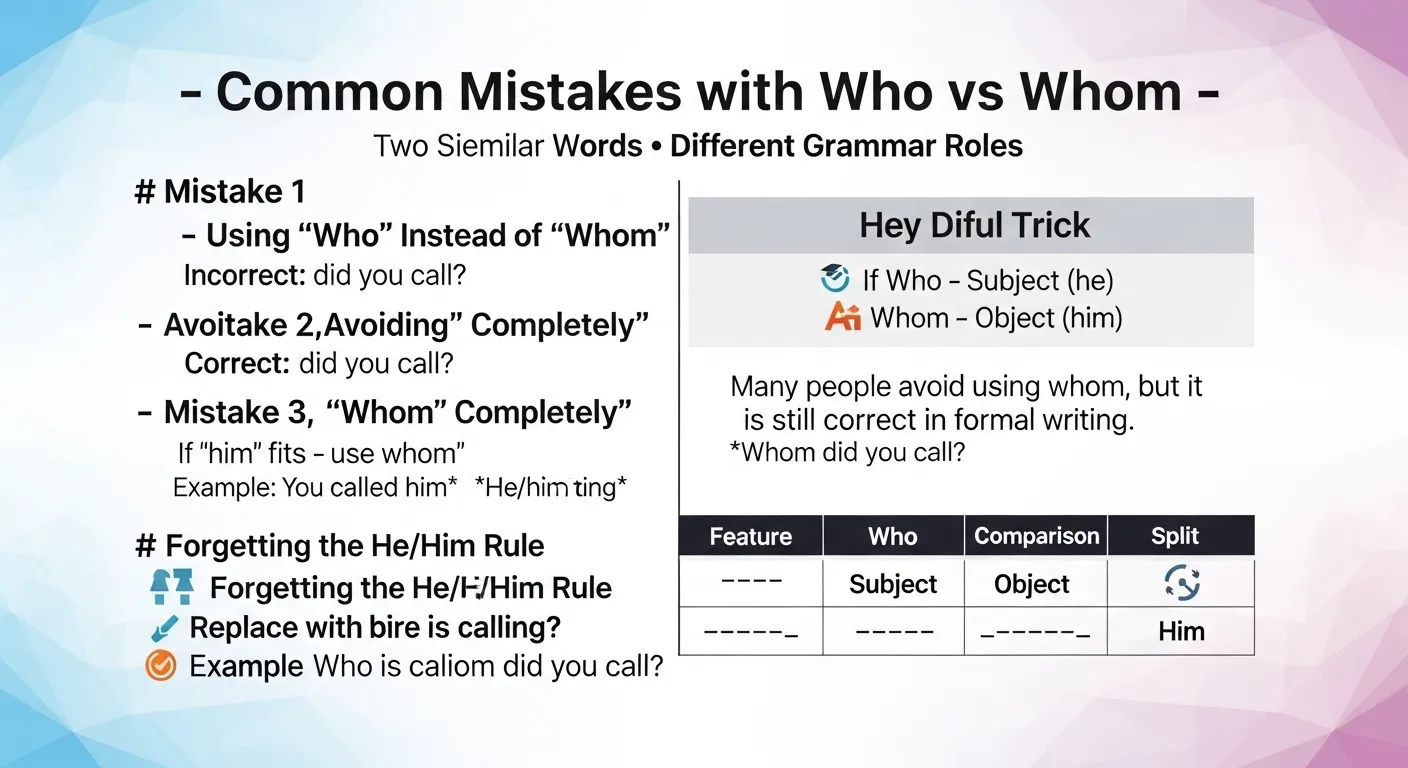
Who is used as a subject, while whom is used as an object. This is the simple answer people want when they search “who vs whom.”
These two words confuse many people. They look similar. They sound similar. But they have different roles in a sentence. The confusion often appears in school writing, emails, and formal English.
The difference comes from grammar roles. A subject does the action. An object receives the action. Who acts like he or she. Whom acts like him or her. This small rule makes the choice easier.
Many people avoid using whom because it sounds formal. Still, it is important in formal writing and exams. Learning the correct use helps improve grammar and confidence.
Understanding who vs whom makes your sentences clear. It also helps you write correct English in both formal and informal situations.
In this guide, you will learn the meaning of who and whom, their origin, key differences, examples, common mistakes, and answers to popular Google questions.
📖 Who vs Whom Definition
🔤 Who Definition
Who is a subject pronoun.
It is used for the person who does the action.
It works like he, she, or they.
Examples:
| Sentence | Meaning |
| Who is calling? | The person is calling |
| Who made this cake? | The person made the cake |
| Who is at the door? | The person is at the door |
Example sentence:
Who is your teacher?
🔤 Whom Definition
Whom is an object pronoun.
It is used for the person who receives the action.
It works like him, her, or them.
Examples:
| Sentence | Meaning |
| Whom did you call? | You called the person |
| To whom did you speak? | You spoke to the person |
| Whom are you helping? | You are helping the person |
Example sentence:
Whom did you invite?
⚡ Who vs Whom: Quick Answer
The difference depends on subject vs object.
| Word | Role | Example |
| Who | Subject | Who is coming? |
| Whom | Object | Whom did you see? |
Simple idea:
- Who → does the action
- Whom → receives the action
🕰️ Origin of Who and Whom
Origin of Who
The word who comes from Old English.
It was used to ask about people.
It has always worked as a subject pronoun.
Over time, it stayed common in everyday English.
Origin of Whom
The word whom also comes from Old English.
It was used as an object form of who.
In modern English, its use has decreased in casual speech.
But it is still important in formal grammar.
🌍 Key Differences Between Who and Whom
Who and whom have different grammar roles.
| Feature | Who | Whom |
| Type | Subject pronoun | Object pronoun |
| Role | Does action | Receives action |
| Similar to | He / She | Him / Her |
Example comparison:
| Sentence | Explanation |
| Who called you? | Subject does action |
| Whom did you call? | Object receives action |
📝 Examples of Who and Whom
Examples Using Who
Who is your friend?
Who is coming today?
Examples Using Whom
Whom did you meet?
Whom are you calling?
To whom should I speak?
Whom did they invite?
With whom are you working?
⚠️ Common Mistakes with Who vs Whom
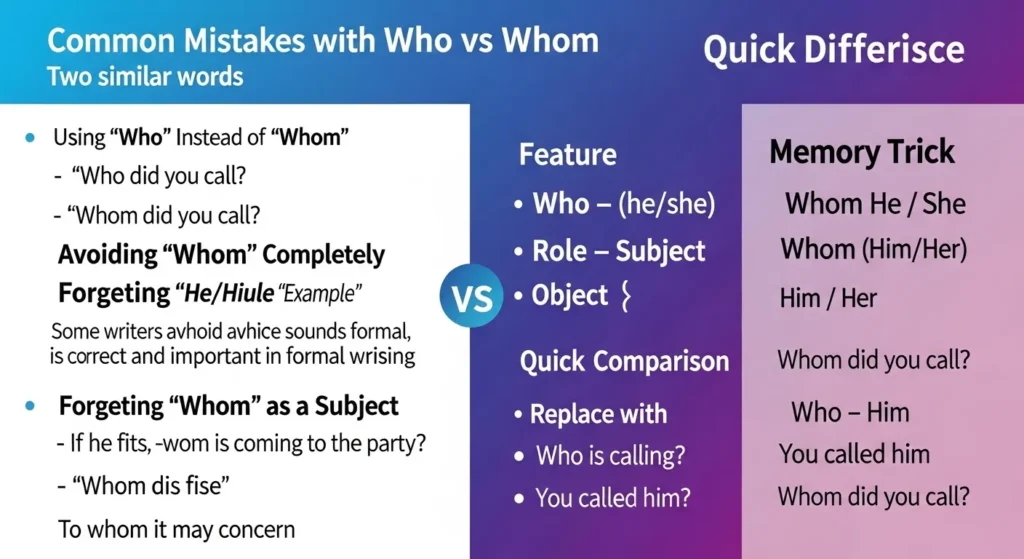
Using who instead of whom
Incorrect:
Who did you call?
Correct:
Whom did you call?
Avoiding whom completely
Many people avoid using whom.
But it is still correct in formal writing.
Forgetting the he/him rule
Helpful trick:
Replace with he/him.
If he fits, use who.
If him fits, use whom.
Example:
You called him → Whom did you call ✔
💬 Who vs Whom in Everyday Examples
Casual speech
People often use who in place of whom.
Example:
Who did you call?
This is common in informal English.
Formal writing
Formal writing prefers correct grammar.
Example:
To whom it may concern.
Emails
Professional emails may use whom for correctness.
📊 Google Search Queries Related to Who vs Whom
People often search these questions:
| Popular Query | Meaning |
| who vs whom difference | Grammar rule |
| when to use whom | Usage help |
| who or whom examples | Learning examples |
| is whom still used | Grammar question |
These queries show common confusion.
❓ FAQs About Who vs Whom
What is the main difference between who and whom?
Who is a subject.
Whom is an object.
Is whom still used in modern English?
Yes. It is used in formal writing.
How can I remember who vs whom?
Use the he/him rule.
Can I use who instead of whom?
In informal speech, yes.
In formal writing, use whom correctly.
What is an example of whom?
Whom did you invite?
Why is whom less common now?
Modern English prefers simpler forms.
Is “to whom it may concern” correct?
Yes. It is a formal and correct phrase.
Conclusion
The difference between who and whom is based on grammar roles. Who is used as a subject.
It refers to the person who performs the action in a sentence. For example, in “Who is calling?” the person is doing the action.
Whom is used as an object. It refers to the person who receives the action. For example, in “Whom did you call?” the person receives the action of the call.
Many people confuse these words because they look and sound similar. However, using a simple trick can help. Replace the word with “he” or “him.” If “he” fits, use who. If “him” fits, use whom.
Understanding who vs whom improves grammar, writing accuracy, and communication skills in both formal and everyday English.
Discover More Articals!
Your vs You’re: What Is the Difference and When to Use Each?
Portland OR ZIP: Complete Guide to Portland And ZIP Codes
Its vs It’s: What Is the Difference and When to Use Each?

