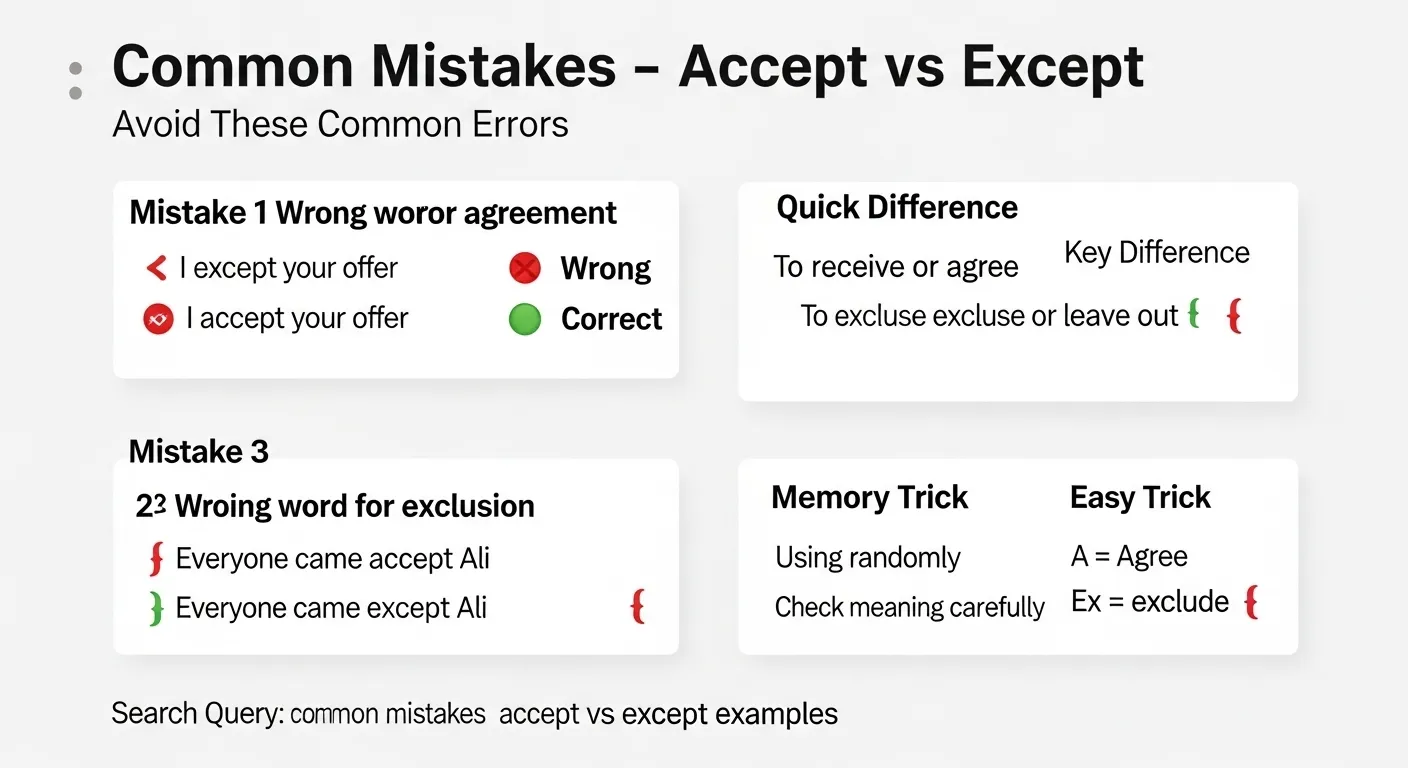
“Accept” means to receive or agree, while “except” means to exclude or leave out.
Many people search accept vs except usage difference, difference between accept and except, and when to use accept or except because these words sound very similar but have completely different meanings.
This confusion is common in exams, emails, business writing, and social media. A small spelling mistake can change the whole meaning of your sentence. That is why learners often struggle with these two words.
This article explains everything in a simple way. You will learn definitions, examples, rules, common mistakes, and easy tips to use both words correctly.
✅ Accept vs Except: Quick Answer
- Accept → To receive, agree, or approve
- Except → To exclude, leave out, or not include
📌 Examples:
- I accept your offer.
- Everyone came except Ali.
👉 Popular search: “accept or except which is correct?”
✔ Answer: Both are correct, but meanings are different.
📖 Definitions with Examples
👍 Accept (Definition)
Accept means to receive something willingly or agree to something.
📌 Examples:
- She accepted the job offer.
- I accept your apology.
- He did not accept the decision.
- They accepted the invitation happily.
👉 Search query: “accept meaning with example sentences”
🚫 Except (Definition)
Except means to leave something or someone out.
📌 Examples:
- Everyone passed except one student.
- I like all fruits except bananas.
- All rooms are full except one.
- She invited everyone except him.
👉 Search query: “except meaning in English with example sentences”
📜 The Origin of Accept vs Except
Both words come from Latin, but their meanings were always different.
- Accept → From “acceptare” meaning “to receive”
- Except → From “excipere” meaning “to take out”
Over time:
- “Accept” stayed linked to agreement and receiving
- “Except” stayed linked to exclusion
Even though their spellings look similar today, their roots clearly show opposite meanings.
👉 Popular query: “why accept and except are confusing in English”
🌍 British English vs American English Spelling
There is no difference in spelling or usage.
📊 Table:
| Word | British 🇬🇧 | American 🇺🇸 | Meaning |
| Accept | Same | Same | Receive/agree |
| Except | Same | Same | Exclude |
👉 The confusion comes from pronunciation, not spelling rules.
🤔 Which Spelling Should You Use?
The correct choice depends on meaning.
🎯 Use “accept” if:
- You receive something
- You agree to something
- You approve something
✔ Examples:
- I accept your help
- She accepted the terms
🎯 Use “except” if:
- You exclude something
- You leave something out
✔ Examples:
- Everyone came except him
- All items are included except tax
🧠 Easy Memory Trick:
- Accept → A = Agree
- Except → Ex = Exclude
👉 Popular search: “easy way to remember accept vs except difference”
❌ Common Mistakes with Accept vs Except
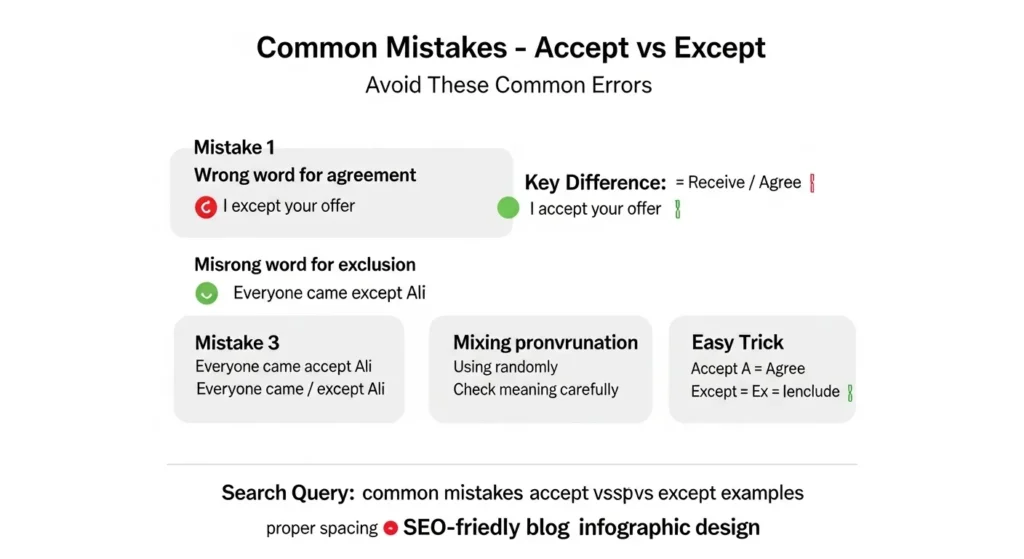
🚫 Mistake 1: Using “except” instead of “accept”
❌ I except your offer
✔ I accept your offer
🚫 Mistake 2: Using “accept” instead of “except”
❌ Everyone came accept Ali
✔ Everyone came except Ali
🚫 Mistake 3: Confusing in fast writing
❌ Mixing both randomly
✔ Always check sentence meaning
🚫 Mistake 4: Spelling errors in exams
❌ accept/except confusion
✔ Learn meaning + practice
👉 Search query: “common mistakes accept vs except examples with answers”
💬 Accept vs Except in Everyday Examples
📧 In Emails:
- I accept your proposal.
- All files are ready except one document.
📰 In News:
- The company accepted the deal.
- All areas were safe except one region.
📱 On Social Media:
- I accept your challenge 😄
- Everyone joined except me 😅
📘 In Formal Writing:
- He accepted the agreement.
- All items are included except additional charges.
🏫 In Academic Writing:
- The theory is widely accepted.
- All cases were studied except one.
👉 Search queries included naturally:
- accept in a sentence
- except in a sentence
- accept vs except examples sentences
- how to use accept and except correctly
📈 Accept and Except: Google Trends & Usage Data
🔍 Popular Searches:
- accept vs except usage difference
- difference between accept and except
- accept vs except examples
- accept meaning
- except meaning
- accept vs except grammar
🌎 Usage Insight:
- “Accept” is more common in communication and business
- “Except” is common in lists, rules, and exclusions
📊 Trend Table:
| Word | Popularity | Usage |
| Accept | High | Agreement/receiving |
| Except | Medium | Exclusion |
👉 Popular query: “which is more common accept or except in English”
📊 Comparison Table: Accept or Except
| Word | Meaning | Function | Example |
| Accept | Receive/agree | Action verb | Accept an offer |
| Except | Exclude | Preposition/conjunction | Everyone except him |
❓ FAQs About Except vs Accept
1. What is the difference between accept and except?
Accept means to receive or agree. Except means to exclude or leave out.
2. Which word is used for agreement?
“Accept” is used for agreement.
3. Which word means leaving out?
“Except” means leaving out.
4. Are accept and except pronounced the same?
They sound similar, but pronunciation is slightly different.
5. Why do people confuse these words?
Because spelling and sound are very similar.
6. Can I use “except” in positive sentences?
Yes, but it shows exclusion.
7. What is the easiest way to remember?
Accept = agree, Except = exclude.
🧾 Conclusion
Both “accept” and “except” are important English words, but they have completely different meanings. Accept is used when you receive something, agree to something, or approve something.
It is very common in daily communication, emails, and professional writing. On the other hand, except is used when you exclude something or leave someone out.
It is often used in lists, rules, and statements where something is not included. The confusion happens because both words look and sound similar, but their meanings are opposite.
The best way to avoid mistakes is to remember a simple rule: accept means agree, except means exclude. Always check the meaning of your sentence before choosing the word.
With regular practice, clear understanding, and simple examples, you can easily master both words and use them correctly in speaking and writing without confusion.
Discover More Articals!
Ringworm or Psoriasis: What Is the Difference?(2026)
Cancun or Cabo: What Is the Difference?(2026)
Boat or Ship: What Is the Difference and When to Use Each?

