Finding the perfect recliner sounds simple — until you’re standing in a showroom surrounded by dozens of options and no clear way to tell which one will still feel comfortable six months from now. Most people buy recliners based on how they look in a store or how a price tag feels in the moment. Then they bring it home, live with it for a few weeks, and realize they missed something: the depth was wrong, the back doesn’t recline far enough, or there’s no space behind it for the wall-hugger style they actually needed.
Recliners for sale today come in a wider range of styles and mechanisms than ever before — power recliners, swivel gliders, wall-hugger models, lift chairs, and zero-gravity options, all at different price points and with different long-term comfort profiles. That variety is genuinely useful, but only if you know what to filter for. This guide walks through the practical decisions — room size, body fit, mechanism type, and fabric durability — so you can pick a chair that works for your actual life, not just the floor model version of it.

Understanding Recliner Types Before You Buy
The first mistake most buyers make is treating all recliners as the same category of furniture. They are not. A wall-hugger recliner and a traditional rocker-recliner have fundamentally different space requirements, motion ranges, and ideal use cases. Getting this decision right before you look at fabric or color saves a significant amount of time and prevents returns.
Manual vs. Power Recliners
Manual recliners use a side handle or push-back mechanism to recline. They are typically lighter, less expensive, and require no power outlet. The trade-off is that adjusting position requires physical effort, which becomes relevant if the chair is being used by someone recovering from surgery, dealing with joint pain, or simply preferring precise incremental adjustments.
Power recliners use an electric motor to move the backrest and footrest independently. Many current models include adjustable headrests, lumbar support, and USB charging ports built directly into the armrest. The independent control matters more than it might seem — being able to raise your feet while keeping the backrest only slightly reclined is a genuinely different sitting posture than what a manual chair allows, and for long sitting sessions, that difference accumulates. Power recliners do require proximity to an outlet, which is worth mapping out before purchase.
Wall-Hugger Recliners
Standard recliners need twelve to eighteen inches of clearance behind them to fully recline. In a smaller living room or bedroom, that clearance either doesn’t exist or forces the chair away from the wall in a way that disrupts the room’s layout. Wall-hugger recliners solve this by moving the seat forward as the back reclines, requiring only a few inches of wall clearance. If you’re working with a room under 200 square feet or placing the chair in a corner arrangement, a wall-hugger design is not a luxury — it’s a practical requirement.
Swivel Gliders and Nursery Recliners
Swivel gliders combine a smooth 360-degree rotation with a gliding motion and reclining function. They’re frequently used in nurseries and reading rooms where the ability to turn toward a side table or reorient toward a sound without standing up is genuinely useful. Power swivel gliders add independent headrest and lumbar adjustments, which makes them a strong option for people who spend extended time reading, nursing, or working from a seated position. The gliding motion is gentler than a traditional rocker, which tends to matter in spaces where floor vibration is a concern.
How Room Size and Layout Affect Your Choice
Before selecting a recliner style, measure the space where the chair will live — not the room, but the specific area: distance from the nearest wall behind the chair’s planned position, clearance to either side, and the sightline to whatever screen or window the chair faces. These three measurements will eliminate a significant portion of available options before you ever look at a product page.
For rooms where the chair sits against or near a wall, the wall-hugger category becomes the practical default. For rooms with more open floor plans, a standard recliner or swivel glider offers more positioning flexibility. Swivel functionality is particularly useful when the chair needs to work in multiple orientations — facing a television from one angle and a conversation area from another.
Room scale also affects frame size selection. A chair with a 45-inch height looks proportionate in a room with ten-foot ceilings and overwhelming in a room with eight-foot ceilings and low-profile furniture. Most manufacturers publish overall dimensions including fully reclined length, which extends two to three feet in front of the chair. That extended footprint needs clear floor space — it’s easy to forget this when a room looks spacious when the chair is upright.
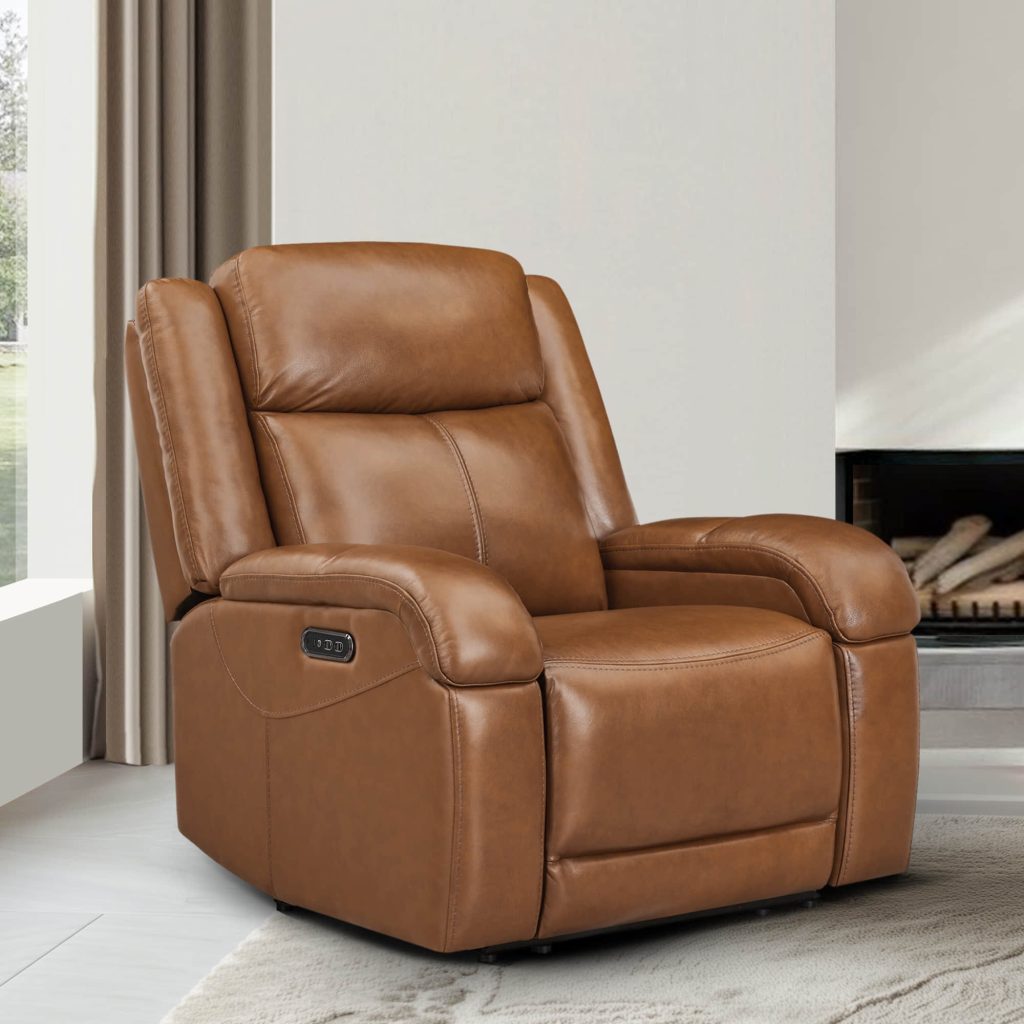
Matching a Recliner to Your Body and Sitting Habits
Comfort is not universal. A chair that feels excellent to someone five feet four inches tall will put a six-foot-two person in a position where their neck has no support and their feet hang over the footrest. Seat depth, seat height, and headrest position are the three dimensions that most directly affect whether a recliner actually supports the body or just holds it in place.
Seat Depth and Height
Seat depth is the distance from the front edge of the seat to the backrest. For proper support, your back should reach the backrest with your knees at roughly a 90-degree angle and your feet flat on the floor. If you’re shorter, a deeper seat pushes you forward and removes lower back support. If you’re taller, a shallow seat leaves your thighs without support. Most standard recliners are built for average adult proportions — roughly five feet six to six feet. Outside that range, looking for adjustable lumbar support or a model with published seat depth measurements is worth the extra research.
Headrest Position and Neck Support
Fixed headrests work well for one height and less well for everyone else. Power recliners with adjustable headrests address this directly — the headrest moves independently, so it can be positioned to support the neck whether the back is upright, partially reclined, or fully flat. For anyone who uses a recliner as a reading or napping chair, this adjustment makes a noticeable difference in how the neck and shoulders feel after an hour. Chita Living’s power recliner lineup includes models with independent power headrests, which is a feature worth prioritizing if neck support is a regular concern.
Sitting Duration and Support Needs
How long you typically sit in a recliner shapes which features matter. For occasional use — a chair that sees thirty minutes of television a night — basic cushioning and a functional mechanism are sufficient. For extended use — reading for hours, recovering from injury, or working from a reclined position — lumbar support quality, cushion density, and the ability to adjust position without fully standing up become genuinely important. Some power recliners include heat and massage functions in the seat and lumbar area, which are not gimmicks for people dealing with chronic back tension or post-surgical recovery.
Fabric and Material Durability for Long-Term Use
The upholstery you choose affects how the chair ages, how easy it is to maintain, and how well it holds up to the specific conditions of your household — pets, children, frequency of use, and climate all factor in.
Leather vs. Performance Fabric
Genuine leather develops a patina over time and is relatively easy to wipe clean. It can crack in very dry climates without conditioning, and it transfers temperature — cold in winter, warm in summer — which some users find uncomfortable. Faux leather avoids the temperature issue but tends to peel after several years, particularly at high-friction contact points like armrests and seat edges.
Performance fabrics — including chenille, boucle, and treated linens — have improved significantly and now offer stain resistance, durability under pet claws, and a wider range of textures than was available five years ago. For households with young children or pets, a performance fabric rated for high abrasion is often more practical than leather, both for longevity and day-to-day cleaning. Many current recliners for sale are available in both leather and fabric variants of the same frame, so the decision often comes down to household conditions rather than style preference.
Cushion Construction and Long-Term Comfort
Foam density determines how a chair feels after two years of use, not just on the first sit. Low-density foam compresses and loses its shape relatively quickly, resulting in a chair that feels noticeably less supportive after heavy use. High-density foam or a foam-and-spring combination holds its shape longer and maintains more consistent support. This information is not always listed prominently in product descriptions, but it’s worth asking about or looking for in detailed product specifications before committing to a purchase.
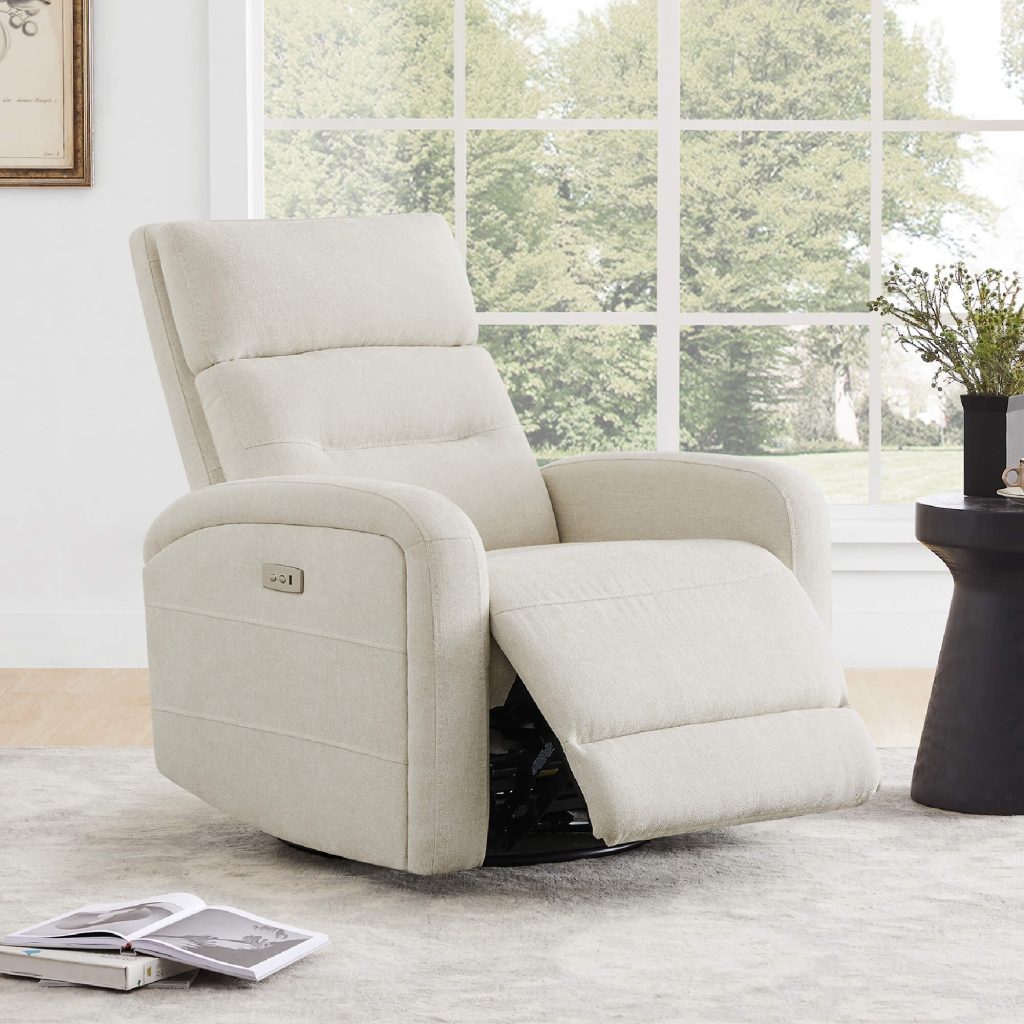
Features Worth Paying For vs. Features You Can Skip
Not every premium feature on a recliner justifies its cost for every buyer. Knowing which upgrades address real use cases — and which are primarily marketing — helps allocate budget toward what will actually improve daily comfort.
Independent power controls for the backrest and footrest are worth the cost for anyone who spends more than an hour at a time in a recliner. Being able to elevate the legs without fully reclining the back changes the ergonomics of long sitting sessions in a way that matters for circulation and lower back pressure. USB charging ports in the armrest are genuinely convenient if the chair is used near a frequently charged device — phone, tablet, or e-reader. Heat and massage functions are useful for people with muscle tension or chronic pain; for occasional users, they add cost without proportionate benefit.
Features with less consistent return on investment include: decorative nailhead trim (difficult to clean, no functional benefit), built-in cup holders (usually awkwardly positioned relative to natural arm placement), and overly complex multi-zone massage systems that are rarely used after the first month. Prioritize the mechanical quality and frame construction over accessory features — a well-built recliner with a solid motor and quality cushioning will outlast a feature-heavy chair built on a weaker frame.
What to Check Before Finalizing a Purchase
Once you’ve narrowed to a specific model, a few final checks prevent the most common post-purchase regrets. Confirm the fully reclined dimensions against your room measurements — not just the seated height and width. Check the weight capacity against actual users; most standard recliners are rated for 250 to 300 pounds, but some frames and mechanisms handle higher weights more reliably than others. If the chair is a power model, confirm the motor warranty separately from the frame warranty, as they often differ.
Return and exchange policies matter more for recliners than for most furniture because comfort fit is difficult to assess from a product page. A 30-day return window gives you enough time to evaluate the chair across different sitting sessions and lighting conditions. Free shipping — both on delivery and on returns — significantly reduces the practical cost of getting the decision wrong the first time.
Finding a Recliner That Actually Works for You
The right recliner is not the one with the most features or the highest price — it’s the one that fits your room, supports your body correctly, and holds up to how your household actually uses furniture. The decisions that matter most are the practical ones: mechanism type relative to your mobility needs, dimensions relative to your room, seat depth relative to your height, and fabric relative to your daily cleaning reality.
Taking thirty minutes to measure your space and identify which recliner type fits your use case before browsing will save hours of comparison paralysis and reduce the likelihood of a return. Whether you’re looking at power swivel gliders for a nursery, wall-hugger recliners for a smaller living room, or a full-featured lift chair for recovery support, the category decision comes first — style and color come after. Brands like Chita Living offer detailed dimension specifications and a 30-day price match guarantee, which removes some of the risk from buying without seeing a piece in person. Start with function, and the right chair becomes much easier to find.

