
“Youth” is usually used as an uncountable noun meaning young people in general, while “youths” is the plural form used when referring to specific young individuals or groups.
English learners and writers often wonder youth or youths – which is correct? This confusion arises because youth can function as a singular noun, a collective noun, and even an abstract noun, while youths is its clear plural form.
Because of this overlap, people frequently ask questions like “can youth be plural?”, “youth is singular or plural?”, or “what is the plural of youth?”
Understanding the difference is important for essays, news articles, academic writing, and everyday communication. Using the wrong form can make writing sound awkward or grammatically incorrect.
This article explains the difference clearly, provides real‑life examples, addresses common queries naturally, and gives professional advice so you can confidently choose the correct form in any situation.
youth’s or youths’ Quick Answer
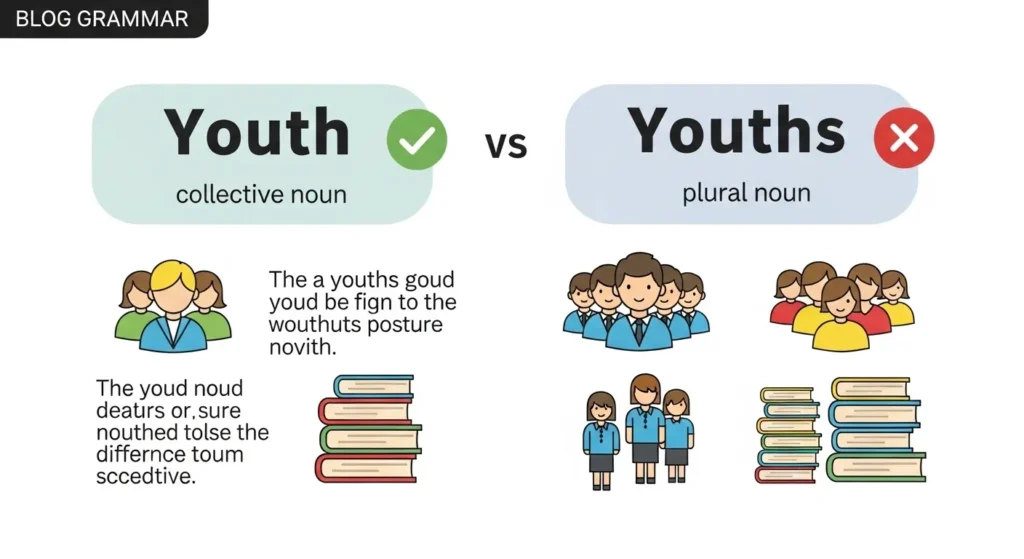
- Youth = singular or collective noun
- Refers to one young person, young people as a group, or the life stage of being young.
- Youths = plural noun
- Refers to multiple individual young people.
Examples:
- ✅ Youth need guidance and support. (collective)
- ✅ A youth was selected for the program. (single person)
- ✅ The program helps several youths in the community. (plural individuals)
- ⚠️ The youths need guidance. (grammatically correct, but less natural for general statements)
The Origin of Youth or Youths

The word youth comes from Old English geoguþ, meaning young age or young person. Historically, youth was used for both singular and collective meanings. The plural form youths developed later to emphasize individual young people or distinct groups.
Over time, youth became the standard collective term, while youths remained less common and more specific in modern English.
Read more about!
Daddy’s or Daddies Quick Answer
British English vs American English Spelling

There is no spelling difference between British and American English.
- Youth ✅
- Youths ✅
The only difference appears in verb agreement with collective nouns:
- British English: The youth are protesting.
- American English: The youth is protesting.
Both are grammatically correct within their systems.
Comparison Table
| Form | British English | American English | Correct |
| Youth | youth | youth | ✅ |
| Youths | youths | youths | ✅ |
Which Spelling Should You Use?
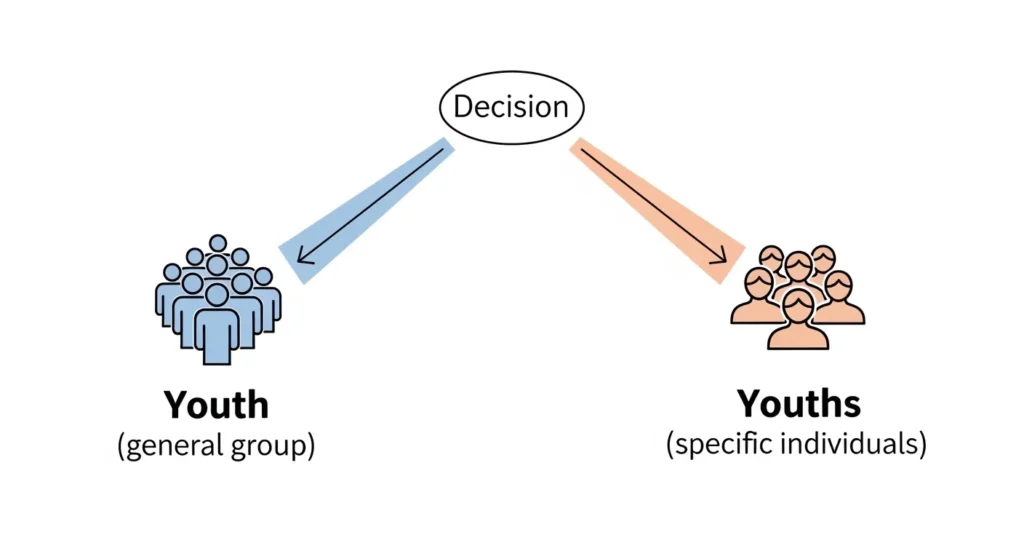
- Use youth when talking about young people collectively or in general.
- Use youths when referring to specific, multiple young individuals.
Audience based advice:
- US audience → youth (collective), youths (plural)
- UK & Commonwealth → same rule
- Global writing → youth for general reference, youths for multiple individuals
💡 Easy tip:
Think youth = general, youths = several individuals.
Common Mistakes with Youth or Youths

- ❌ The youths are the future of the nation. (better: youth)
- ❌ Several youth joined the program. (should be youths)
- Correct versions:
- ✅ The youth are the future of the nation.
- ✅ Several youths joined the program.
Correct versions:
- ✅ The youth are the future of the nation.
- ✅ Several youths joined the program.
Youth or Youths in Everyday Examples
Emails
- ✅ Our program supports youth development.
- ✅ Several youths participated in the event.
News
- ✅ Youth unemployment is rising.
- ✅ Police detained three youths for questioning.
Social Media
- ✅ Empowering the youth to achieve their dreams 🌟
- ✅ Local youths volunteer at the shelter.
Formal Writing
- ✅ The policies aim to benefit the youth population.
- ✅ The initiative targets youths from multiple neighborhoods.
Youth vs Youths: Grammatical Nuances (Advanced Understanding)
Although youth and youths are both correct, their tone and intention are different.
- Youth → an abstract, collective, or policy-level term
- Youths → concrete, countable, and focused on individual young people
Example Difference
- Youth today faces many challenges.
(A broad, society-level statement about young people in general.) - Youths today face many challenges.
(Refers to specific individuals or identifiable groups of young people.)
💡 Rule:
If a sentence includes numbers, actions, or police/news context, youths usually sounds more natural.
Youth as an Abstract Noun (Important Concept)
The word youth is often used as an abstract noun, referring to the stage of life rather than specific people.
Examples:
- Youth is a time of learning.
- Youth brings energy and new ideas.
In these cases, youth refers to the life stage, not individuals.
👉 In this meaning, “youths” is never used.
Youth in Academic & Policy Writing
In academic and formal writing, youth is usually preferred.
Common academic phrases include:
- youth development
- youth policy
- youth engagement
- youth population
- youth empowerment
Incorrect vs Correct:
❌ youths development
✅ youth development
Because youth functions as a collective or conceptual term in research and policy language.
Youths in Legal & News Language
The word youths often appears in news reports and legal language when referring to specific individuals.
Examples:
- Police questioned two youths.
- The court sentenced three youths.
💡 In news writing:
- Youth = category or general group
- Youths = specific people involved
Youth vs Youths with Numbers (Very Important Rule)
When a number appears in the sentence, the plural youths is normally used.
Incorrect:
❌ Five youth attended the program.
❌ Many youth were arrested.
Correct:
✅ Five youths attended the program.
✅ Many youths were arrested.
Collective Verb Agreement Confusion (Extra Tip)
In British English, collective nouns sometimes use plural verbs.
Example:
- The youth are protesting. (British English)
In American English, collective nouns often take singular verbs.
Example:
- The youth is protesting. (American English)
Both forms are grammatically acceptable within their systems.
General guideline:
- US writing → youth is
- UK writing → youth are (when used collectively)
Youth vs Youths: Tone Difference
| Word | Tone |
|---|---|
| Youth | Neutral, respectful, and formal |
| Youths | More official, report-style, factual |
Because of this tone difference, motivational or inspirational writing usually prefers youth.
Examples:
✅ Empowering the youth
❌ Empowering the youths (sounds colder and more official)
Youths or Youth: Google Trends & Usage Data
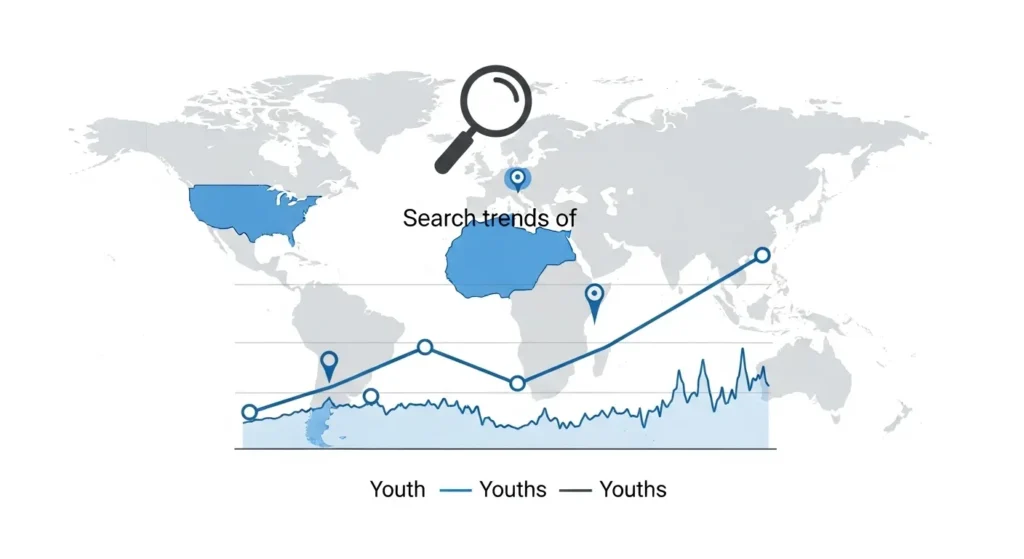
Search data shows “youth or youths” is commonly searched by:
- ESL learners
- Students writing essays
- Journalists and bloggers
Popular Usage by Region
| Country | Search Intent |
| United States | Grammar & usage |
| United Kingdom | Writing accuracy |
| India | Exam preparation |
| Pakistan | English learning |
| Australia | Academic writing |
In general, youth is more commonly used than youths, especially in collective or general references.
Comparison Table: Youth vs Youths
| Word | Correct? | Meaning | Usage |
| Youth | ✅ Yes | Young people collectively or one individual | Standard, general |
| Youths | ✅ Yes | Multiple young individuals | Specific, plural |
FAQs
1. What is the plural of youth?
The plural of youth is youths.
2. Is youths correct?
Yes. Youths is a correct plural form when referring to multiple individuals.
3. Is youth plural or singular?
Youth can be singular, collective, or abstract depending on context.
4. Youth is or are?
Both are correct: is (American English) and are (British English) when used collectively.
5. Youth or youths which is correct?
Both are correct—the choice depends on meaning and context.
Conclusion
The difference between youth and youths is subtle but important. Use youth when talking about young people collectively, a single young person, or the stage of life.
Use youths when referring to multiple individual young people, especially with numbers or in news and legal contexts.
Once you understand this distinction, questions like “youth plural form,” “is youth plural,” or “youth vs youths” become easy to answer, and your writing becomes clearer, more natural, and grammatically accurate.
Related posts!
cues vs ques Which One Should You Use
🌏 Vietnam or Thailand: Which Destination Is Better?
🌾 Artisan or Agriculturist: Meaning, Differences and Explained

