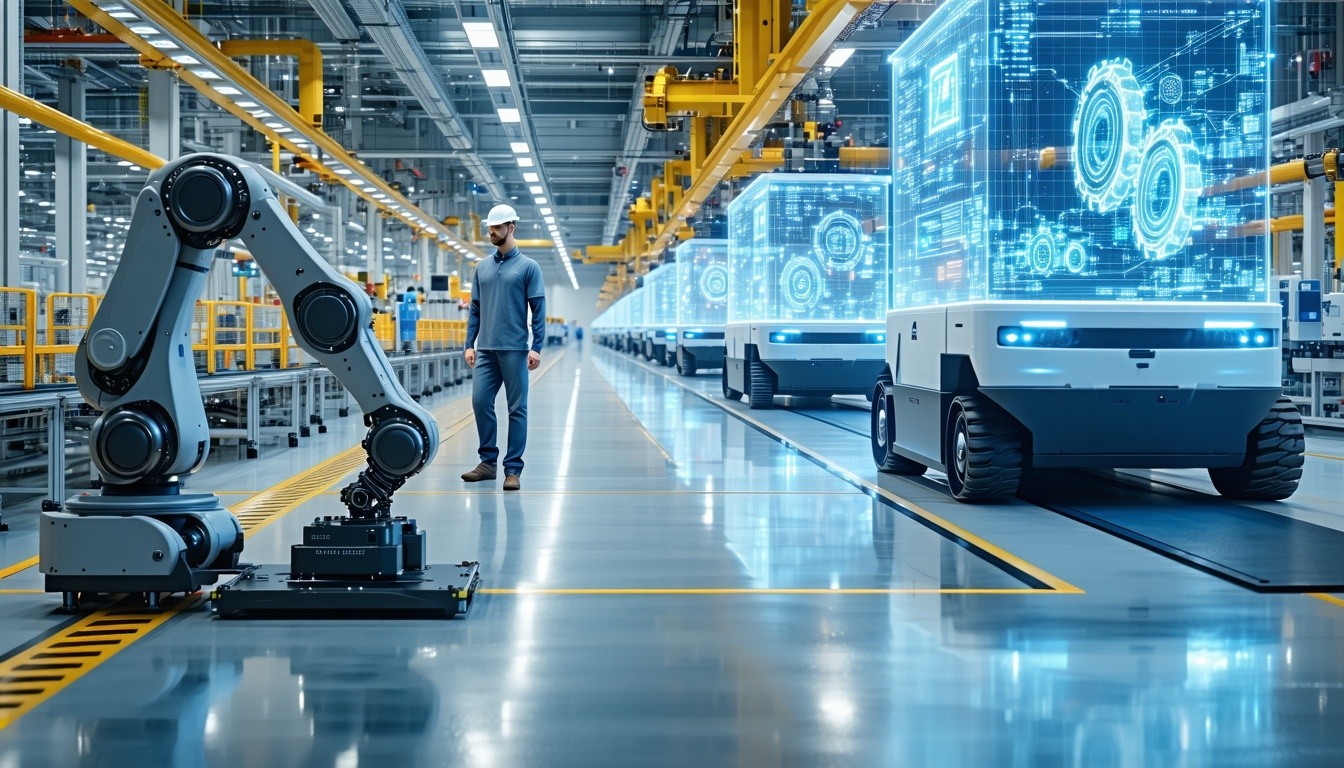
Manufacturing automation solutions cover a wide range, from robotic cells and conveyors to the software that watches how the whole line behaves. Buyers often spend first on hardware and last on visibility, which is backwards. The cheapest and fastest gains usually come from seeing the process clearly, not from adding another machine to a line nobody is measuring.
What do manufacturing automation solutions include?
Manufacturing automation solutions include physical automation such as robotics and material handling, control automation through PLCs and SCADA, and process intelligence software that monitors output and quality. The third layer ties the first two together by showing whether they are actually performing.
Each layer answers a different question. Robots answer how work gets done. Controllers answer whether equipment is running. Process intelligence answers whether the line is producing right-first-time at the rate it should. Many plants own the first two and skip the third, which is precisely why their automation investment underdelivers against the business case that justified it.
The missing layer is also the cheapest to add. Robotics and conveyors carry capital cost, installation downtime and long lead times. Smart factory automation that reads existing cameras adds intelligence in software, so it reaches value while a hardware project is still in procurement.
Where do manufacturing automation solutions deliver the fastest ROI?
The fastest return usually comes from the monitoring layer, because it exposes existing losses without new capital equipment. Plants typically find recoverable downtime and quality escapes already present on the line, which pays back faster than buying additional hardware.
An AI manufacturing automation solution that reads your existing cameras can quantify those losses in weeks. Genichi Taguchi’s loss function made the point decades ago: every deviation from target carries a cost, even when the part still passes. Software that measures those deviations turns vague waste into a ranked, recoverable figure a plant manager can take to finance.
The return is recovery, not new capacity. Because the monitoring layer surfaces output the plant is already losing, the payback comes from reclaiming existing throughput rather than from adding a machine, which is why it consistently returns its cost inside the first year.
How should a plant sequence its automation roadmap?
Start with visibility, then automate the proven bottlenecks. Deploying process intelligence first tells you which stations to automate and which already perform, so capital goes where it returns the most rather than where it is easiest to install.
Sequencing visibility before heavy capital is the difference between automation that guesses and automation that targets. The theory of constraints is blunt about this: improvements anywhere but the bottleneck do not raise throughput. The monitoring layer identifies the true constraint, which is often not the station teams assume.
Do these solutions suit mid-market plants?
Yes. Software-led automation scales down well because it adds intelligence to equipment a mid-market plant already owns. A camera-based monitoring layer needs no robotic line, so smaller plants get the same visibility larger operations use, without the capital.
Integration risk is the other reason to lead with software. A monitoring layer that reads cameras touches no safety-critical control logic, so it carries far less deployment risk than reprogramming a cell or rewiring a line, which makes it an easier first project to get approved.
Workforce readiness shapes the outcome as much as the technology. Automation without operators who understand the data it produces tends to gather dust, so pairing each rollout with short, practical training on reading and acting on the new signals protects the investment.
That accessibility is what makes the monitoring-first approach practical for plants that cannot fund a full automation overhaul. To see which losses your current these solutions are missing, book a short process review at jidoka-tech.ai/contact-us.
Frequently Asked Questions
Are manufacturing automation solutions only for large plants?
No. Software-led automation such as camera-based process monitoring scales down well, because it adds intelligence to equipment a mid-market plant already owns rather than requiring a full robotic line or a large capital budget.
What is the difference between automation and process intelligence?
Automation performs the work. Process intelligence measures and improves how that work runs, flagging downtime, bottlenecks and quality escapes that the automation itself does not report, so the two are complementary rather than competing.

