English learners, writers, and even native speakers often search for “trooper or trouper” because these two words look and sound almost the same, yet they mean very different things.
This small spelling difference can completely change the meaning of a sentence. Using the wrong word can confuse readers, weaken professional writing, or even change the tone of a message. That is why people frequently ask: Is it trouper or trooper? Which one is correct?
The confusion usually appears in phrases like “a real trouper” or “a real trooper.” Both versions are seen online, in emails, news articles, and social media posts.
Many people are unsure which spelling is right and why. Some assume both are acceptable, while others think one is American and the other British. In reality, the issue is not about region but about meaning and usage.
This article solves that confusion clearly and completely. You will get a quick answer, word origins, British vs American usage, common mistakes, real life examples, usage trends,
FAQs, and professional advice. By the end of this guide, you will confidently know when to use trouper and when to use trooper, without hesitation.
Trouper or Trooper:Quick Answer
Trooper refers to a soldier, police officer, or cavalry member, or someone who keeps going despite difficulty.
Trouper refers to a reliable, hardworking member of a group, especially in theater or performance, who does their job without complaint.
Examples:
- He is a state trooper who works on highway patrol. ✅
- She stayed positive during hard times she’s a real trouper. ✅
❌ She’s a real trooper in the theater company. (Incorrect context)
The Origin of Trouper or Trooper
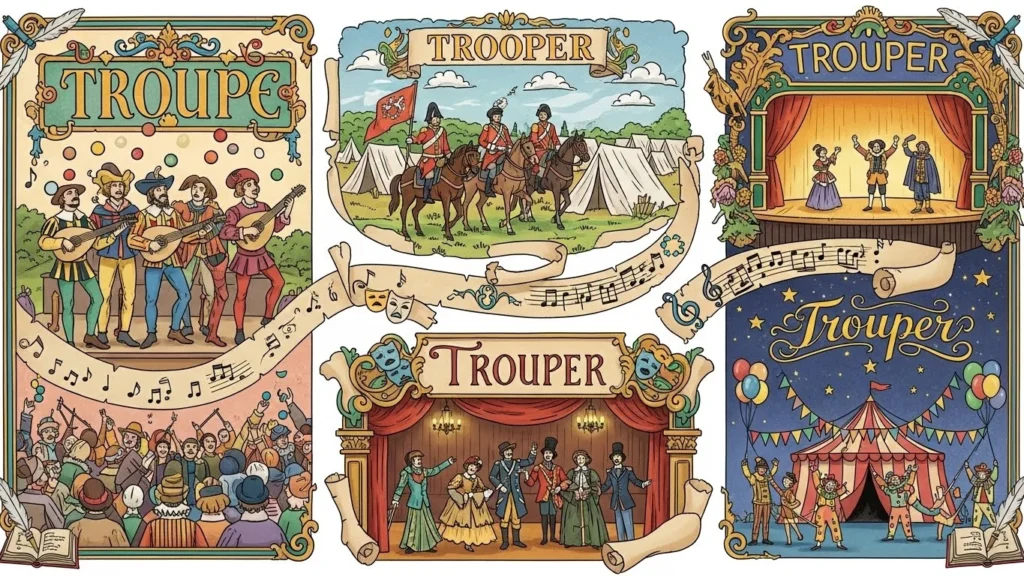
The difference between trooper vs trouper comes from their historical roots, even though they sound similar.
Origin of “Trooper”
The word trooper comes from the word troop, which originally referred to a group of soldiers. It dates back to the 16th century and was commonly used to describe mounted
soldiers (cavalry). Over time, it expanded to include soldiers, police officers, and law enforcement personnel, especially in American English.
Because soldiers were known for endurance and discipline, the word trooper also developed a figurative meaning: someone who shows courage, strength, or persistence in difficult situations.
Origin of “Trouper”
The word trouper comes from troupe, meaning a group of actors or performers. A trouper was someone who traveled, performed regularly, and remained committed despite tough conditions, such as low pay or constant travel.
Over time, trouper came to mean a dependable person who keeps going and does not complain, even outside the theater world.
The spelling differences exist because these words come from different roots: troop (military) and troupe (theater).
British English vs American English Spelling
Unlike many confusing word pairs, trouper and trooper are not a British vs American spelling issue. Both words exist and are used in both varieties of English, but their meanings remain different.
Examples
- British English: She remained cheerful all day what a trouper.
- American English: A highway trooper stopped the car for inspection.
Comparison Table
| Feature | Trouper | Trooper |
| Origin | French troupe | English troop |
| Main meaning | Reliable team member | Soldier or police officer |
| Figurative use | Hardworking, patient person | Strong, resilient person |
| British usage | Yes | Yes |
| American usage | Yes | Yes |
Trouper or Trooper in Everyday Examples
Emails
- Thanks for covering the shift you’re a real trouper.
- A state trooper will contact you regarding the report.
News
- The injured officer returned to duty as a dedicated trooper.
- The cast praised her as a true trouper during rehearsals.
Social Media
- Long day, but still smiling. Being a trouper! 💪
- Met a friendly highway trooper today.
Formal Writing
- The employee proved to be a reliable trouper under pressure.
- The trooper followed standard safety procedures.
Trouper or Trooper:Google Trends & Usage Data
Online search trends show that “trouper or trooper” is commonly searched by:
- English learners
- Content writers
- Students and professionals
Usage by Context
- Trooper appears more often in:
- News articles
- Law enforcement reports
- Crime and traffic updates
- Trouper appears more often in:
- Opinion pieces
- Workplace praise
- Entertainment and theater content
Usage by Region
- United States: “Trooper” is searched more due to police usage.
- UK and Commonwealth countries: “Trouper” is commonly searched in idiomatic praise.
- Global ESL regions: Both are searched together due to confusion.
- read more about!600+Broche or Brooch: Which One Is Correct?
Comparison Table:Trouper vs Trooper
| Word | Meaning | Typical Context | Example |
| Trouper | Reliable, patient person | Work, theater, teamwork | She’s a real trouper |
| Trooper | Soldier or police officer | Military, law enforcement | The trooper arrived |
FAQs
Are “trouper” and “trooper” interchangeable?
No. They have different meanings and should not be mixed.
Which is correct: a real trouper or a real trooper?
Both can be correct, depending on meaning. For praise, trouper is usually better.
Is “trooper” always military?
No. It can also refer to police officers or resilient people.
Is “trouper” only used in theater?
No. It is now used widely for dependable people.
Is this a British vs American difference?
No. Both words are used in both varieties of English.
Which spelling is more common online?
“Trooper” is more common overall, but “trouper” is correct in many cases.
Can I use “trooper” in formal writing?
Yes, when referring to law enforcement or resilience.
Conclusion
The confusion between trouper or trooper is understandable because the words sound alike and are often used in praise. However, they are not the same and should not be used interchangeably.
Trooper is linked to soldiers, police officers, and physical or mental toughness. Trouper, on the other hand, describes a reliable, patient, and hardworking person who continues without complaint.
Choosing the correct word depends on meaning, not spelling preference or region. If you are writing about law enforcement, military service, or resilience, trooper is the right choice.
If you are praising someone for dedication, teamwork, or positive attitude during hardship, trouper is usually more accurate.
By understanding their origins, usage contexts, and common mistakes, you can now use both words confidently in emails, articles, social media, and formal writing.
This clarity improves professionalism and avoids misunderstandings. Remember: similar spelling does not mean similar meaning.
Related posts!
Allways or Always:Quick Answer

