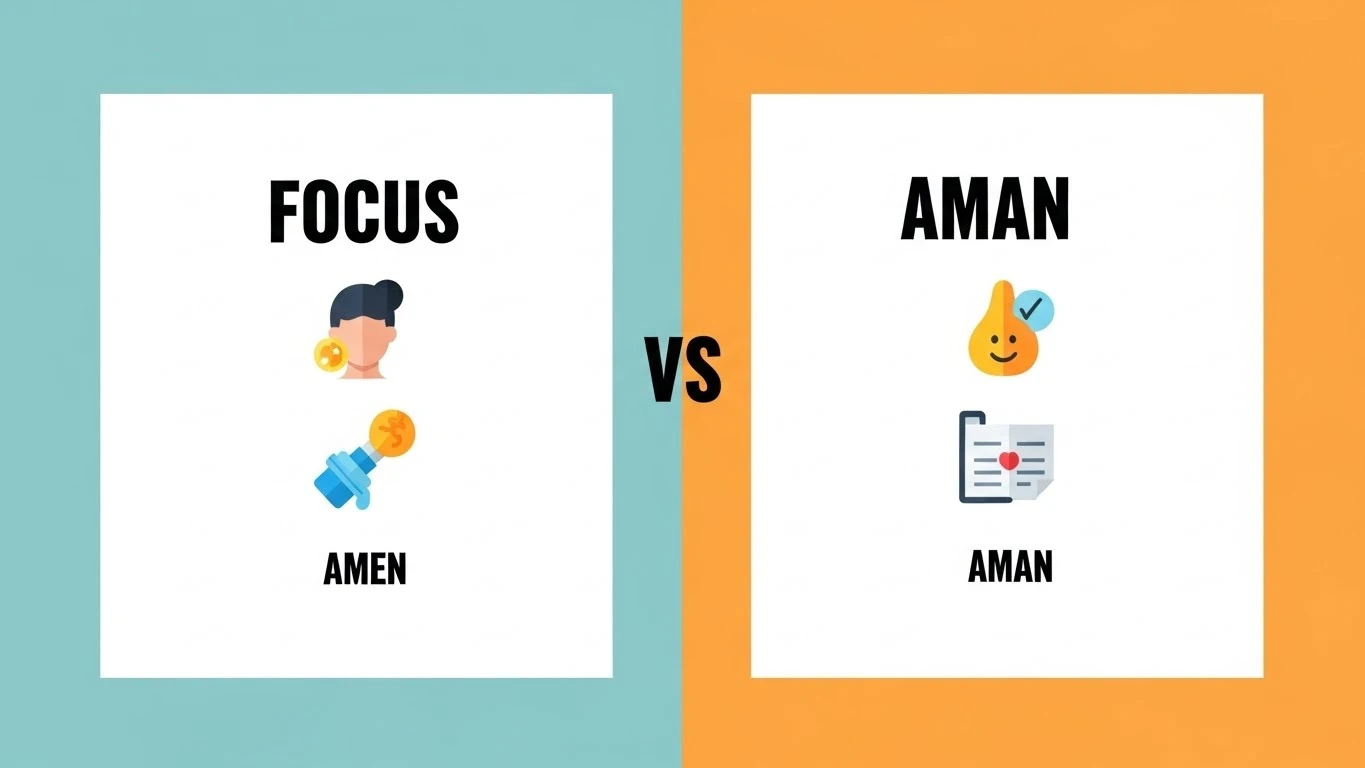
“Amen” is correct in religious context, while “Aman” is a separate word meaning peace or a name.
Many people search for “amen or aman” because these two words look similar but mean very different things. You may have seen amen at the end of prayers, speeches, or religious posts.
At the same time, aman appears in names, Arabic or Urdu texts, or discussions about peace. Because both words are short and sound alike in some accents, writers often get confused about which one to use.
This confusion becomes more common online. People type quickly, autocorrect changes words, and non-native English speakers may not know the cultural or religious background behind each term.
As a result, using aman instead of amen (or vice versa) can completely change the meaning of a sentence. In formal writing, emails, or published content, this mistake can look unprofessional or misleading.
This article solves that confusion clearly and simply. You will learn the quick answer, the origin of both words, how they differ in British and American English, and which spelling you should use based on your audience.
We will also cover common mistakes, real-life examples, Google usage trends, FAQs, and professional advice. By the end, you will know exactly when to use amen and when aman is correct.
Amen or Aman:Quick Answer

Quick Answer:
👉 Amen is the correct English word used at the end of prayers or to express agreement.
👉 Aman is not an English alternative spelling of amen. It is a proper noun or foreign word, often meaning peace in Arabic or used as a personal name.
Examples:
- ✔️ The prayer ended with amen.
- ✔️ Many people commented “Amen” to show agreement.
- ❌ The prayer ended with aman. (incorrect in English)
- ✔️ The word aman means peace in Arabic.
Bottom line:
If you are writing in English and talking about prayer or agreement, amen is always correct.
The Origin of aman vs amen
Origin of Amen
The word amen comes from Hebrew (אָמֵן), meaning “so be it,” “truly,” or “it is certain.” It entered English through Greek and Latin, and has been used for centuries in religious contexts.
Amen appears in:
- Judaism
- Christianity
- Islam (with slightly different pronunciation)
Over time, English adopted amen as a fixed spelling. It never changed between regions, which is why amen is spelled the same everywhere in English.
Origin of Aman
The word aman has a completely different origin. It comes from Arabic, Urdu, Persian, and other languages, where it usually means peace, safety, or protection. It is also widely used as:
- A male name
- A surname
- A cultural or religious term, not English grammar
Why the Confusion Exists
The confusion exists because:
- Amen and aman sound similar in some accents
- Non-native speakers mix English and local languages
- Autocorrect may suggest “aman”
- Social media spelling is often casual
But historically and linguistically, they are not the same word.
British English vs American English Spelling

Unlike many English words, amen does not change spelling between British and American English.
Key Point:
- British English: amen
- American English: amen
There is no accepted English variation called aman.
Comparison Table
| Feature | Amen | Aman |
| English word | ✅ Yes | ❌ No |
| Used in prayers | ✅ Yes | ❌ No |
| British spelling | Amen | Not used |
| American spelling | Amen | Not used |
| Meaning in English | So be it / agreement | None |
| Foreign word / name | ❌ No | ✅ Yes |
Which Spelling Should You Use?
Use Amen if:
- You are writing in English
- You are ending a prayer
- You want to show agreement
- You are posting religious or motivational content
- You are writing formal or informal English
Use Aman if:
- You are writing in Arabic, Urdu, or Persian
- You are referring to peace or safety in those languages
- You are using someone’s name (Aman Ali, Aman Khan)
Audience-Based Advice
- US audience: Always use amen
- UK audience: Always use amen
- Commonwealth/global English: Use amen
- Cultural or linguistic context: Use aman only when appropriate
👉 For English content, amen is the only correct choice.
Amen vs Aman: What Is the Difference and Which One Is Correct?
Many users search for amen vs aman, what is the difference between amen and aman, and is it amen or aman because both words look similar but belong to different contexts.
The difference is simple:
- Amen → Used in English for prayers and agreement
- Aman → A non-English word meaning peace or used as a name
Examples:
- Amen to that! ✅
- Aman means peace in Urdu/Arabic ✅
This also answers common queries like:
- is aman a word → Yes, but not standard English
- amen or aman meaning → Different meanings and uses
- is it aman or amen → Depends on context
👉 In English writing, amen is almost always the correct choice.
Amen vs Aman: What Is the Difference and Which One Is Correct?
Many users search for amen vs aman, what is the difference between amen and aman, and is it amen or aman because both words look similar but belong to different contexts.
The difference is simple:
- Amen → Used in English for prayers and agreement
- Aman → A non-English word meaning peace or used as a name
Examples:
- Amen to that! ✅
- Aman means peace in Urdu/Arabic ✅
This also answers common queries like:
- is aman a word → Yes, but not standard English
- amen or aman meaning → Different meanings and uses
- is it aman or amen → Depends on context
👉 In English writing, amen is almost always the correct choice.
Amen or Aman in Everyday Examples
Emails
- ✔️ Thank you for your support. Amen to that!
- ❌ Thank you for your support. Aman to that.
News & Articles
- ✔️ The pastor ended his speech with amen.
- ❌ The pastor ended his speech with aman.
Social Media
- ✔️ This message is powerful. Amen 🙏
- ❌ This message is powerful. Aman 🙏
Formal Writing
- ✔️ The congregation responded with amen.
- ❌ The congregation responded with aman.
- READ MORE ABOUT!
- Trouper or Trooper:Quick Answer
Amen or Aman:Google Trends & Usage Data
Search data shows that “amen” is widely used across English-speaking countries, including:
- United States
- United Kingdom
- Canada
- Australia
The term “aman” is mostly searched in:
- South Asia
- Middle East
- As a name or cultural term
Usage Context
- Amen: Religion, agreement, motivation
- Aman: Names, peace, non-English usage
This proves that amen dominates English usage, while aman belongs to different linguistic contexts.
Comparison Table: Amen vs Aman
| Aspect | Amen | Aman |
| Correct in English | ✅ Yes | ❌ No |
| Meaning | So be it / agreement | Peace (non-English) |
| Used in prayers | ✅ Yes | ❌ No |
| Grammar role | Interjection | Proper noun / foreign word |
| safe for English | ✅ Yes | ❌ No |
FAQs:
1. Is “aman” an alternative spelling of “amen”?
No. Amen has only one correct English spelling.
2. Can I use aman in English sentences?
Only if it is a name or foreign word, not as a replacement for amen.
3. Why do people type aman instead of amen?
Because of pronunciation, autocorrect, and language mixing.
4. Is amen religious only?
Mostly, but it is also used informally to show strong agreement.
5. Do British and American English differ here?
No. Both use amen.
6. Is aman wrong everywhere?
No. It is correct in Arabic, Urdu, and as a name.
7. Which word is friendly for English content?
Amen is safe and correct.
Conclusion
The confusion between amen or aman is common, but the rule is simple once you understand it. Amen is the correct and only accepted English word used in prayers, religious contexts, and expressions of agreement.
Its spelling does not change between British and American English, making it easy to remember and safe to use in all types of English writing.
On the other hand, aman is not an English spelling variant of amen. It comes from other languages and usually means peace or is used as a personal name.
Using aman instead of amen in English sentences, especially in formal writing, prayers, or online content, is considered a mistake and can confuse readers.
If your goal is clear communication, professional writing, and correct grammar, always choose amen when writing in English.
Save aman for cultural, linguistic, or naming contexts where it truly belongs. Remembering this distinction will improve your writing accuracy and help you avoid common errors.
Related posts!
The Origin of Absents or Absence
Fewer vs Less: What Is the Difference and When to Use Each?
Problemo or Problema: Which Word Is Correct?

