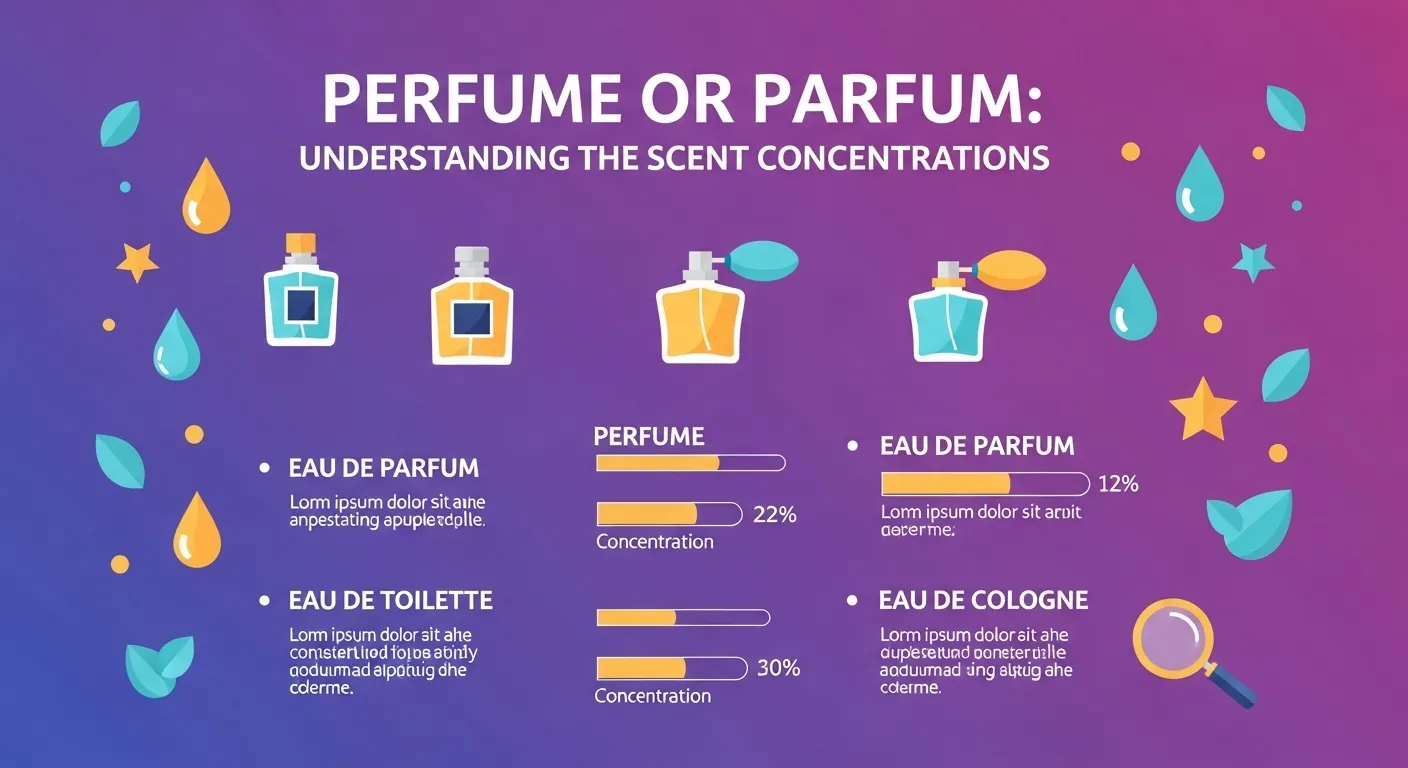
Perfume is the standard English term, while parfum is the French word used mainly in branding or to indicate a stronger fragrance concentration.
People around the world often search for “perfume or parfum” because they see both words used on bottles, websites, ads, and social media.
At first glance, they look like spelling variations of the same word, and many people assume one must be wrong.
However, the confusion is deeper than simple spelling. The difference between perfume and parfum is connected to language, origin, branding, and regional usage.
This confusion usually appears when someone is buying a fragrance online, writing product descriptions, learning English, or comparing luxury brands. You may wonder:
Is parfum the French spelling? Is perfume the English one? Are they interchangeable? Does parfum mean stronger perfume? These are very common questions, especially in global markets where English and French terms mix freely.
This article solves all that confusion in a clear and simple way. You will get a quick answer, the history of the words, British vs American spelling rules, practical advice on which spelling
to use, common mistakes, everyday examples, usage trends, FAQs, and a final expert conclusion. By the end, you will know exactly when to use perfume and when parfum is more appropriate.
Perfume or Parfum:Quick Answer
Perfume is the correct and standard English word for a scented liquid used on the body.
Parfum is a French word that is often used in branding and product labels, especially to indicate a high concentration of fragrance.
Examples:
- She bought a new perfume yesterday. ✅
- This luxury bottle is labeled parfum. ✅
❌ I wear a parfum every day (in normal English writing).
The Origin of Perfume or Parfum

Understanding the origin of these words makes the difference very clear.
Origin of “Perfume”
The word perfume comes from the Latin phrase per fumum, which means “through smoke.” In ancient times, people burned aromatic substances, and the pleasant smell
traveled through the air. This idea later entered Old French as parfum and then moved into English as perfume.
Over time, English adapted the spelling to fit its own rules, and perfume became the accepted form in modern English. Today, it is used in everyday speech, writing, advertising, and formal contexts.
Origin of “Parfum”
Parfum is the original French spelling. French has remained a dominant language in the fragrance industry, especially in countries like France and Italy. Because of this, many luxury
brands keep the word parfum on their bottles to signal elegance, heritage, and high quality.
The spelling difference exists because English borrowed the word from French but later modified it, while French kept the original form.
British English vs American English Spelling
Interestingly, there is no difference between British and American English when it comes to this word.
- British English: perfume
- American English: perfume
Both varieties follow the same spelling and meaning. Parfum is not considered standard in either British or American English. It appears mainly in French contexts or branding.
Examples
- British English: She received a bottle of perfume as a gift.
- American English: This perfume smells fresh and light.
Comparison Table

| Feature | British English | American English |
| Standard spelling | perfume | perfume |
| Use of “parfum” | Rare | Rare |
| Meaning | Same | Same |
| Formal writing | perfume | perfume |
Which Spelling Should You Use?
The right choice depends on your audience and purpose.
- For US audiences: Always use perfume.
- For UK or Commonwealth audiences: Use perfume.
- For global or ESL audiences: Use perfume for clarity.
- For luxury branding or product labels: Parfum may be used intentionally.
Professional rule: If you are writing emails, blogs, articles, ads, or academic content in English, perfume is the correct choice.
What Is the Difference Between Perfume and Parfum?
Many people search for what is the difference between perfume and parfum because both words appear on products, websites, and ads. The difference is not just spelling it is about language and usage.
- Perfume is the correct English word
- Parfum is a French word used in branding and fragrance categories
This answers common questions like:
- is parfum French
- parfum which language
- perfume vs parfum
- perfume or parfum which is correct
Meaning and Usage:
- Perfume → general English usage
- Parfum → French term, often used for stronger fragrance or luxury labeling
For example:
- She bought a new perfume. ✅
- This bottle is labeled Eau de Parfum. ✅
Here, many users also ask about parfum meaning or meaning of parfum, which usually refers to a higher concentration of fragrance oils in perfumes.
Simple Rule:
👉 Use perfume in English writing
👉 Use parfum only for product labels or French context
This also helps answer:
- perfume or parfum in English
- parfum in English
- what does parfum mean in perfume
Common Mistakes with Perfume or Parfum

Mistake 1: Using “parfum” in normal English sentences
❌ I like this parfum a lot. ✅ I like this perfume a lot.
Mistake 2: Thinking parfum is American spelling
❌ Parfum is American English. ✅ Perfume is used in both US and UK English.
Mistake 3: Assuming parfum always means the same thing
❌ Parfum and perfume always mean exactly the same. ✅ Parfum can also indicate a stronger concentration in products.
Perfume or Parfum in Everyday Examples
Emails
- Please send me details about this perfume.
- The perfume arrived in perfect condition.
News
- The brand launched a new luxury perfume line.
Social Media
- This perfume smells amazing 😍
- New parfum drop from a French brand ✨
Formal Writing
- The study analyzed consumer preferences for floral perfume.
Perfume or Parfum: Google Trends & Usage Data
Search behavior shows that “perfume” is far more commonly searched in:
- United States
- United Kingdom
- Canada
- Australia
- South Asia
The term “parfum” shows higher interest in:
- France
- Luxury fashion searches
- High-end fragrance buyers
In online stores, parfum is often used to describe product strength, while perfume dominates general searches and informational content. This confirms that users mainly want clarity about correct English usage.
read more about!British English vs American English Spelling
Comparison Table:Perfume vs Parfum
| Word | Language | Main Use | Example |
| Perfume | English | General use | She wears perfume |
| Parfum | French | Branding/strength | Eau de Parfum |
Correct Spelling of Perfume (Common Mistakes to Avoid)
Many learners are confused about the correct spelling of perfume because they see variations like parfume, purfume, or perfum online.
The correct spelling is always:
👉 Perfume ✅
This section answers common queries like:
- how do you spell perfume
- what is the spelling of perfume
- perfume spelling in English
- perfumes spelling
Incorrect Spellings:
- ❌ parfume spelling
- ❌ how do you spell purfume
- ❌ perfum or parfum (in normal English writing)
- ❌ parfume or perfume
Correct Examples:
- I love this perfume.
- She collects expensive perfumes.
Related Confusions:
- is it perfume or parfume → correct: perfume
- perfume or parfume spelling correct → perfume
- perfume or parfum which is better → depends on context, but spelling in English is perfume
Even terms like eau de parfum spelling are correct only when referring to product types, not general English writing.
Key Tip:
👉 If you are writing in English, always use perfume
👉 Avoid incorrect forms like parfume, purfume, or parfum (unless branding)
FAQs
Is “parfum” an English word?
No. Parfum is French, not standard English.
Is perfume spelled differently in the UK?
No. Both UK and US use perfume.
Why do bottles say “parfum”?
To show French origin or higher fragrance concentration.
Can I use parfum in English writing?
Only in branding or when referring to product labels.
Is parfum stronger than perfume?
Often yes, in product categories.
Which spelling is correct for ?
Perfume is best for English.
Are perfume and parfum interchangeable?
Not in standard English writing.
Conclusion
The difference between perfume or parfum is not about right or wrong spelling alone it is about language and context. Perfume is the correct and accepted word in both British and
American English. It should be used in everyday writing, professional communication, articles, blogs, and content.
On the other hand, parfum is a French term that survives mainly in luxury branding and fragrance labels, often to suggest elegance or a stronger scent.
Understanding this distinction helps you avoid mistakes and sound more natural in English. If your goal is clarity and correctness, always choose perfume.
If you are discussing a French product label or a specific fragrance category, then parfum can be appropriate. Knowing your audience is key.
By following the simple rules, examples, and comparisons in this guide, you can now use perfume or parfum confidently in emails, marketing content, social media, and formal writing without confusion.
Related posts!
Allways or Always:Quick Answer
Ringworm or Psoriasis: What Is the Difference?(2026)
Cancun or Cabo: What Is the Difference?(2026)

