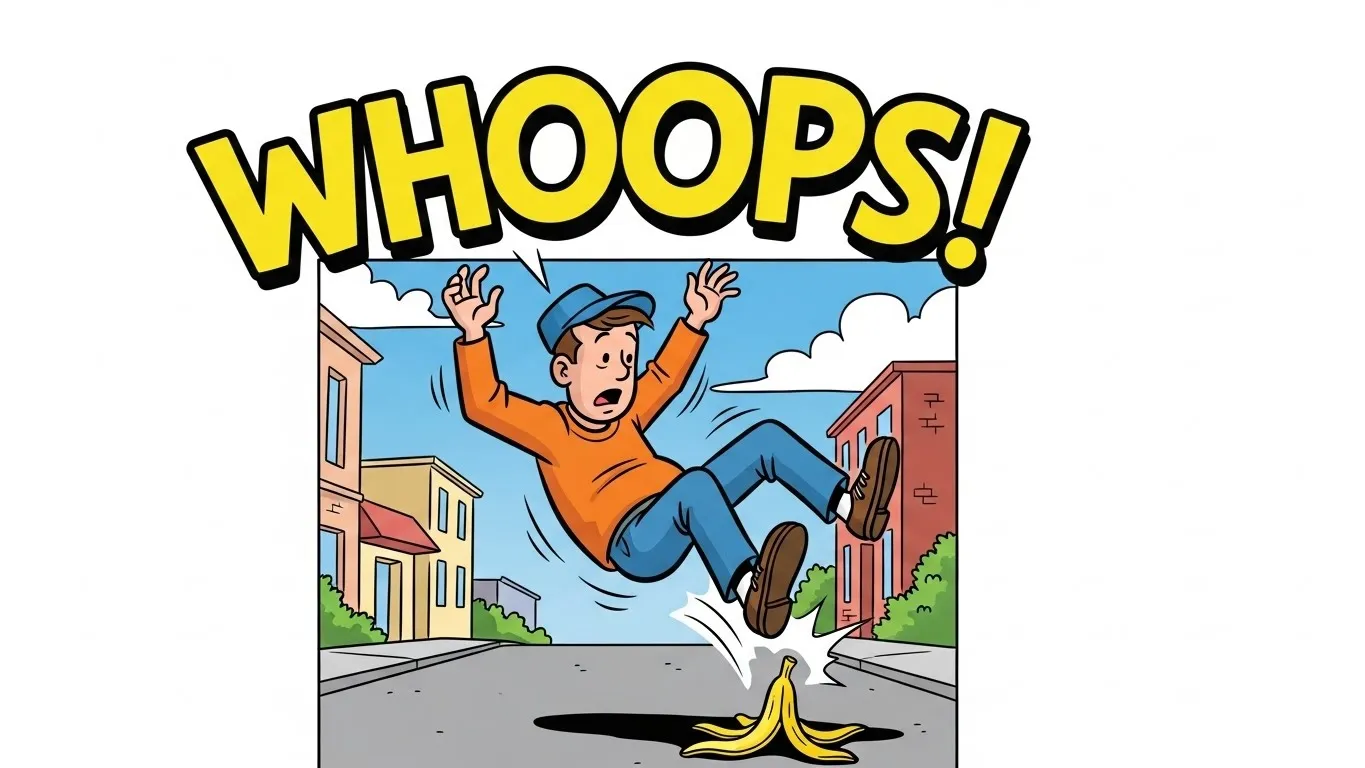
Ever typed “woops” in a text and wondered if it’s right? Many English writers, students, and casual texters get confused between woops and whoops.
This small interjection is used to express a minor mistake, accident, or surprise, but spelling it incorrectly can make your writing look sloppy. People search for this keyword to clarify which form is standard, especially in emails, social media posts, or informal writing.
Understanding the correct spelling ensures your messages are clear, professional, and easily understood. This guide explains the correct usage, origin, British vs American English spelling, common mistakes, examples, and trends so you can write confidently every time.
Woops or Whoops :Quick Answer
- Whoops → Correct standard spelling. Expresses minor mistakes, accidents, or surprises.
- Example: Whoops! I forgot to attach the file.
- Example: Whoops! I forgot to attach the file.
- Woops → Informal or phonetic variant seen in texting, casual notes, or social media.
- Example: Woops! I dropped my keys. (less formal, not standard)
- Example: Woops! I dropped my keys. (less formal, not standard)
Tip: Always use whoops in writing unless you’re deliberately informal.
The Origin of Woops or Whoops
The difference between whoops vs woops comes from how English turns spoken sounds into written words. Whoops is the older and more accepted spelling. It comes from an interjection used to show surprise, regret, or a small mistake.
The word is closely related to expressions like “whoop” and “whoopee,” which have long been used to express sudden emotion or excitement. English often uses “wh-” at the start of expressive words, which is
why whoops became the standard form. It appeared earlier in written English and was recorded in dictionaries, books, and newspapers as the correct spelling.
Woops, on the other hand, developed later as a phonetic spelling. When people say whoops quickly, the “h” sound is usually silent, so it sounds like woops.
Because of this, some writers began spelling it the way it sounds. However, woops never became fully standard and is still considered informal.
British English vs American English Spelling
Unlike many spelling debates, woops vs whoops is not a British vs American issue. Both British and American English prefer whoops as the correct spelling.
Examples
- British English: Whoops, that was the wrong train.
- American English: Whoops, I left my keys at home.
Comparison Table
| Aspect | British English | American English |
| Standard spelling | whoops | whoops |
| Informal variant | woops (rare) | woops (rare) |
| Formal acceptance | Yes (whoops) | Yes (whoops) |
| Dictionary support | whoops | whoops |
There is no official spelling difference between the two varieties.
Which Spelling Should You Use?
Your choice should depend on audience and context.
- US audience: Use whoops in all writing.
- UK/Commonwealth audience: Use whoops.
- Global or professional audience: Always choose whoops.
Woops may appear in:
- Casual text messages
- Informal social media posts
- Personal chats
However, for blogs, articles, emails, exams, or business writing, whoops is the correct and professional option.
Common Mistakes with Woops or Whoops
Mistake 1: Assuming both are equally correct
❌ Woops, the report has an error. ✅ Whoops, the report has an error.
Mistake 2: Using “woops” in formal writing
❌ Woops, we sent the wrong file. ✅ Whoops, we sent the wrong file.
Mistake 3: Thinking it is a US vs UK difference
❌ Americans use woops; British use whoops. ✅ Both prefer whoops.
Woops or Whoops in Everyday Examples
Emails
- Whoops, I attached the wrong document. Please see the corrected version.
News Writing
- Whoops moments happen even in live broadcasts.
Social Media
- Whoops, posted this too early 😅
- Woops 😂 forgot my password again (very casual)
Formal Writing
- The editor noted, “Whoops, this paragraph needs revision.”
Woops or Whoops:Google Trends & Usage Data

Search behavior shows that “woops or whoops” is commonly searched by:
- ESL learners
- Students
- Content writers
- Social media users
Globally, whoops appears far more often in published content, books, news articles, and professional blogs. Woops appears mainly in informal contexts and online comments.
In countries like the United States, United Kingdom, Canada, Australia, India, and Pakistan, whoops dominates in standard English usage. This confirms that whoops is the accepted spelling worldwide.
Comparison Table: Woops vs Whoops
| Feature | Woops | Whoops |
| Standard English | ❌ No | ✅ Yes |
| Formal writing | ❌ Avoid | ✅ Correct |
| Informal use | ✅ Sometimes | ✅ Yes |
| Dictionary accepted | ❌ Limited | ✅ Yes |
| Recommended usage | Casual only | All contexts |
Frequently Asked Questions
Is “woops” a real word?
It exists as an informal spelling, but it is not considered standard English.
Is “whoops” grammatically correct?
Yes, whoops is the correct and accepted spelling.
Can I use “woops” in exams?
No. Always use whoops in exams and formal writing.
Do dictionaries accept “woops”?
Some list it as a variant, but whoops is preferred.
Is “whoops” American or British?
It is used in both varieties of English.
Can “whoops” be used in professional emails?
Yes, but only in a light, informal tone.
Is “oops” the same as “whoops”?
They are similar, but oops is more common and neutral.
Conclusion
The confusion between woops or whoops is understandable, especially in casual writing where spelling often follows sound rather than rules.
However, when it comes to correct and standard English, whoops is the clear winner. It is recognized by dictionaries, accepted in both British and American English, and suitable for everything from social media posts to professional writing.
Woops, on the other hand, is best seen as an informal spelling that appears mainly in quick messages and online comments. While readers may understand it, it does not carry the
same level of correctness or professionalism. If you want to avoid mistakes, confusion, or criticism especially in exams, articles, blogs, or emails always choose whoops.
Language clarity matters, even in small words. By following the simple rule of using whoops as your default choice, you ensure your writing remains clear, correct, and widely accepted.
With this guide, examples, tables, and FAQs, you now have complete confidence in choosing between woops or whoops.
Read more about!

