Many English learners search for “absents or absences” because these two words look similar but are often confused in writing and speech.
At first glance, they seem to mean the same thing, but in correct English usage, they play very different roles.
This confusion is common in school notes, office emails, attendance records, medical letters, and even legal documents. Using the wrong word can make your writing look unprofessional or unclear.
People usually face this problem when talking about someone not being present. Should you write “due to my absence” or “due to my absents”? Is absents even a real word?
These questions push users to search online for a clear and quick explanation. The confusion exists because one word is a noun, while the other is either a verb form or an incorrect plural in many contexts.
This article solves that confusion completely. You will get a quick answer, simple explanations, real life examples, common mistakes, spelling rules, and professional advice
for global audiences. By the end of this guide, you will clearly know when to use absence, when absents is correct, and when it is completely wrong.
Absent or absence : Quick Answer
Absence is a noun. It means the state of not being present.
Absents is usually incorrect when people want to talk about non attendance. It is only correct as a verb form (third person singular of absent).
Examples:
- His absence from work was noticed. ✅
- She absents herself from meetings often. ✅
❌ His absents from work was noticed. (Incorrect)
The Origin of absent vs absence

The word absence comes from the Latin word absentia, which means “being away” or “not present.” It entered English through Old French and has been used as a noun for centuries to describe a lack of presence.
The verb absent also comes from the same Latin root absens, meaning “away” or “not present.” Over time, English developed both a noun (absence) and a verb (to absent).
The form absents appeared as a grammatical verb form, not as a plural noun.
The confusion exists because English speakers sometimes assume absents is the plural of absence. However, the correct plural of absence is absences, not absents.
British English vs American English Spelling
There is no spelling difference between British English and American English for absence or absents. The rules are the same in both varieties.
Examples
- British English: Her absence was explained to the manager.
- American English: His long absence raised questions.
Comparison Table
| Feature | British English | American English |
| Noun form | absence | absence |
| Plural noun | absences | absences |
| Verb form | absents | absents |
| Usage rules | Same | Same |
Which Spelling Should You Use?
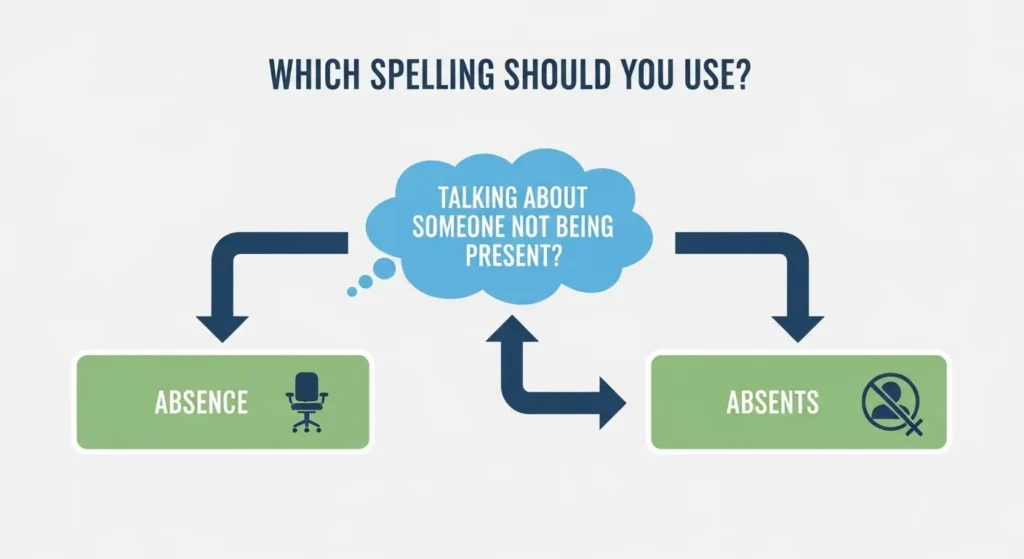
The correct choice depends on grammar and meaning, not location.
- Use “absence” when talking about someone not being present.
- Use “absents” only when describing the action of someone choosing to stay away.
Audience Based Advice
- US audience: Use absence in formal and casual writing.
- UK/Commonwealth audience: Follow the same rule.
- Global audience: Avoid absents unless you are sure it is used as a verb.
Professional tip: In emails, reports, and notices, always use absence.
Common Mistakes with Absents or Absence
Mistake 1: Using “absents” as a noun
❌ His absents was recorded. ✅ His absence was recorded.
Mistake 2: Wrong plural form
❌ Many absents were reported. ✅ Many absences were reported.
Mistake 3: Avoiding the verb incorrectly
❌ She absence herself from work. ✅ She absents herself from work.
Mistake 4: Confusing formal usage
❌ Due to absents, the class was canceled. ✅ Due to absence, the class was canceled.
Absents or Absence in Everyday Examples
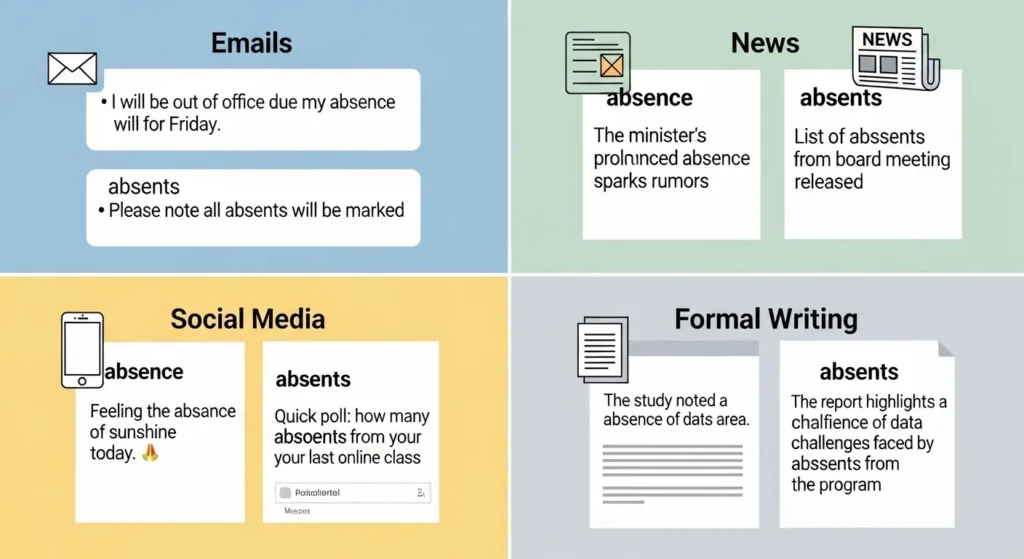
Emails
- I apologize for my absence yesterday.
- He absents himself from meetings without notice.
News
- The minister’s absence sparked debate.
- The player absents himself due to injury.
Social Media
- Sorry for the long absence! I’m back now.
- He often absents himself from online discussions.
Formal Writing
- Repeated absences may lead to disciplinary action.
- The employee absents herself without approval.
Absents or Absence : Google Trends & Usage Data
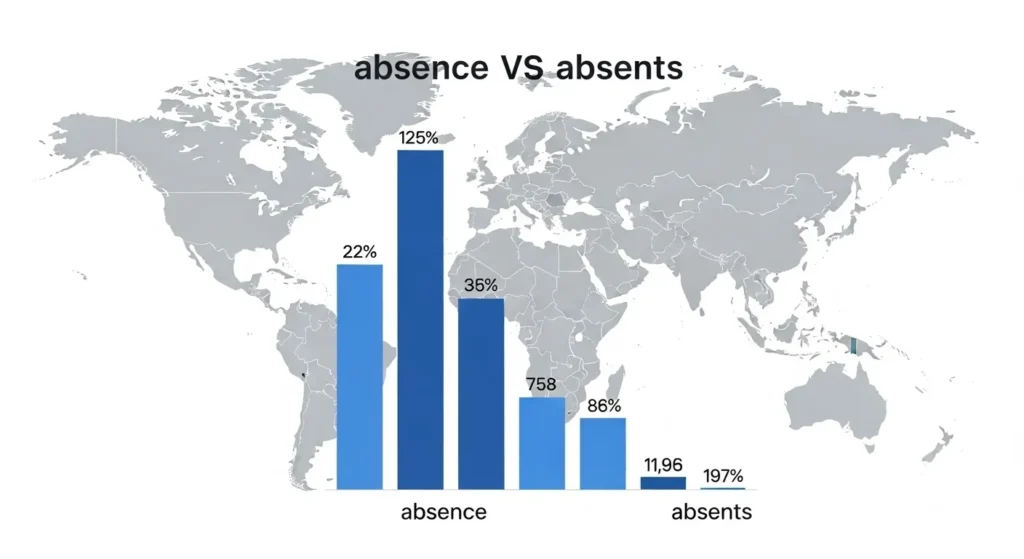
Search trends show that “absents or absence” is frequently searched in:
- South Asia
- Middle East
- Africa
- ESL focused regions
Most users are students, teachers, HR staff, and office workers. The confusion usually appears in attendance records, leave applications, and academic writing. Absence is far more commonly used than absents, which appears mainly in formal or legal contexts as a verb.
Comparison Table: Absents vs Absence
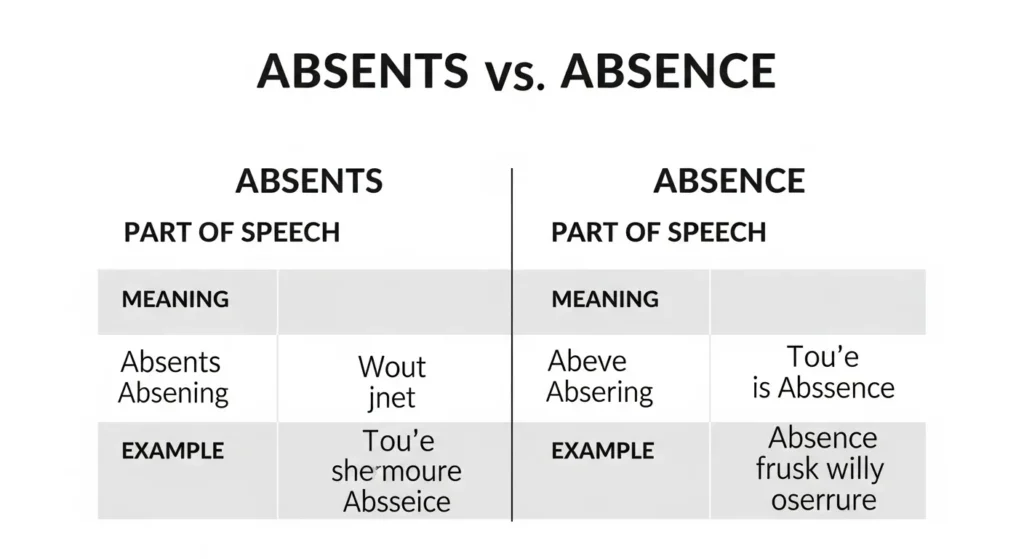
| Word | Part of Speech | Meaning | Correct Example |
| Absence | Noun | State of not being present | Her absence was noted |
| Absents | Verb | Chooses to stay away | He absents himself |
| Absences | Plural noun | Multiple times not present | Several absences occurred |
FAQs
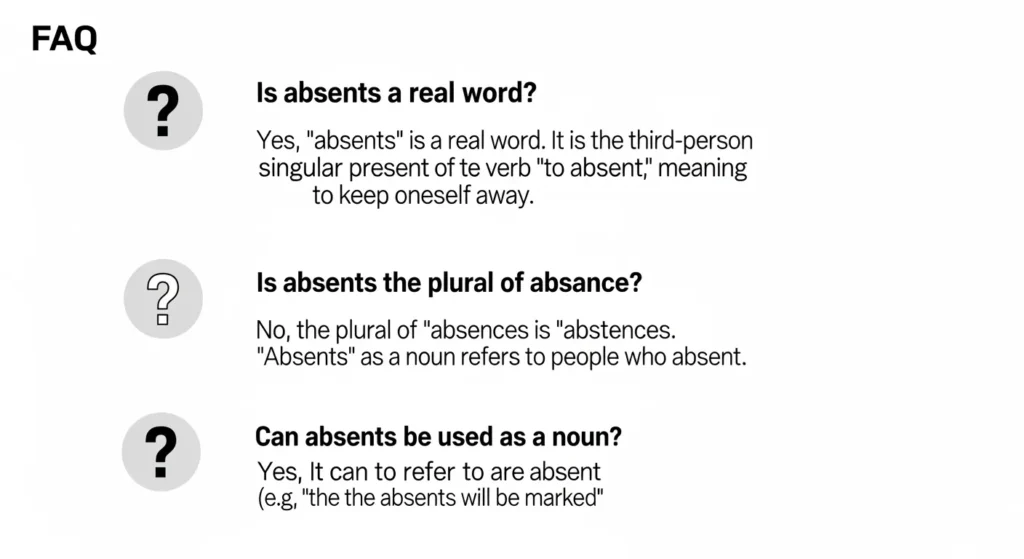
Is “absents” a real word?
Yes, but only as a verb, not as a noun.
Is “absents” the plural of absence?
No. The plural of absence is absences.
Which word is correct in attendance reports?
Absence or absences is correct.
Can I say “due to absents”?
No. The correct phrase is due to absence.
Is “absence” formal or informal?
It works in both formal and informal English.
Is there a difference between UK and US usage?
No. Both follow the same rules.
Can “absent” be a verb?
Yes. To absent oneself is correct but formal.
Conclusion
The confusion between absents or absence is very common, but once you understand the grammar, the choice becomes easy. Absence is a noun and should be used whenever you
are talking about someone not being present. It is the correct and safe choice for emails, school work, office communication, and formal writing.
On the other hand, absents is not a plural noun. It is a verb form used in more formal contexts, usually with himself or herself.
Because it is less common, many writers misuse it. That is why, for most situations, absence is the word you need.
If you remember just one rule, remember this: When you mean non attendance, always choose “absence.” This simple habit will improve your writing clarity and help you avoid common English mistakes.
Related posts!
Crises or Crisis : Quick Answer
Dare or Drink: How to Play the Game the Right Way📝
West Linn or: Meaning, Location, and Why People Search It

I am Lucas Miller. I am a English author known for writing simple and clear content about English spelling, word differences, and everyday language usage. I work focuses on helping students and ESL learners understand confusing English words easily. I believe that learning English should be stress-free and practical for daily life.