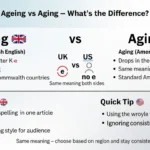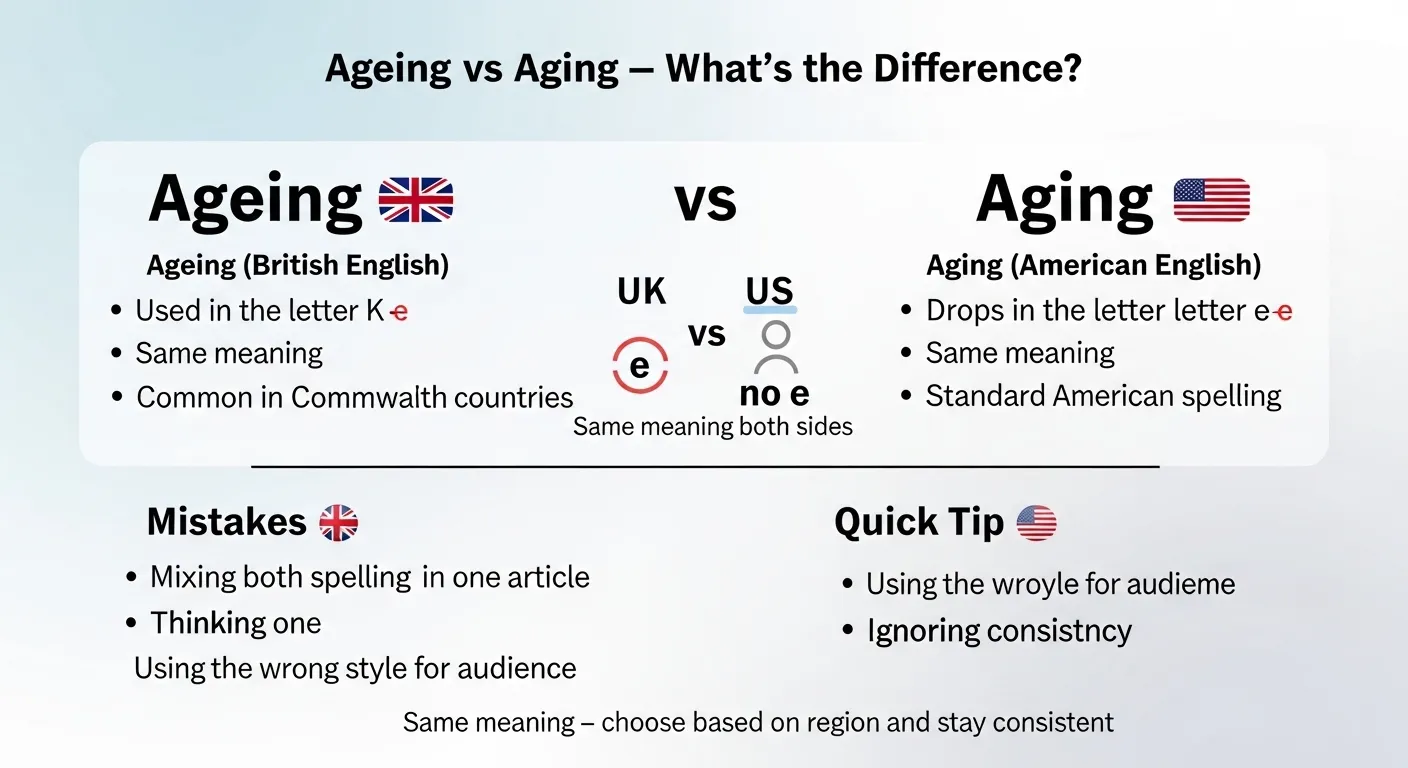
“Ageing” is British English, while “aging” is American English. Both are correct. This is the simple answer people want when they search “ageing vs aging difference.”
Many people get confused when they see these two spellings. They look almost the same. The only difference is one extra “e.” Because of this, writers often wonder which one is right.
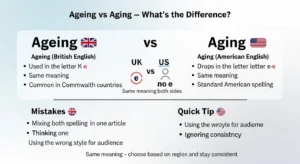
The truth is simple. Both spellings are correct. The choice depends on where you are writing. Ageing is used in the UK and other Commonwealth countries. Aging is used in the United States.
This difference is common in English. Many words change slightly between British and American spelling. So this is not a mistake. It is just a style choice.
Understanding ageing vs aging helps you write clearly. It also helps you match your audience and avoid confusion.
In this guide, you will learn definitions, origin, spelling rules, examples, common mistakes, and answers to popular Google search questions.
📖 Ageing vs Aging Definition
🇬🇧 Ageing Definition
Ageing is the British English spelling.
It means growing older over time.
It can refer to people, animals, or things.
Example sentence:
The population is ageing quickly in the UK.
🇺🇸 Aging Definition
Aging is the American English spelling.
It has the same meaning.
It is used in the United States.
Example sentence:
The country is facing an aging population.
⚡ Ageing vs Aging: Quick Answer
The difference is about spelling style.
| Word | Region | Status |
| Ageing | British English | Correct |
| Aging | American English | Correct |
Simple idea:
- 🇬🇧 Ageing → UK style
- 🇺🇸 Aging → US style
🕰️ Origin of Ageing and Aging
The base word is “age.”
It comes from Latin and Old French.
It means “time of life.”
When adding -ing, English forms a verb.
In British English, some words keep the extra “e.”
In American English, the “e” is often removed.
That is why we get:
- ageing (UK)
- aging (US)
Both forms developed over time.
🌍 British English vs American English Spelling
This is a clear example of spelling difference.
| Type | British English | American English |
| Verb form | Ageing | Aging |
| Style | Keeps “e” | Drops “e” |
More examples:
| UK | US |
| Ageing population | Aging population |
| Ageing process | Aging process |
📝 Which Spelling Should You Use?
Use the spelling based on your audience.
Simple guide:
- Writing for UK → use ageing
- Writing for US → use aging
- Writing for global audience → choose one and stay consistent
Consistency is very important.
Do not mix both styles in one document.
⚠️ Common Mistakes with Ageing vs Aging
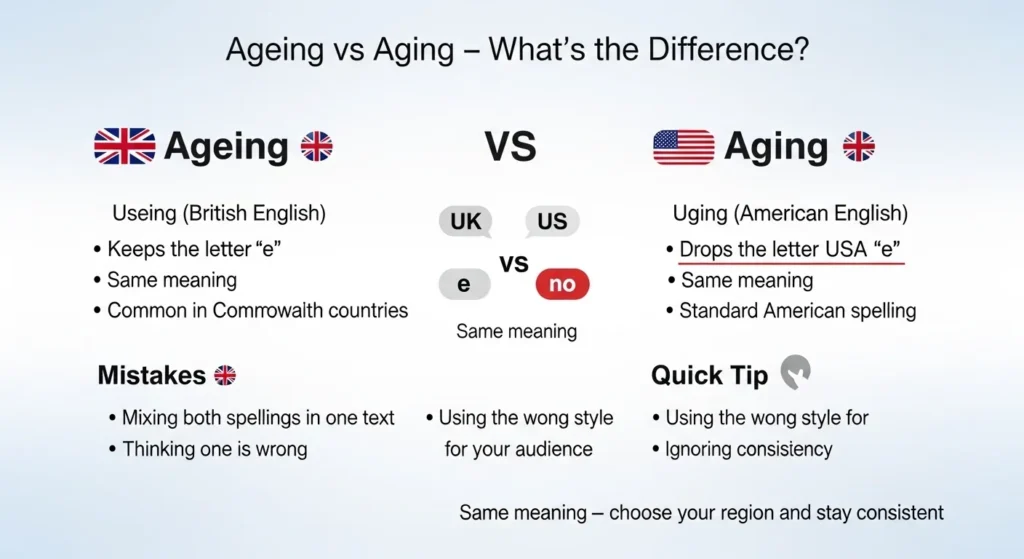
Mixing both spellings
Do not use both in the same text.
Thinking one is wrong
Both are correct.
Using wrong style for audience
Match your reader’s region.
Ignoring consistency
Pick one style and follow it.
💬 Ageing or Aging in Everyday Examples
British English examples
The population is ageing.
Skin ageing is natural.
American English examples
The population is aging.
Skin aging is natural.
Mixed context
Both mean the same thing.
Only spelling changes.
📊Aging vs Ageing: Google Trends & Usage Data
Search data shows regional preference.
| Region | Preferred Form |
| UK | Ageing |
| USA | Aging |
| Canada | Both |
| Australia | Ageing |
Popular search queries:
- ageing vs aging difference
- aging or ageing which is correct
- ageing meaning
- aging population meaning
- ageing vs aging grammar
These searches show common confusion.
📊 Comparison Table (Keyword Variations)
| Term | Meaning | Region |
| Ageing | Growing older | UK |
| Aging | Growing older | US |
| Ageing population | Older society | UK |
| Aging population | Older society | US |
❓ FAQs About Ageing vs Aging
What is the main difference between ageing and aging?
The difference is spelling.
Is ageing correct?
Yes. In British English.
Is aging correct?
Yes. In American English.
Which is better?
Both are correct.
Can I use both in one article?
No. Stay consistent.
Why is the “e” removed in American English?
American English simplifies spelling.
What does ageing/aging mean?
It means growing older.
Conclusion
The difference between ageing and aging is simple and clear. Both words have the same meaning. They both describe the process of growing older. The only difference is spelling style.
Ageing is used in British English and many Commonwealth countries. Aging is used in American English. Neither spelling is wrong. The correct choice depends on your audience.
This type of spelling difference is common in English. It is important to stay consistent and use one style in your writing. Mixing both forms can confuse readers.
Understanding ageing vs aging helps you write clearly and correctly. It also improves your professional writing and communication.
Discover More Articals!
Kyoto or Tokyo: What Is the Difference Between Them?(2026)
Liason vs Liaison: What Is the Correct Spelling and When to Use It?
Venmo or PayPal: What Is the Difference?(2026)

I am Lucas Miller. I am a English author known for writing simple and clear content about English spelling, word differences, and everyday language usage. I work focuses on helping students and ESL learners understand confusing English words easily. I believe that learning English should be stress-free and practical for daily life.