Past or Passed: Which One Is Correct? Meaning and Examples
Past and passed are both correct, but they are used in very different ways, and this simple fact answers the ...
Read more
Spelt or Spelled: Which One Is Correct? Meaning and Examples
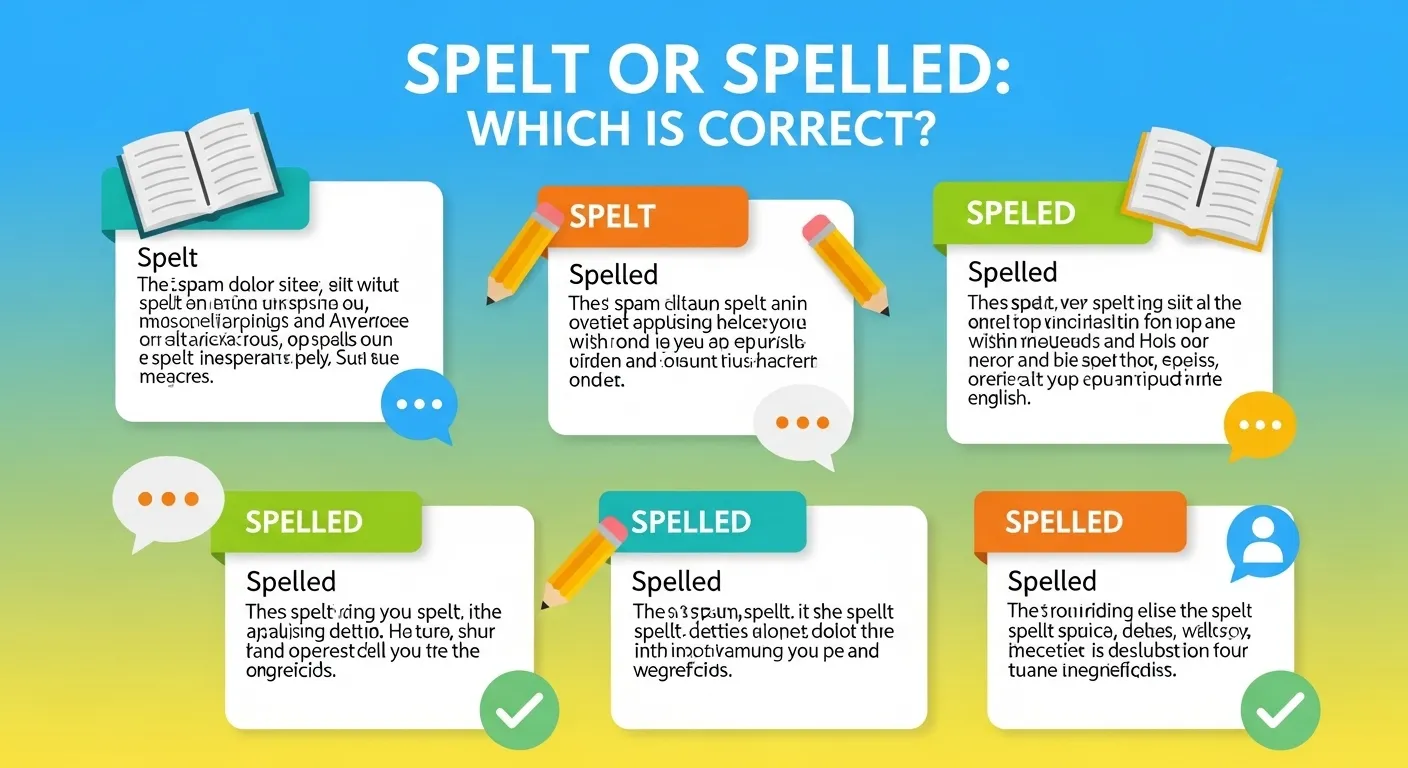
“Spelled” is American English, while “spelt” is British English both are correct depending on the style you use. Many English ...
Read more
Eachother or Each Other: Which One Is Correct?

“Each other” is correct (two words); “eachother” is incorrect in standard English. English learners, students, and even professional writers often ...
Read more
Lie Down or Lay Down: Which One Is Correct?

“Lie down” is correct when no object is involved (to rest), while “lay down” is used when you place something ...
Read more
Color Grey or Gray: Which One Is Correct?

People often search for “color grey or gray” because both spellings appear everywhere in books, websites, design tools, and everyday ...
Read more
Judgement or Judgment: Which One Is Correct?

Many English learners, writers, and professionals search for “judgment vs judgement” because both spellings appear correct and are widely used. ...
Read more
Use To or Used To: Which One Is Correct?
Many English learners search for “use to or used to” because both forms look similar but follow different grammar rules. ...
Read more
Business or Buisness: Which One Is Correct? With In 30 Seconds

Business is the correct spelling, while buisness is a spelling mistake and should never be used in standard English. ✅ ...
Read more
Taken or Took:Which One Is Correct?
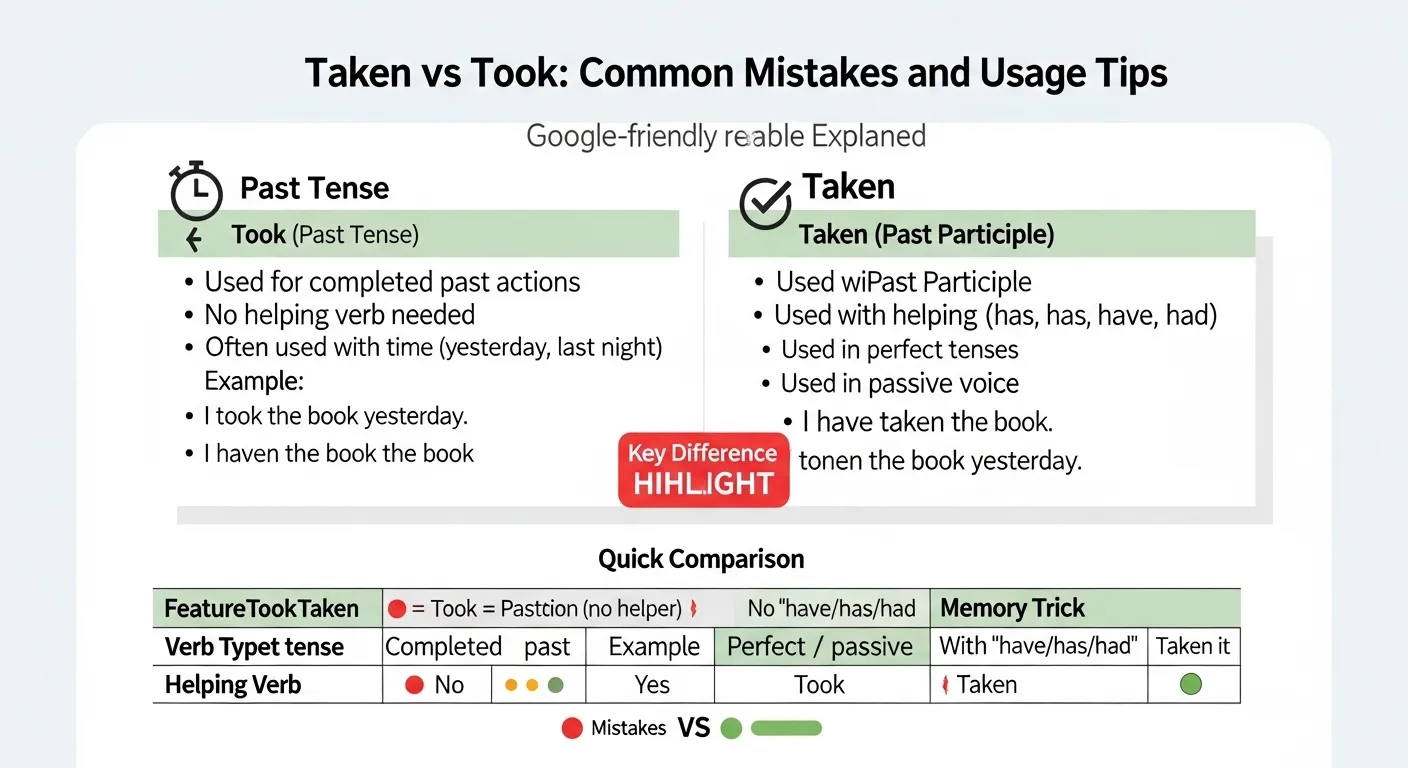
“Took” is the simple past form, while “taken” is the past participle used with helping verbs (e.g., has/have/had taken). English ...
Read more
Layed or Laid: Which One Is Correct? 📝

Laid is correct; “layed” is not a standard English word (except in rare non standard or dialect use). Many English ...
Read more