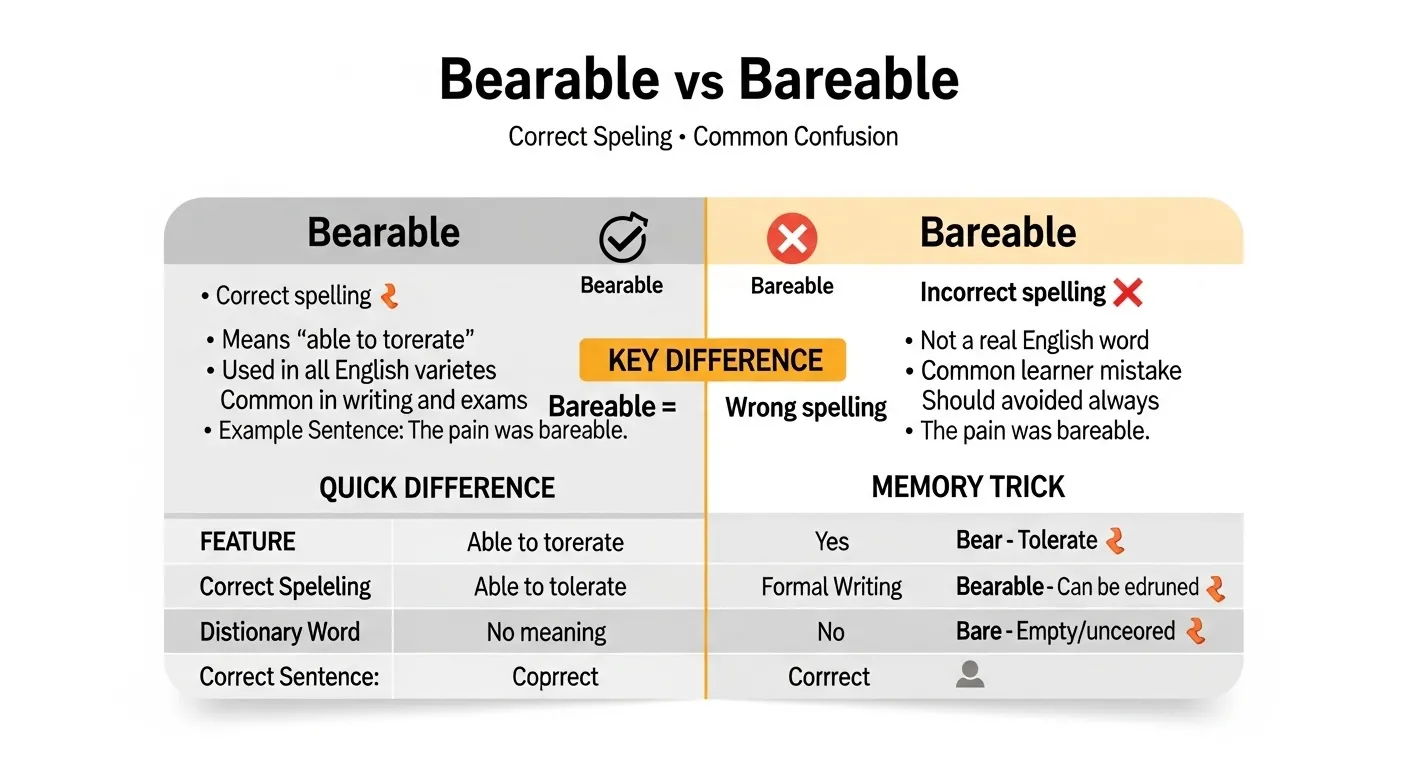
Bearable is the correct spelling, and bareable is incorrect.
Many people search for “bearable or bareable” because both spellings look possible in English.
The confusion usually comes from the word bare, which means uncovered, and bear, which means to
tolerate or endure. Learners, writers, and even native speakers worry about using the wrong form in exams, emails, blogs, or professional writing.
One wrong letter can make your sentence look careless. This article clears that confusion step by step. You will get a quick answer first.
Then you will learn the origin, spelling rules, British vs American usage, common mistakes,examples and expert advice. Sentences are short. Language is simple. Everything is clear.
Bearable or Bareable: Quick Answer
Bearable is the correct and accepted spelling in modern English.
Bareable is not a real word and is considered incorrect.
Examples:
- The pain was bearable.
- The heat is bearable today.
❌ The pain was bareable. (Incorrect)
Easy rule:
If something can be tolerated, use bearable.
Bearable Meaning, Spelling, and Common Questions
Many learners search for bearable or bareable meaning and bareable or bearable meaning to understand the difference clearly.
👉 Bearable means something that can be tolerated or endured.
👉 Bareable has no valid meaning because it is not a correct word.
People also ask:
- how to spell bearable
- how do you spell bearable
- spell bearable
- spelling of bearable
👉 The correct spelling is: B-E-A-R-A-B-L-E
Common confusion searches include:
- is it bareable or bearable
- bearable vs bareable
- bareable vs bearable
- barable or bearable
👉 The correct form is always bearable ✅
Incorrect variations you may see:
- bareable ❌
- barable ❌
- bareble ❌
- barelable ❌
- barablr ❌
These are all spelling mistakes and should be avoided.
You may also see confusion like:
- bare able
- bare-able
- bare able meaning
👉 These forms are incorrect when you mean tolerable. The correct word is always bearable.
The Origin of Bearable or Bareable
Origin of the Word “Bearable”
The word bearable comes from the verb bear. In Old English, beran meant to carry, endure, or tolerate. Over time, bear kept the meaning of handling difficulty or pain.
When the suffix -able was added, it formed bearable, meaning able to be endured.
Why “Bareable” Looks Confusing
The word bare means uncovered or empty. Examples include bare hands or bare feet. When learners see bearable, they sometimes think it comes from bare. This leads to the wrong spelling bareable.
Why Spelling Differences Exist
English spelling is not always phonetic. Some words sound the same but come from different roots. Bear and bare sound identical, but their meanings are different. Only bear fits the meaning of tolerance.
British English vs American English Spelling
Some English words change spelling by region. This one does not.
British English
British English uses bearable.
Examples:
- The weather was cold but bearable.
- The noise became bearable after a while.
American English
American English also uses bearable.
Examples:
- The workload is bearable now.
- The injury is painful but bearable.
Comparison Table
| Feature | British English | American English |
| Correct spelling | Bearable | Bearable |
| Bareable accepted? | No | No |
| Formal writing | Bearable | Bearable |
| Exams & tests | Bearable | Bearable |
Key point: There is no US :UK difference here.
Which Spelling Should You Use?
For US Writers
Always use bearable. It is the only correct form.
For UK and Commonwealth Writers
Use bearable in all contexts.
For Global English
Use bearable. Search engines and readers expect it.
For Students and Exams
Never write bareable. It will be marked wrong.
Clear advice:
If you mean tolerable, choose bearable.
Common Mistakes with Bearable or Bareable
Mistake 1: Linking the Word to “Bare”
❌ The heat was bareable.
✅ The heat was bearable.
Mistake 2: Assuming Both Spellings Are Correct
Only bearable is correct.
Mistake 3: Spellcheck Dependence
Some basic tools may not catch bareable. Always double-check.
Mistake 4: Using Bareable in Formal Writing
This makes writing look unprofessional.
Bearable vs Bareable in Usage and Sentence Clarity
Many users search for real usage differences such as:
- bearable or bareable
- is bareable a word
- how to spell bearable or bareable
- how to spell bareable
👉 The rule is simple:
- Bearable ✅ = correct word
- Bareable ❌ = incorrect spelling
Sentence Comparison for Clarity
Correct examples:
- The pain is bearable. ✅
- The weather is hot but bearable. ✅
Incorrect examples:
- The pain is bareable. ❌
- The situation is bareable. ❌
Final Clarity Rule
You may also see searches like:
- bearable vs bareable
- bareable and bearable
- bearable or barable
👉 All of these confirm one key idea:
If the meaning is “able to tolerate,” the correct spelling is always bearable.
Bearable or Bareable in Everyday Examples
In Emails
- The delay is bearable.
- The workload is heavy but bearable.
In News Writing
- Temperatures are high but bearable.
- Conditions remain difficult yet bearable.
On Social Media
- Monday stress is bearable ☕
- Gym pain is bearable 💪
In Formal Writing
- The side effects were mild and bearable.
- The situation became bearable over time.
In Academic Contexts
- The pressure was intense but bearable.
Bearable or Bareable: Google Trends & Usage Data
Search Behavior
- Bearable has strong and consistent search volume.
- Bareable appears mostly in error-based searches.
By Country
- United States: Bearable dominates
- United Kingdom: Bearable dominates
- Canada: Bearable dominates
- Australia: Bearable dominates
- South Asia: Bearable dominates
User Intent
Most users search this keyword to confirm correct spelling. They want fast clarity.
Comparison Table: Bearable vs Bareable
| Point | Bearable | Bareable |
| Correct spelling | Yes | No |
| Dictionary listed | Yes | No |
| Formal writing | Correct | Incorrect |
| Exams & tests | Safe | Wrong |
Frequently Asked Questions
Is bareable a real word?
No. Bareable is incorrect.
Why do people spell bearable as bareable?
Because bear and bare sound the same.
Can I use bareable informally?
No. It is wrong in all contexts.
Is bearable used differently in US and UK English?
No. Usage is the same.
What does bearable mean?
It means able to be tolerated.
Is bearable an adjective?
Yes. It describes a condition or feeling.
What is the opposite of bearable?
Unbearable.
Conclusion
The spelling question “bearable or bareable” has a simple and clear answer. Bearable is the only correct spelling. It comes from the verb bear, which means to endure or tolerate.
The word bare has a completely different meaning and has no role here. This confusion happens because both words sound the same, but English spelling depends on meaning, not sound.
In British English, American English, and global English, bearable is standard. It is safe for exams, emails, blogs, academic papers, and professional writing.
The spelling bareable is always incorrect and should be avoided. Using it can reduce clarity and harm credibility.
If you remember one thing, remember this: tolerance equals bear. When something is difficult but manageable, it is bearable. This single rule will help you write with confidence and accuracy every time.
Related posts!
Common Mistakes with Duffel or Duffle
Ageing vs Aging: What Is the Difference?In 30 Seconds
Involve or Envolve: What Is the Correct Spelling?(2026)

I am Daniel Wright. I am a English language writer. I focuse on word comparisons and common spelling confusions.
I simplifies tricky English terms to help learners and writers avoid everyday mistakes.
My work is especially useful for students, bloggers, and non-native English readers.
Daniel believes clear language builds confident communication.