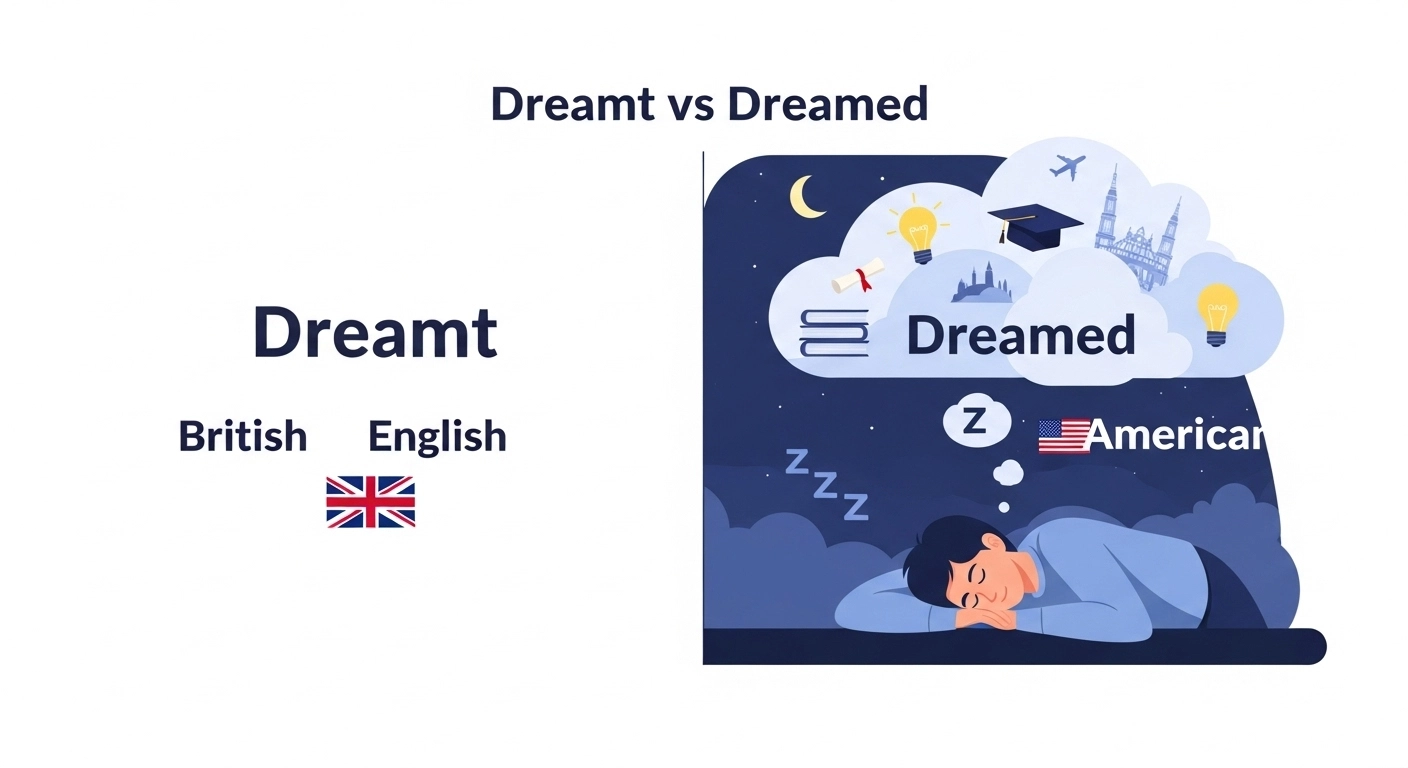
Both dreamt and dreamed are correct spellings, and knowing this answer removes confusion right away.
Many people search for “dreamt or dreamed” because they see both forms used in books, exams, emails, and online content.
The confusion usually appears when writers are unsure which spelling is grammatically correct, which one sounds more natural, or which is preferred in American or British English.
Since English has many spelling variations across regions, learners often fear making mistakes in formal writing. This article solves that problem clearly and completely.
You will learn the difference between dreamt and dreamed, their origin, spelling rules, regional preferences, common mistakes, real-life examples, usage trends, and expert advice so you can choose the correct form with confidence.
Dreamt or Dreamed: Quick Answer
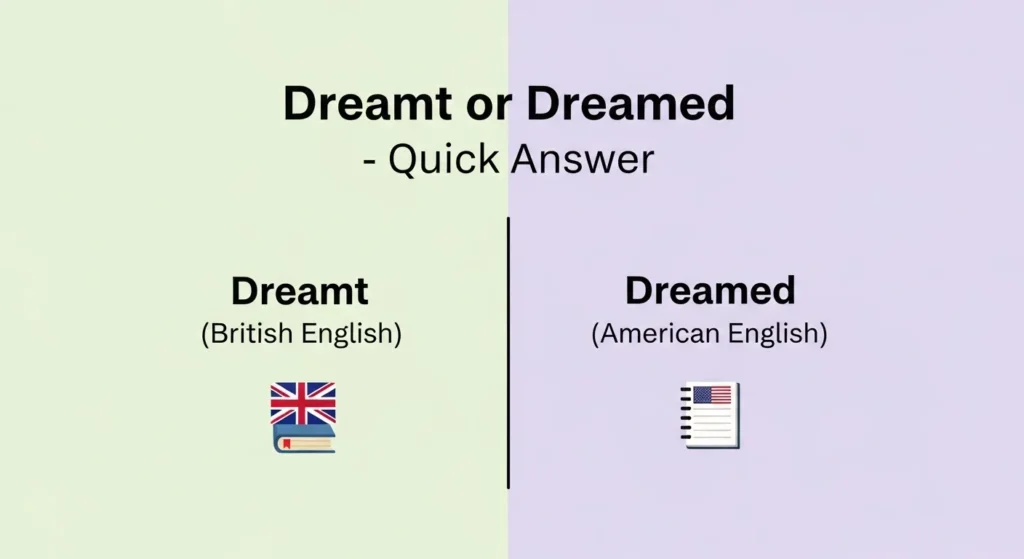
Dreamt and dreamed are both the past tense and past participle of the verb dream.
- Dreamed is more common in American English.
- Dreamt is more common in British English and some Commonwealth countries.
Examples:
- I dreamed about my childhood last night. (American English)
- She dreamt of becoming a doctor. (British English)
- He has dreamed of success for years.
- They have dreamt about traveling the world.
Simple rule:
US English prefers dreamed; UK English prefers dreamt.
The Origin of Dreamt or Dreamed
History of the Word “Dream”
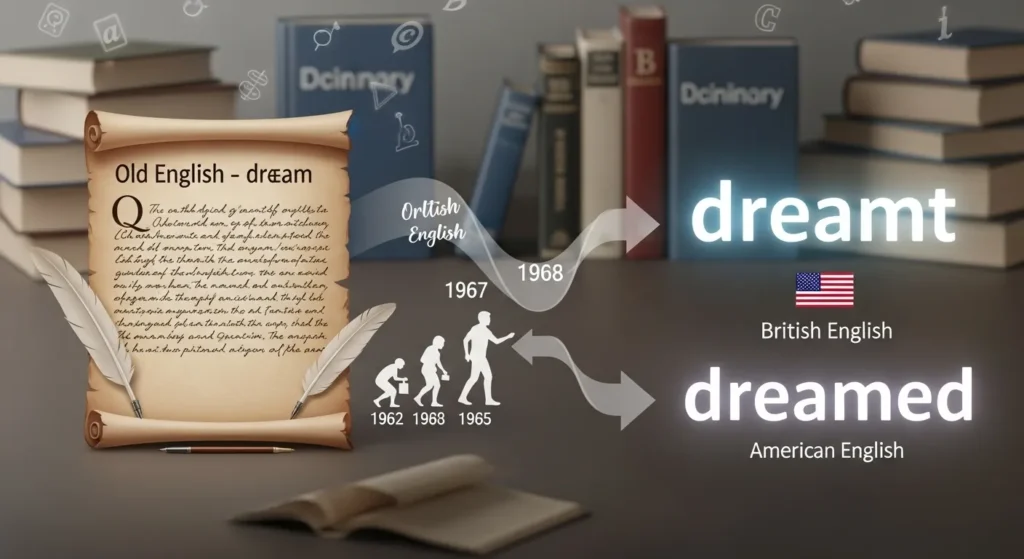
The verb dream comes from Old English drēam, which originally meant joy, music, or celebration. Over time, its meaning changed to refer to thoughts, images, or stories experienced during sleep. As English evolved, the verb dream developed different past tense forms.
Why Two Forms Exist
Originally, English verbs followed different patterns. Some verbs formed the past tense with -ed, while others used irregular forms.
The verb dream followed both patterns over time. The -ed form (dreamed) followed regular verb rules, while dreamt developed by analogy with verbs like sleep → slept and keep → kept.
Influence of Regional English
As British and American English separated, spelling and verb preferences also changed. American English favored regular verb forms like dreamed, while British English continued using shorter irregular forms like dreamt. This is why both forms are correct today.
British English vs American English Spelling
The difference between dreamt and dreamed is mainly regional, not grammatical.
British English Usage
- Preferred form: dreamt
- Used in both speech and writing
Examples:
- She dreamt about her future career.
- He has dreamt of this moment all his life.
American English Usage
- Preferred form: dreamed
- Considered standard in all contexts
Examples:
- I dreamed about flying last night.
- They have dreamed of owning a home.
Comparison Table
| Feature | British English | American English |
| Preferred form | dreamt | dreamed |
| Accepted alternative | dreamed | dreamt (less common) |
| Formal writing | dreamt | dreamed |
| Spoken usage | dreamt | dreamed |
Which Spelling Should You Use?
Writing for American Audiences
If your readers are in the United States, dreamed is the safest and most natural choice. It matches American grammar rules and style guides.
Writing for UK or Commonwealth Audiences
If your audience is in the UK, Australia, New Zealand, or similar regions, dreamt sounds more natural and is widely accepted.
Writing for a Global Audience
For international or mixed audiences, dreamed is often the better option because it is more widely understood and commonly taught to ESL learners.
Professional advice:
Choose the form your audience expects and stay consistent.
Common Mistakes with Dreamt vs Dreamed
Mistake 1: Thinking One Form Is Incorrect
❌ Dreamt is wrong. ✅ Both dreamt and dreamed are correct.
Mistake 2: Mixing Both Forms in One Text
❌ He dreamed big and later dreamt of success. ✅ He dreamed big and later dreamed of success.
Mistake 3: Confusing Past Tense and Past Participle
❌ I have dreamt last night. (American English context) ✅ I dreamed last night.
Mistake 4: Overcorrecting Formal Writing
Some writers think dreamt is more formal everywhere. This is not true. Formal writing follows regional standards.
Dreamt or Dreamed in Everyday Examples
Emails
- I dreamed about the project all night. (US)
- She dreamt of better opportunities. (UK)
News Writing
- The athlete dreamed of winning gold since childhood. (US media)
- He dreamt of political change. (UK media)
Social Media
- I dreamed of this moment 💭
- Never stop what you dreamt of ✨
Formal Writing
- The author dreamed of social reform.
- She had dreamt of success from an early age.
Dreamt or Dreamed: Google Trends & Usage Data
Search interest for “dreamt or dreamed” is high among students, writers, and ESL learners.
Popular Regions
- United States: dreamed dominates
- United Kingdom: dreamt dominates
- Canada: mixed usage
- Australia: dreamt preferred
- India and Pakistan: mixed usage
Usage by Context
- Dreamed appears more in academic and online content
- Dreamt appears more in literature and British publications
The difference is regional preference, not correctness.
Comparison Table: Dreamt vs Dreamed
| Word | Region | Verb Form | Example |
| dreamt | British English | Past / participle | She dreamt of success |
| dreamed | American English | Past / participle | He dreamed of success |
Frequently Asked Questions
Is “dreamt” a real word?
Yes. Dreamt is a correct past tense and past participle of dream.
Is “dreamed” American English only?
It is preferred in American English but understood globally.
Which form should I use in exams?
Use the form that matches the required English variety.
Can I use both forms in the same sentence?
No. Always stay consistent.
Is one form more formal than the other?
No. Formality depends on region, not spelling.
Which form is better for ?
Choose the form your target audience searches for.
Are dreamt and dreamed interchangeable?
Yes, in meaning but not always in regional style.
Conclusion
Both dreamt and dreamed are correct English forms, and neither is a mistake. The difference lies in regional preference, not grammar rules.
American English strongly prefers dreamed, while British and many Commonwealth varieties favor dreamt. Understanding this distinction helps writers sound natural and professional.
If you are writing for an American audience, use dreamed consistently. If your readers are British or from Commonwealth countries, dreamt will feel more familiar.
For international or ESL-focused writing, dreamed is often the safest choice because it follows regular verb patterns.
Small differences like this matter in clear communication. They show awareness of audience and language standards.
By following the guidelines in this article, you can confidently choose the correct form every time and avoid common errors. Whether you dreamed big or dreamt deeply, now your English usage will always be correct.
Related posts!

I am Daniel Wright. I am a English language writer. I focuse on word comparisons and common spelling confusions.
I simplifies tricky English terms to help learners and writers avoid everyday mistakes.
My work is especially useful for students, bloggers, and non-native English readers.
Daniel believes clear language builds confident communication.