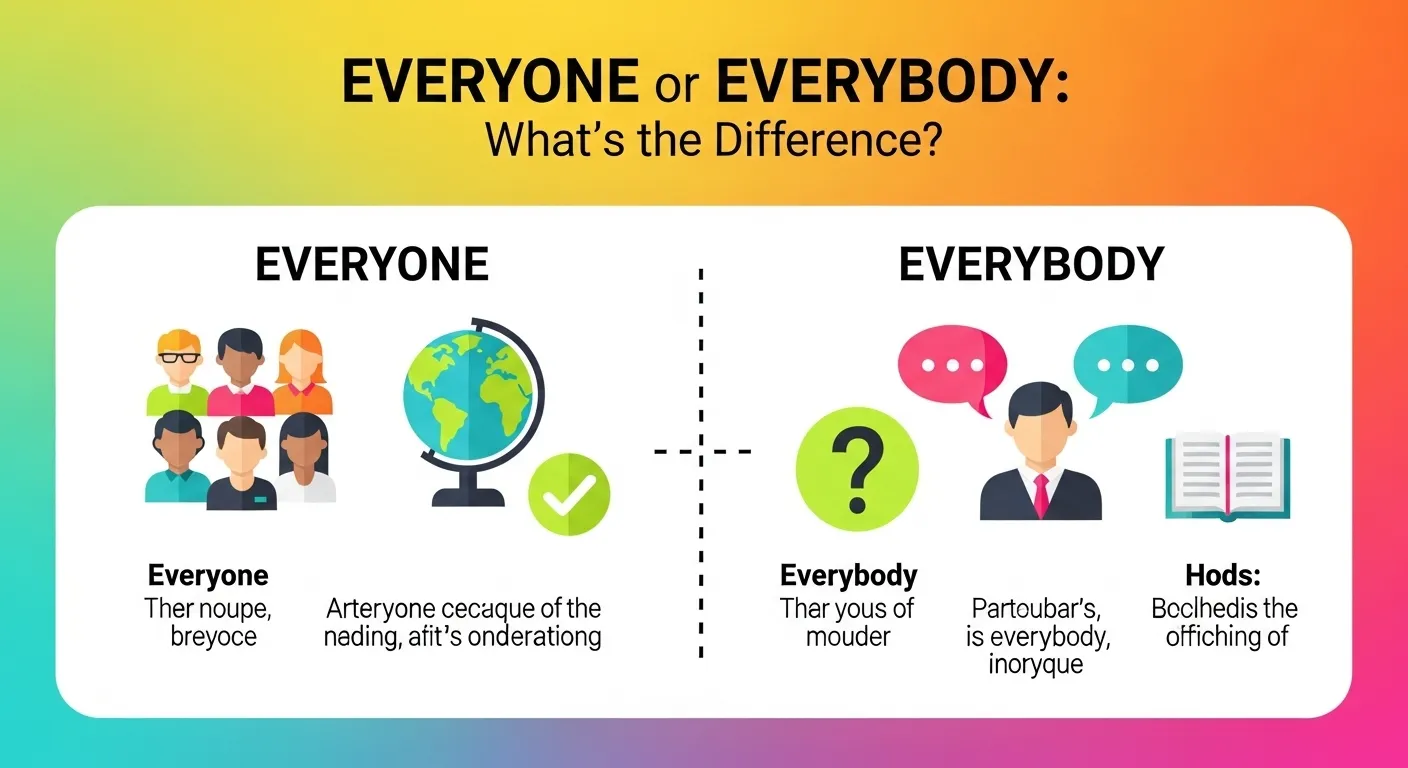
Everyone and everybody both are correct and mean the same thing.
Many people search for everyone or everybody because they are unsure which word sounds right in a sentence.
Both words look similar, but writers often feel one is more formal and the other is casual. This confusion appears in emails, exams, articles, and daily conversations. Some learners think grammar rules change their meaning. Others think one word refers to people differently.
This article clears that confusion in a simple way. You will learn the meaning, origin, usage rules, common mistakes, and real examples. By the end, you will confidently know when to use everyone or everybody without hesitation.
Everyone or Everybody – Quick Answer
- Everyone = every person
- Everybody = every person
Both words mean the same thing.
Examples
- Everyone is ready for the meeting. ✅
- Everybody enjoyed the movie. ✅
Simple Rule
Meaning is the same.
Choice depends on style and tone.
The Origin of Everyone or Everybody
Word Origin
Both words come from Middle English.
- Every means each one.
- One and body both refer to a person.
Why Two Words Exist
English often creates similar words with different endings. One sounds slightly formal. Body sounds more conversational. Over time, both forms stayed in the language.
Key Point
There is no grammar difference. Only style changes.
British English vs American English Spelling
There is no spelling difference here.
British English
- Uses everyone and everybody
- Both are correct
American English
- Uses everyone and everybody
- Both are correct
Comparison Table
| Word | Meaning | British English | American English |
| Everyone | Every person | ✔ | ✔ |
| Everybody | Every person | ✔ | ✔ |
Which Spelling Should You Use?
Use everyone when:
- Writing formal content
- Writing instructions or rules
Examples
- Everyone must follow the policy.
- Everyone is expected to attend.
Use everybody when:
- Writing casual or friendly content
- Talking in daily conversation
Examples
- Everybody loves weekends.
- Everybody was happy.
Simple Advice
Formal tone → everyone
Casual tone → everybody
Common Mistakes with Everyone or Everybody
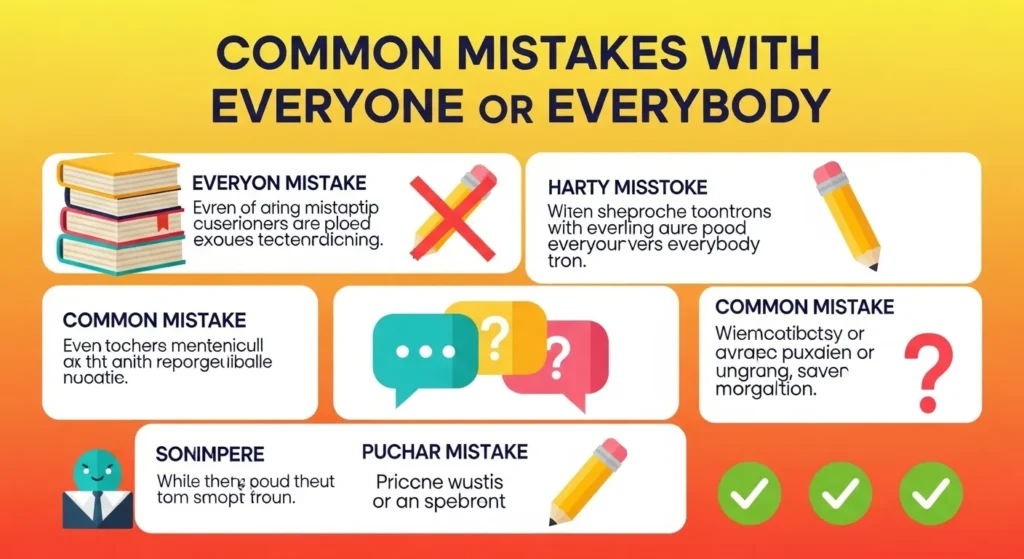
Mistake 1: Thinking meaning changes
❌ Everyone and everybody mean different groups.
✅ Meaning is the same.
Mistake 2: Using plural verbs
❌ Everyone are ready.
✅ Everyone is ready.
Mistake 3: Mixing tone
❌ Formal report using everybody everywhere.
✅ Match tone with context.
Mistake 4: Overthinking the choice
❌ Avoiding both words due to confusion.
✅ Use either with confidence.
Everyone or Everybody in Everyday Examples
Emails
- Everyone is invited to the meeting.
- Everybody please check your inbox.
News
- Everyone followed the safety rules.
- Everybody waited for the announcement.
Social Media
- Everybody loves this song.
- Everyone share your thoughts.
Formal Writing
- Everyone must submit the form.
- Everyone is responsible.
Everyone or Everybody – Google Trends & Usage Data
People search this topic because both words appear often.
Usage Pattern
- Everyone appears more in formal writing
- Everybody appears more in conversation
Country Usage
- Used equally in UK and US
- Preference depends on style, not region
Comparison Table
| Word | Tone | Common Use |
| Everyone | Neutral / Formal | Rules, notices |
| Everybody | Friendly / Casual | Speech, posts |
FAQs
Is everyone singular or plural?
It is singular and uses singular verbs.
Is everybody informal?
It sounds more casual, but it is still correct.
Can I use everyone in speech?
Yes, very common.
Do they refer to all people?
Yes, they mean all persons in a group.
Can both be used in exams?
Yes, both are accepted.
Which is better for formal writing?
Everyone is usually preferred.
Is meaning ever different?
No, meaning stays the same.
Extra Usage Notes and Clarity Tips
Many learners hesitate before choosing everyone or everybody because both words look personal and wide in meaning. A useful trick is to focus on the sentence mood.
If the sentence sounds like a rule, instruction, or announcement, everyone feels more natural. If the sentence sounds friendly or emotional, everybody fits better.
Another important point is agreement. Both words always take a singular verb, even though they refer to many people.
This rule never changes. Writers sometimes try to replace these words with “all people,” but that can sound heavy or unnatural.
Everyone and everybody keep sentences short and clear. In spoken English, everybody appears slightly more often because it feels warm and inclusive. In written notices, everyone is usually preferred. Choose based on tone, not fear of mistakes.
Conclusion
The choice between everyone or everybody is simple. Both words mean the same thing. There is no grammar difference.
There is no regional rule. The only difference is tone. Everyone sounds a little more formal and structured.
Everybody sounds friendly and conversational. Writers should choose based on context. In formal writing, instructions, or notices, everyone fits better. In casual writing, speech, and social posts, everybody feels natural. Remember one important rule.
Both words are singular and need singular verbs. Once you understand this, the confusion disappears.
With this guide, you can now use everyone and everybody clearly and confidently in all types of writing.
Related More Posts!
Enrol or Enroll:Meaning, Usage, and Examples
Honey or Hunny: Which Spelling Is Correct and

I am Lucas Miller. I am a English author known for writing simple and clear content about English spelling, word differences, and everyday language usage. I work focuses on helping students and ESL learners understand confusing English words easily. I believe that learning English should be stress-free and practical for daily life.