Many people search for “fiend vs feen” because they have seen both spellings online and are unsure which one is correct. You might notice “fiend” in books and news articles, but “feen” often appears in social media, slang, or song lyrics.
This creates real confusion, especially for students, writers, and professionals who want to sound clear and correct.
The problem is simple but important. One spelling is a real English word with a long history. The other is usually slang or a misspelling, depending on how it is used.
When people type “feen or fiend” into Google, they want a fast answer, but they also want to know why both versions exist and when each one is acceptable.
This article clears that confusion once and for all. You will get a quick answer, learn the origin of the word, see British and American spelling rules, and understand which spelling you should use for your audience.
You will also see real-life examples, common mistakes, and usage trends. By the end, you will feel confident choosing the right spelling every time.
fiend or feen : Quick Answer

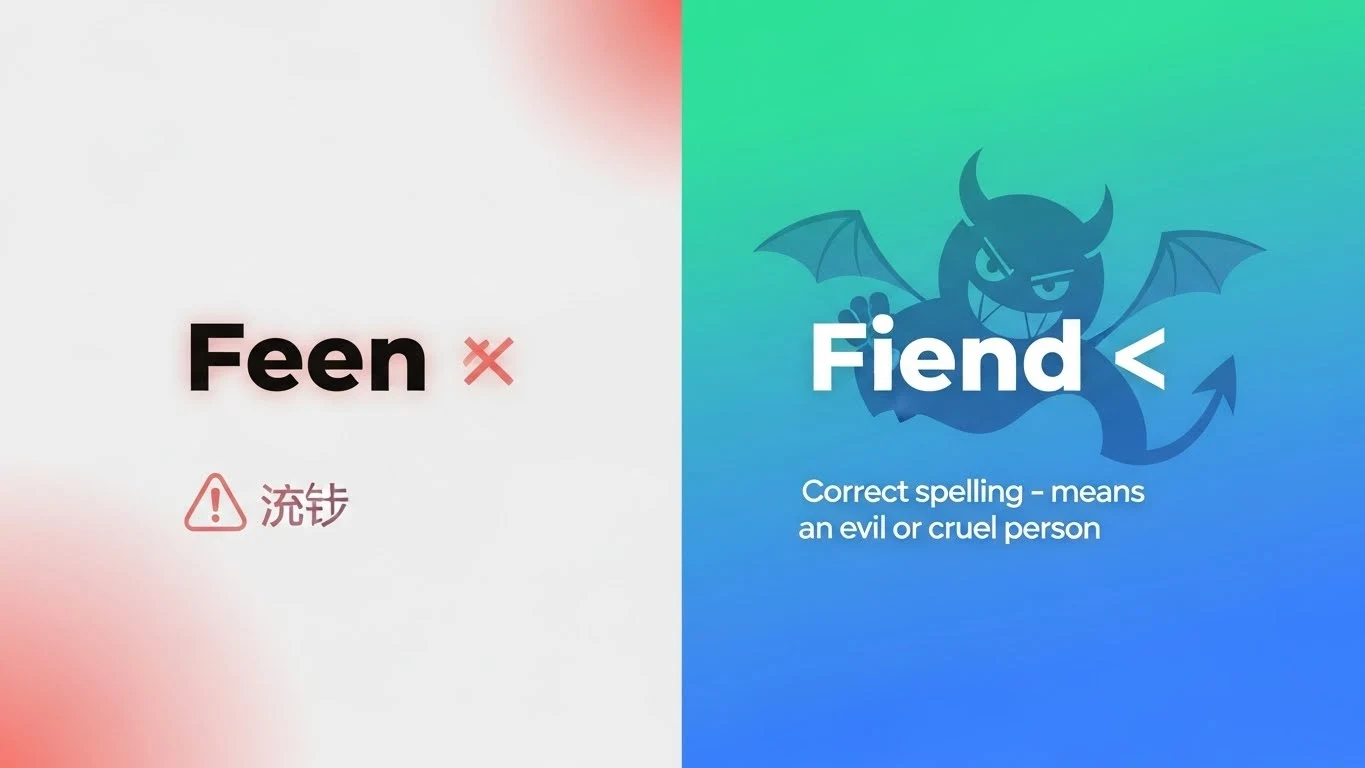
“Fiend” is the correct standard English spelling.
It means an evil person, a demon, or someone obsessed with something.
Examples:
- He is a fiend for video games.
- The villain was described as a cruel fiend.
“Feen” is not a standard English word.
It is usually slang, a phonetic spelling, or a misspelling of fiend, often used in casual speech or music.
The Origin of Feen or Fiend

The word fiend has very old roots. It comes from Old English “fēond”, which meant enemy or hater. This word is related to old Germanic languages and was often used to describe evil spirits or demons.
Over time, fiend kept its negative meaning. It came to describe:
- A demon or devil
- A cruel or wicked person
- Someone with an extreme obsession (like a “coffee fiend”)
So where did “feen” come from?
“Feen” developed much later as slang. In spoken English, especially in fast or casual speech, fiend can sound like “feen.” Some communities began spelling it the way it sounds. Music, texting, and social media helped spread this version.
This is why spelling differences exist. One comes from history and dictionaries. The other comes from sound and culture.
British English vs American English Spelling
In this case, British and American English use the same spelling.
Both prefer fiend.
There is no official difference between British and American spelling for this word, unlike words such as colour/color or centre/center.
Comparison Table
| Variant | British English | American English | Correct? |
| Fiend | ✅ Yes | ✅ Yes | ✅ Correct |
| Feen | ❌ No | ❌ No | ❌ Slang only |
Even though “feen” appears online, it is not accepted in formal writing in either system.
Which Spelling Should You Use?
Your audience matters.
Use fiend if:
- You are writing for school or work
- You are publishing online articles or blogs
- You are writing emails, reports, or news
- Your audience is global
You may see feen if:
- You are reading song lyrics or social posts
- You are quoting slang or dialogue
- You are writing informal fiction or messages
Simple rule:
If in doubt, always choose “fiend.”
It is safe, correct, and widely accepted.
Common Mistakes with Feen or Fiend
Many people make the same errors with this word.
Mistake 1: Using “feen” in formal writing
❌ He is a coffee feen.
✅ He is a coffee fiend.
Mistake 2: Thinking “feen” is American spelling
❌ Americans spell it feen.
✅ Americans also spell it fiend.
Mistake 3: Believing both are correct
❌ Feen and fiend mean the same thing officially.
✅ Only fiend is correct in standard English.
Mistake 4: Using “feen” without context
If you use feen, readers may think it is a typo.
Feen or Fiend in Everyday Examples
Emails
- Correct: He is a detail-oriented fiend at work.
- Incorrect: He is a detail-oriented feen at work.
News
- The hacker was described as a cyber fiend.
Social Media
- I’m a Netflix fiend lately.
- I’m a Netflix feen 😅 (slang, informal)
Formal Writing
- The novel portrays the villain as a heartless fiend.
Casual Chat
- Bro, you a snack fiend.
- Bro, you a snack feen. (slang)
Feen or Fiend : Google Trends & Usage Data
Search interest in “feen or fiend” shows that many users are unsure which spelling is correct
. Most searches come from English-speaking countries like the United States, the United Kingdom, Canada, and Australia.
Fiend is far more common in:
- Books
- News articles
- Academic writing
- Professional websites
Feen appears more often in:
- Song lyrics
- Social media
- Informal forums
- Slang-heavy content
The trend shows a clear pattern: people see “feen” online but search to confirm “fiend.” This means the main intent is spelling verification and correct usage.
read more about!The Origin of Lynx
Comparison Table: Feen vs Fiend
| Feature | Fiend | Feen |
| Dictionary word | Yes | No |
| Formal writing | Correct | Incorrect |
| Slang usage | Rare | Common |
| British English | Accepted | Not accepted |
| American English | Accepted | Not accepted |
| safe usage | Yes | No |
FAQs
1. Is “feen” a real word?
No. It is not recognized in standard English dictionaries.
2. Why do people spell fiend as feen?
Because it sounds similar in spoken English and slang culture.
3. Can I use feen in writing?
Only in informal or creative contexts, like dialogue or lyrics.
4. Is fiend always negative?
Mostly yes, but it can be playful, like “chocolate fiend.”
5. Are feen and fiend pronounced the same?
Yes, in casual speech they often sound alike.
6. Which spelling is better for ?
Fiend is better and more trusted by search engines.
7. Do British and American English differ here?
No. Both use fiend.
Conclusion
The confusion around feen or fiend is common, but the answer is clear. Fiend is the correct and standard spelling in both British and American English.
It has deep historical roots and is accepted in all formal and professional writing.
Feen, on the other hand, is slang or a phonetic spelling that appears mostly in casual conversation, music, and social media.
If your goal is clarity, credibility, and correctness, you should always choose fiend. This is especially important for emails, academic work, blogs, and business communication.
Using the wrong spelling can make your writing look careless, even if readers understand your meaning.
Understanding the difference also helps you read modern content with confidence. You can recognize when “feen” is used for style rather than accuracy.
In short, know your audience, but when unsure, stick with the standard. One correct spelling solves the confusion and that spelling is fiend.
Related posts!

I am Lucas Miller. I am a English author known for writing simple and clear content about English spelling, word differences, and everyday language usage. I work focuses on helping students and ESL learners understand confusing English words easily. I believe that learning English should be stress-free and practical for daily life.