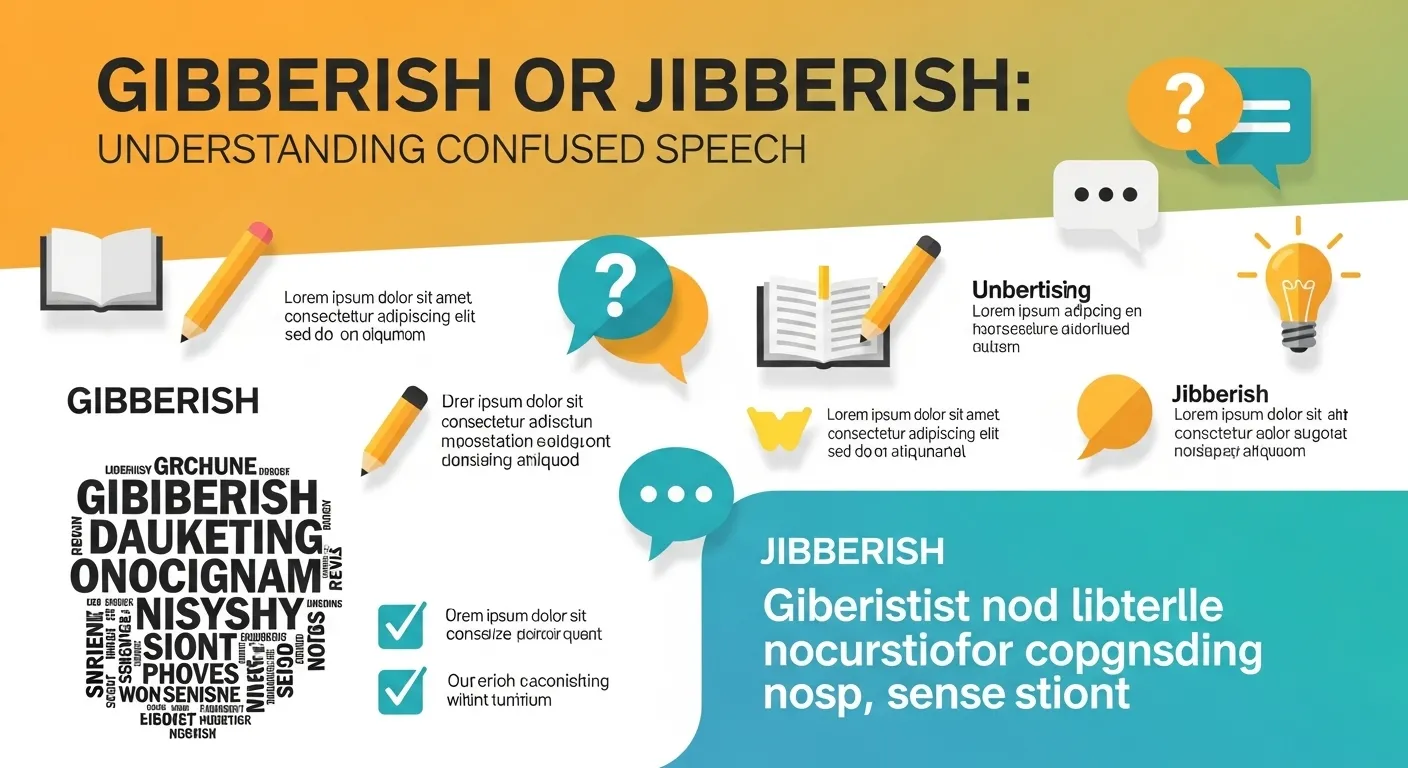
English is full of confusing word pairs, and “gibberish or jibberish” is one of them. Many people see both spellings online and wonder which one is correct.
You might read gibberish in a dictionary, but then notice jibberish used in social media posts, comments, or even blog articles.
This creates doubt, especially for students, writers, bloggers, and non native English learners who want to write correctly.
People usually search for “jiberish or gibberish” when they hear someone speak nonsense, read unclear text, or want to describe meaningless language.
The confusion happens because both spellings sound the same, and English often has silent letters or tricky spellings. However, only one spelling is accepted in standard English.
This article solves that confusion completely. You’ll get a quick answer, learn the origin of the word, understand British vs American usage, see real life examples, and discover
common mistakes people make. By the end, you’ll know exactly which spelling to use and how to use it confidently in emails, writing, exams, and professional work.
Gibberish or Jibberish: Quick Answer
The correct spelling is “gibberish.”
“Jibberish” is incorrect and considered a misspelling.
✅ Correct:
- He was talking complete gibberish.
- The instructions sounded like gibberish to me.
❌ Incorrect:
- He was talking complete jibberish.
- The text looked like jibberish.
Gibberish means speech or writing that has no clear meaning, sounds confusing, or is impossible to understand.
The Origin of Gibberish or Jibberish
The word gibberish dates back to the 16th century. Linguists believe it comes from the verb “gibber” or “jabber,” which means to talk quickly and unclearly.
Over time, gibberish became the noun used to describe meaningless or nonsense speech.
Some theories suggest the word may also be linked to Geber, a medieval alchemist whose writings were hard to understand for common people.
Whether true or not, the idea fits the meaning: language that sounds complex but makes no sense.
So why does “jibberish” exist?
The answer is simple:
- English pronunciation makes the “g” sound soft, like j.
- People write words the way they hear them.
- This leads to the incorrect spelling jibberish.
Despite being common online, jibberish has never been accepted in standard dictionaries.
British English vs American English Spelling
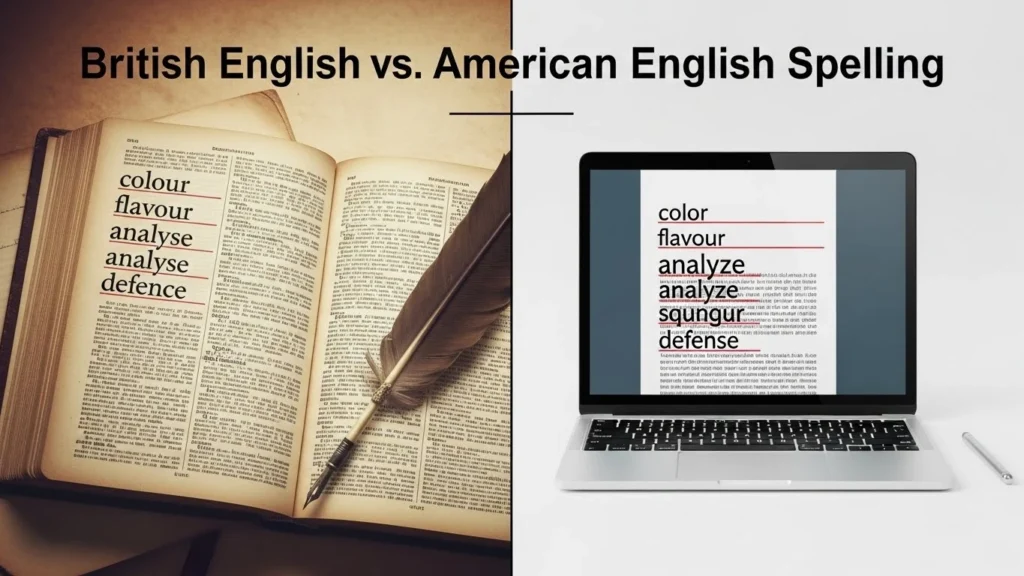
Many English words change spelling between British and American English, such as colour/color or centre/center. This makes people wonder if gibberish or jibberish follows the same rule.
The truth:
There is no difference between British and American English here.
| English Variant | Correct Spelling | Accepted? |
| British English | gibberish | ✅ Yes |
| American English | gibberish | ✅ Yes |
| Any English form | jibberish | ❌ No |
Both UK and US dictionaries recognize gibberish only.
Jibberish is wrong everywhere.
Which Spelling Should You Use?
Your audience matters in writing, but in this case, the rule is simple.
✔ For US audiences
Always use gibberish. American English does not recognize jibberish.
✔ For UK & Commonwealth audiences
Use gibberish only. British English follows the same rule.
✔ For global and online writing
Use gibberish to stay professional and correct worldwide.
Professional tip:
Using jibberish can make your writing look careless, uneducated, or unedited especially in academic or business content.
Common Mistakes with Gibberish or Jibberish
Many people make small but important errors with this word.
❌ Common mistakes:
- Writing jibberish instead of gibberish
- Thinking jibberish is American spelling
- Using it in formal writing without context
- Confusing it with slang or humor only words
✅ Correct usage:
- Use gibberish in both casual and formal contexts.
- Make sure the sentence clearly shows confusion or nonsense.
Gibberish or Jibberish in Everyday Examples
📧 Emails
- “Sorry, the file you sent looks like gibberish on my screen.”
📰 News
- “The leaked audio was mostly gibberish and hard to understand.”
📱 Social Media
- “This update is pure gibberish 😵”
🏢 Formal Writing
- “Without proper formatting, the data appeared as gibberish.”
Gibberish or Jibberish: Google Trends & Usage Data
Search data shows that “gibberish” is widely used in:
- USA
- UK
- Canada
- Australia
- India
“Jibberish” appears in searches mainly because:
- People hear the word but don’t know the spelling
- ESL learners guess the spelling
- Informal internet usage spreads mistakes
In professional content, books, dictionaries, and news articles, gibberish dominates completely.
Comparison Table: Gibberish vs Jibberish
| Feature | Gibberish | Jibberish |
| Correct spelling | ✅ Yes | ❌ No |
| Dictionary listed | ✅ Yes | ❌ No |
| British English | ✅ Accepted | ❌ Wrong |
| American English | ✅ Accepted | ❌ Wrong |
| Formal writing | ✅ Safe | ❌ Avoid |
| content | ✅ Recommended | ❌ Not advised |
FAQs
1. Is “jibberish” ever correct?
No. Jibberish is always incorrect in standard English.
2. Why do people spell gibberish as jibberish?
Because both words sound the same when spoken.
3. Is gibberish informal?
No. It can be used in both informal and formal writing.
4. Can gibberish be used in academic writing?
Yes, when describing unclear language or data.
5. Is gibberish a slang word?
No. It is a standard English word.
6. Does gibberish mean nonsense only?
Mostly yes, but it can also describe coded or unreadable text.
7. What is the verb form of gibberish?
The verb form is “gibber”, meaning to speak quickly and unclearly.
read more about!Simple Examples:
Conclusion
The confusion between gibberish or jibberish is common, but the rule is very clear. Gibberish is the only correct spelling, accepted in both British and American English.
The word has a long history and is widely used in everyday speech, professional writing, and formal communication. On the other hand, jibberish is simply a spelling mistake, often caused by pronunciation confusion.
If you want your writing to look professional, accurate, and polished, always choose gibberish. Whether you’re writing an email, a blog post, a school essay, or a business report, using the correct spelling builds trust and clarity.
Remember, English already has enough tricky words there’s no need to add mistakes by using incorrect spellings.
When in doubt, check a dictionary or remember this simple rule:
👉 Sounds like “j,” spelled with “g.”
Related posts!
Crises or Crisis : Quick Answer

I am Lucas Miller. I am a English author known for writing simple and clear content about English spelling, word differences, and everyday language usage. I work focuses on helping students and ESL learners understand confusing English words easily. I believe that learning English should be stress-free and practical for daily life.