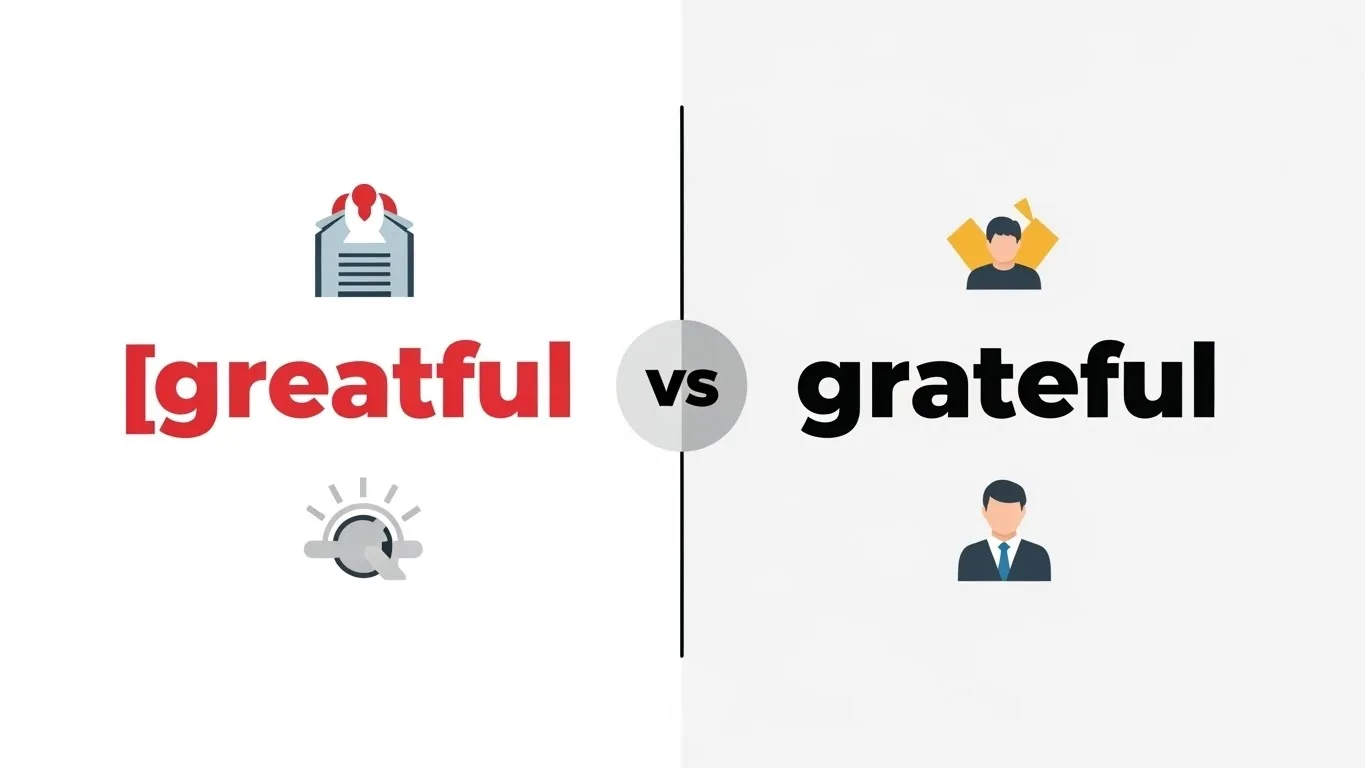
Grateful is the correct spelling; greatful is incorrect, and knowing this instantly answers the search query. Many people search for “greatful or grateful” because both words sound almost the same when spoken, and spelling mistakes are very common in emails, social
media posts, and even professional writing. Writers often assume that “greatful” comes from the word “great,” but English spelling does not always follow sound-based logic. This confusion can lead to embarrassing errors, especially when expressing thanks or
appreciation. This article clears all confusion by explaining the correct spelling, its origin, usage rules, examples, trends, and expert advice in very simple language. By the end, you will confidently use grateful the right way every time.
Greatful or Grateful: Quick Answer
Grateful is the only correct spelling.
Greatful is not a real English word and is always incorrect.
Examples:
- I am very grateful for your help. ✅
- She felt grateful after receiving support. ✅
❌ I am greatful for your help. (Incorrect)
Easy rule: If you mean thankful or appreciative, always use grateful.
The Origin of Greatful or Grateful
Origin of “Grateful”
The word grateful comes from the Latin word gratus, which means pleasing, thankful, or appreciative. It entered English through Old French and Middle English, keeping its core meaning of showing thanks or appreciation. Over time, the spelling settled as grateful, with the letters “grate” connected to appreciation, not greatness.
Why “Greatful” Exists as a Mistake
The incorrect spelling greatful appears because:
- It sounds similar to grateful
- People associate gratitude with something “great”
- English learners rely on pronunciation instead of word history
However, greatful has no root, no dictionary meaning, and no grammatical acceptance in standard English.
Why the Confusion Persists
- Same pronunciation in fast speech
- Heavy use in emotional writing
- Frequent misuse on social media
Despite common usage online, greatful remains incorrect.
British English vs American English Spelling
There is no spelling difference between British and American English for this word.
American English
- Correct: grateful
- Incorrect: greatful
Example:
- I am grateful for this opportunity.
British English
- Correct: grateful
- Incorrect: greatful
Example:
- She was grateful for the support.
Comparison Table
| Feature | Grateful | Greatful |
| Correct spelling | ✅ Yes | ❌ No |
| Used in US English | ✅ Yes | ❌ No |
| Used in UK English | ✅ Yes | ❌ No |
| Dictionary entry | ✅ Yes | ❌ No |
| Meaning | Thankful | None |
Which Spelling Should You Use?
For US Audiences
Always use grateful. The spelling greatful is considered a basic error in American English.
For UK & Commonwealth Audiences
Use grateful in all formal and informal writing. British English does not accept greatful either.
For Global or Professional Writing
In global communication, spelling mistakes reduce credibility. Grateful is the only professional choice.
Expert tip: Remember that grateful comes from “gratitude,” not “great.”
Common Mistakes with Greatful or Grateful
Mistake 1: Linking It to “Great”
❌ I am greatful for your kindness. ✅ I am grateful for your kindness.
Mistake 2: Repeating Online Errors
Just because you see greatful on social media does not make it correct.
Mistake 3: Auto-correct Ignorance
Some keyboards fail to correct “greatful,” but grammar rules still apply.
Mistake 4: Mixing It with Similar Words
- Grateful = thankful
- Graceful = elegant
They are different words with different meanings.
Greatful or Grateful in Everyday Examples
Emails
- I am grateful for your quick response.
- We are grateful for your cooperation.
News Writing
- The community is grateful for the relief efforts.
Social Media
- Feeling so grateful today 🙏
- Forever grateful for this support.
Formal Writing
- The author expresses grateful acknowledgment to the contributors.
Greatful or Grateful: Google Trends & Usage Data
Search trends show that “greatful or grateful” is a highly searched keyword, especially among English learners.
Popularity by Region
- United States: High correction-related searches
- United Kingdom: Strong interest from students
- India, Pakistan, Philippines: Very high ESL searches
Why People Search This Term
- Frequent spelling mistakes
- Emotional writing contexts
- Social media influence
Key Insight
Professional, academic, and news writing only use grateful. The form greatful does not appear in credible sources.
Comparison Table: Greatful vs Grateful
| Word | Correct? | Meaning | Usage |
| grateful | ✅ Yes | Thankful, appreciative | I am grateful |
| greatful | ❌ No | No meaning | Incorrect |
FAQs About Greatful or Grateful
Is “greatful” ever correct?
No. Greatful is always incorrect.
Why do people write “greatful”?
Because it sounds similar to grateful and looks like it comes from “great.”
Is “grateful” used in British English?
Yes. British and American English both use grateful.
What is the noun form of grateful?
The noun form is gratitude.
Can “grateful” be used formally?
Yes. It is common in formal, academic, and professional writing.
Is “grateful” positive or negative?
It is always positive and expresses appreciation.
How can I remember the correct spelling?
Link grateful with gratitude, not “great.”
Conclusion
Understanding the difference between greatful or grateful is simple once you know the rule. Grateful is the correct and only accepted spelling, while greatful is a common but
incorrect mistake. This error usually happens because people associate gratitude with something “great,” but English spelling is based on word history, not sound or emotion.
This rule is the same in American English, British English, and global English. That makes it easy to remember and apply everywhere. Whether you are writing an email, posting on
social media, working on an essay, or communicating professionally, always choose grateful. Correct spelling improves clarity, trust, and confidence in your writing.
By following the explanations, examples, tables, FAQs, and usage advice in this guide, you can fully solve this common confusion. Small spelling choices like this make a big difference in strong and professional English communication.
Related posts!
Desert or Dessert: Quick Answer

I am Daniel Wright. I am a English language writer. I focuse on word comparisons and common spelling confusions.
I simplifies tricky English terms to help learners and writers avoid everyday mistakes.
My work is especially useful for students, bloggers, and non-native English readers.
Daniel believes clear language builds confident communication.