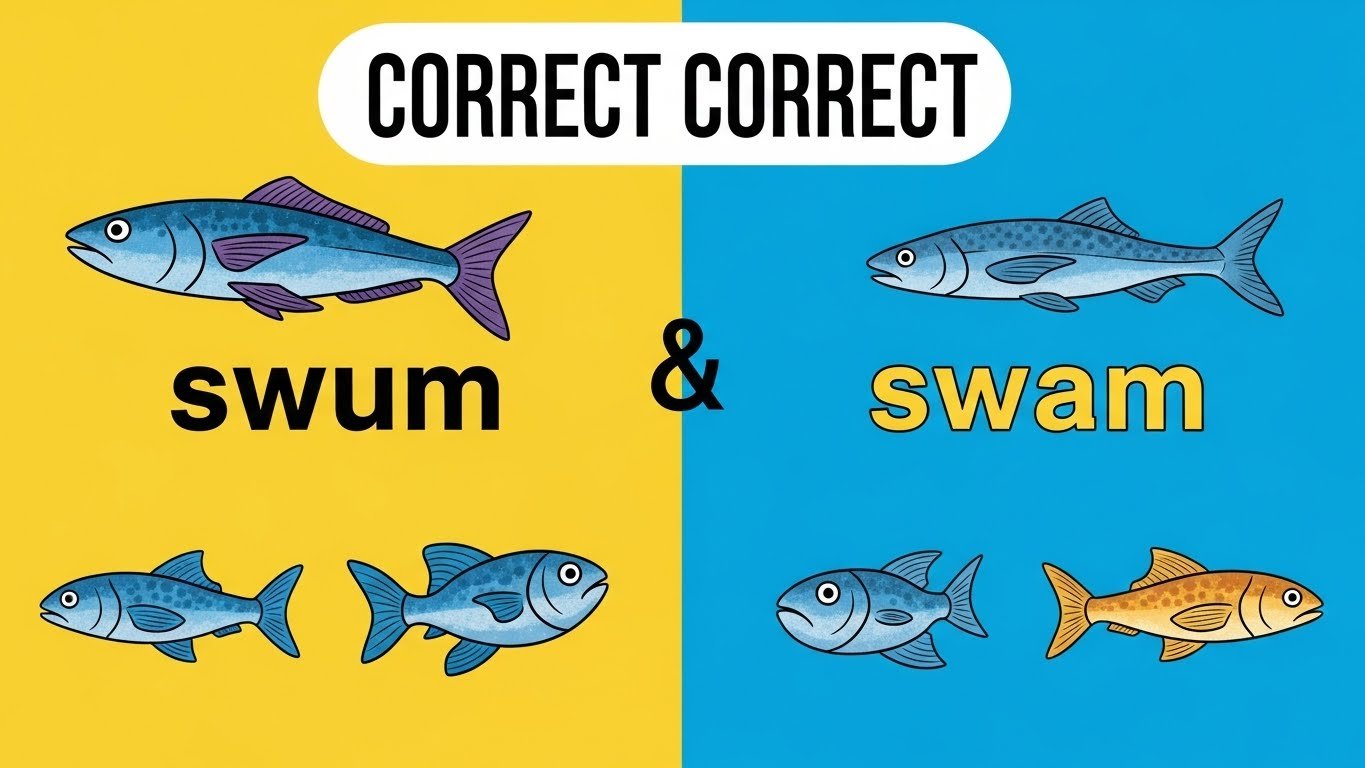
Many English learners and even native speakers search for “swam or swum” because both words come from the same verb, swim, yet they are used differently.
At first glance, they look interchangeable, which creates confusion in writing, exams, emails, and everyday conversation. Using the wrong form can make your sentence sound incorrect or unprofessional, especially in formal English.
The main reason people search for swum or swam is tense confusion. English has irregular verbs, and swim is one of them.
Instead of following the regular “-ed” rule, it changes form depending on how it is used in a sentence. Learners often ask questions like: Is it I swam or I have swum? Can I say I have swam? These doubts are common and completely normal.
This article solves that confusion in a simple and clear way.
You will get a quick answer, detailed explanations, real life examples, common mistakes, and professional advice. By the end, you will know exactly when to use swum and when to use swam with confidence.
Swum or Swam: Quick Answer
Swam is the simple past tense of swim. It is used for actions completed in the past.
Swum is the past participle of swim. It must be used with a helping verb such as has, have, had, or been.
Examples:
- I swam in the pool yesterday. ✅
- I have swum in the ocean before. ✅
❌ I have swam in the ocean. (Incorrect)
The Origin of Swum or Swam
The words swum and swam both come from the Old English verb swimman, which meant “to move through water.” Like many old verbs, swim developed irregular forms over time.
Historically, English kept strong verb patterns where vowel sounds changed instead of adding endings. This is why we have:
- swim (present)
- swam (past)
- swum (past participle)
The spelling differences exist because English evolved from Germanic languages that relied on sound changes. Over centuries, these forms became fixed. That is why swam and swum look different but share the same root meaning.
British English vs American English Spelling

There is no spelling or usage difference between British English and American English for swum or swam. Both follow the same grammar rules.
Examples
- British English: I swam in the river last summer.
- American English: I have swum in that lake before.
Comparison Table
| Feature | British English | American English |
| Base verb | swim | swim |
| Simple past | swam | swam |
| Past participle | swum | swum |
| Grammar rules | Same | Same |
Which Spelling Should You Use?
The correct choice depends on sentence structure, not region.
- For US audiences: Follow standard tense rules (swam for past, swum with helping verbs).
- For UK/Commonwealth audiences: The same rules apply.
- For global audiences: Use clear grammar and avoid mixing forms.
Tip: If your sentence has have, has, or had, always use swum.
Common Mistakes with Swum or Swam
Mistake 1: Using “swum” alone
❌ I swum yesterday. ✅ I swam yesterday.
Mistake 2: Using “swam” with helping verbs
❌ I have swam there before. ✅ I have swum there before.
Mistake 3: Mixing time expressions
❌ Yesterday, I have swum for an hour. ✅ Yesterday, I swam for an hour.
Swum or Swam in Everyday Examples
Emails
- I swam during my vacation last week.
- I have swum regularly to stay fit.
News
- The athlete swam across the channel.
- She has swum in international competitions.
Social Media
- I just swam for 30 minutes! 🏊
- I’ve swum in colder water than this.
Formal Writing
- The researcher had swum daily as part of training.
Swum or Swam: Google Trends & Usage Data
Search data shows that “swum or swam” is commonly searched in:
- South Asia (India, Pakistan)
- Southeast Asia
- English-learning regions worldwide
Most searches come from students, exam candidates, and ESL learners. The confusion usually appears in grammar tests and spoken English. “Swam” appears more in storytelling, while “swum” appears more in formal and perfect tense writing.
read more about!Unshakable or Unshakeable: Which Spelling Is Correct?
Comparison Table: Swum vs Swam
| Form | Type | Used With | Example |
| Swam | Simple past | No helping verb | I swam yesterday |
| Swum | Past participle | has/have/had | I have swum before |
FAQs
Is “swum” a real word?
Yes, swum is the correct past participle of swim.
Can I say “I have swam”?
No. The correct form is I have swum.
Is “swam” present tense?
No. Swam is simple past tense.
Which is correct: I swam or I have swum?
Both are correct, depending on the tense.
Is there any difference in British and American usage?
No, both use the same rules.
Why is “swim” irregular?
Because it follows old Germanic strong verb patterns.
Conclusion
Understanding the difference between swum or swam is easier than it seems once you know the basic tense rules.
Both words are correct, but they are used in different grammatical situations. Swam is used for completed actions in the past, while swum is used with helping verbs in perfect tenses.
This small distinction can make a big difference in how professional and accurate your English sounds.
Whether you are writing an email, preparing for an exam, posting on social media, or working on formal content, choosing the correct form shows strong language skills.
Remember one simple rule: if your sentence includes have, has, or had, use swum. If the action happened at a clear time in the past, use swam.
With this guide, you now have a quick answer, detailed explanation, and practical advice all in one place.
Related posts!

I am Lucas Miller. I am a English author known for writing simple and clear content about English spelling, word differences, and everyday language usage. I work focuses on helping students and ESL learners understand confusing English words easily. I believe that learning English should be stress-free and practical for daily life.