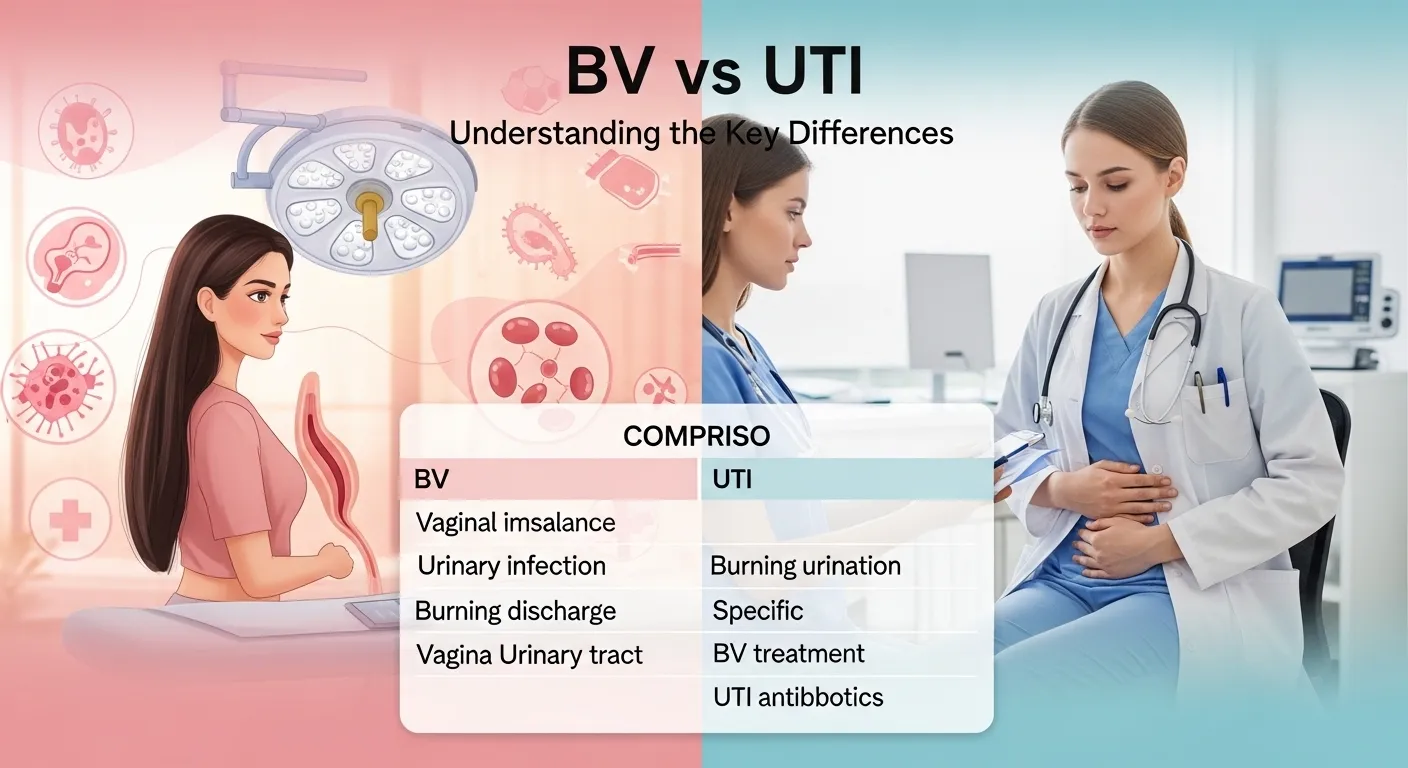
BV is a vaginal bacterial imbalance, while a UTI is an infection of the urinary tract.
Many people search “BV or UTI” because the symptoms can feel similar, such as burning, discomfort, or unusual changes in the body.
This creates confusion, especially for women trying to understand what is happening and when to seek medical care. Some think both conditions are the same infection, while others treat the wrong problem first.
Knowing the difference is important because each condition has different causes and treatments.
This guide explains definitions, symptoms, origins of the terms, comparisons, examples, and clear advice to help you understand both conditions confidently.
📖 Definition of BV or UTI
🌺 Definition of BV (Bacterial Vaginosis)
Bacterial Vaginosis (BV) is a condition caused by an imbalance of natural bacteria inside the vagina.
Good and harmful bacteria normally stay balanced, but BV happens when harmful bacteria grow more than normal.
BV is not officially classified as a sexually transmitted infection, though sexual activity can influence it.
🚻 Definition of UTI (Urinary Tract Infection)
A UTI is an infection affecting parts of the urinary system, including:
- bladder
- urethra
- ureters
- kidneys
UTIs are usually caused by bacteria entering the urinary tract, most commonly E. coli bacteria.
Simple Definitions Table
| Condition | Definition |
| BV | Vaginal bacterial imbalance |
| UTI | Infection in urinary system |
Easy Understanding
- BV → Vaginal bacteria problem
- UTI → Urinary infection
✅ BV vs UTI: Quick Answer
BV and UTI are different conditions even though symptoms may overlap.
- BV mainly causes odor and discharge changes.
- UTI mainly causes pain during urination and frequent urge to pee.
Quick Examples
- Fishy odor and thin discharge → likely BV
- Burning while urinating and constant urge → likely UTI
Fast Comparison
| Symptom | BV | UTI |
| Vaginal odor | Common | Rare |
| Burning pee | Mild or none | Common |
| Frequent urination | No | Yes |
| Discharge changes | Yes | Usually no |
📜 The Origin of BV or UTI
🌺 Origin of the Term BV
The term Bacterial Vaginosis comes from medical Latin:
- Bacterial = related to bacteria
- Vaginosis = condition affecting the vagina
Doctors began using this term in the 20th century when research showed symptoms were caused by bacterial imbalance rather than a single infection.
Earlier names included “nonspecific vaginitis,” but BV became the accepted medical term because inflammation is often minimal.
🚻 Origin of the Term UTI
Urinary Tract Infection is a descriptive medical phrase.
- Urinary refers to urine system
- Tract means connected organs
- Infection means bacterial invasion
The term became common as modern medicine classified infections based on body systems.
Why Confusion Exists
Both conditions:
- affect nearby body areas
- cause discomfort
- may include burning sensations
But they involve different systems:
- BV → reproductive system
- UTI → urinary system
🇬🇧🇺🇸 British English vs American English Spelling
Medical terms BV and UTI remain the same worldwide. There are no spelling differences between British and American English.
Examples
- UK: She was treated for BV.
- US: She was treated for BV.
- UK: The doctor diagnosed a UTI.
- US: The doctor diagnosed a UTI.
Comparison Table
| Term | British English | American English | Change |
| BV | BV | BV | No |
| UTI | UTI | UTI | No |
Medical abbreviations stay consistent globally for clarity.
🌍 Which Spelling Should You Use?
Since BV and UTI are medical abbreviations, spelling does not change by region. The focus should be on correct usage.
🇺🇸 United States Audience
Use:
- BV
- UTI
These abbreviations are widely recognized in healthcare communication.
🇬🇧 UK & Commonwealth Audience
The same abbreviations apply in medical writing and public health information.
🌎 Global Audience
You may write the full form first, then abbreviation:
Bacterial Vaginosis (BV)
Urinary Tract Infection (UTI)
This helps readers understand immediately.
⚠️ Common Mistakes with UTI or BV
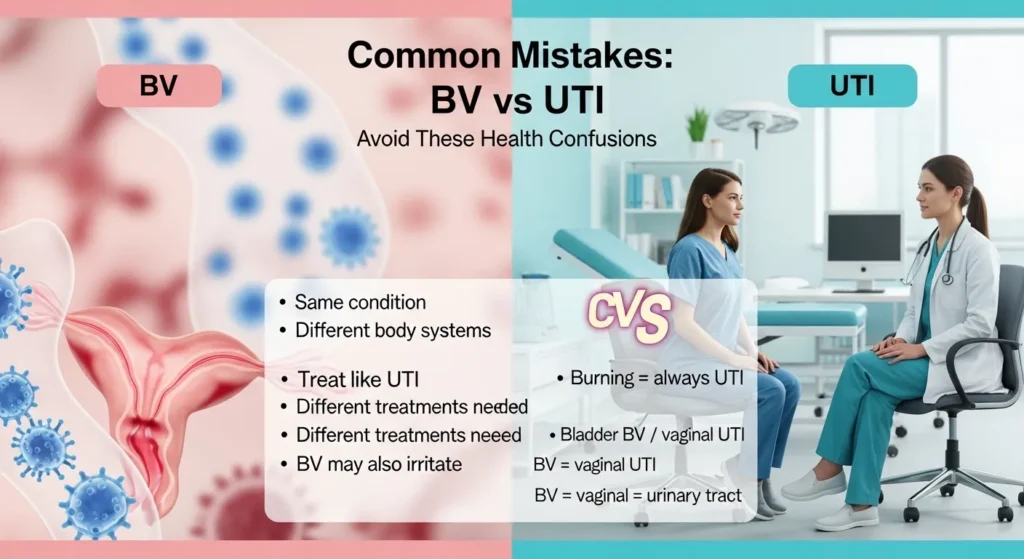
1. Thinking They Are the Same Condition
They affect different body systems and require different treatment.
2. Treating BV Like a UTI
UTI medicines may not fix BV because causes differ.
3. Ignoring Vaginal Odor
Strong odor is more linked to BV than UTI.
4. Assuming Burning Always Means UTI
BV can sometimes cause irritation too.
5. Self-Diagnosing Without Testing
Medical testing helps confirm the correct condition.
6. Incorrect Usage of Terms
Wrong
- bladder BV
- vaginal UTI
Correct
- BV affects vagina
- UTI affects urinary tract
✉️ BV and UTI in Everyday Examples
Emails
- I visited the clinic because I suspected a UTI.
- The doctor confirmed BV after testing.
News Writing
- Health experts warn about rising UTI cases.
- Awareness campaigns educate women about BV symptoms.
Social Media
- I learned BV and UTI are different conditions.
- Stay hydrated to reduce UTI risk.
Formal Writing
- BV results from bacterial imbalance in vaginal flora.
- UTIs remain one of the most common infections worldwide.
📊 BV or UTI: Google Trends & Usage Data
Search interest for “BV or UTI” increases as people try to understand symptoms before visiting healthcare providers.
High Interest Regions
United States
- Strong searches related to urinary symptoms and treatment guidance.
United Kingdom
- Increased awareness campaigns about vaginal health.
India
- High student and health-information searches.
Canada & Australia
- Balanced searches for both conditions.
Why Searches Are Increasing
- Greater health awareness
- Online symptom research
- Easier access to health information
- Increased discussion of women’s health topics
People often compare symptoms to understand their condition faster.
📋 Comparison Table: BV vs UTI
| Feature | BV | UTI |
| Body Area | Vagina | Urinary tract |
| Cause | Bacterial imbalance | Bacterial infection |
| Common Symptom | Odor & discharge | Burning urination |
| Urination Frequency | Normal | Increased |
| Treatment | Antibiotics specific to BV | Antibiotics for UTI |
| Sexual Activity Link | Possible influence | Not required |
| Medical Testing | Vaginal sample | Urine test |
❓ FAQs About BV or UTI
1. Can BV turn into a UTI?
No. They are separate conditions, though both can occur at the same time.
2. Which is more painful?
UTIs usually cause stronger burning and bladder discomfort.
3. Does BV cause frequent urination?
Usually no. Frequent urination is more linked to UTI.
4. Can dehydration cause BV?
Dehydration mainly increases UTI risk, not BV directly.
5. Do both need medical treatment?
Yes. Proper diagnosis ensures correct medicine.
6. Can symptoms overlap?
Yes, which is why testing is important.
7. When should someone see a doctor?
If symptoms last more than a few days or worsen.
🧾 Conclusion
Understanding the difference between BV and UTI helps people respond quickly and correctly to symptoms.
BV is a bacterial imbalance inside the vagina that often causes odor and discharge changes, while a UTI is an infection of the urinary tract that leads to burning urination and frequent bathroom visits. Although symptoms may feel similar at first, the causes and treatments are different.
Recognizing key signs such as odor for BV and urination pain for UTI makes identification easier.
Medical testing remains the safest way to confirm the condition and receive proper treatment. Clear knowledge reduces confusion and prevents unnecessary stress.
By learning how each condition works, individuals can communicate better with healthcare providers and take informed steps toward recovery and long-term health comfort.
Discover More Articala!
🐋 Orca or Whale: What Is the Real Difference?
Honey or Hunny: Which Spelling Is Correct and How to Use It
🌾 Artisan or Agriculturist: Meaning, Differences and Explained

