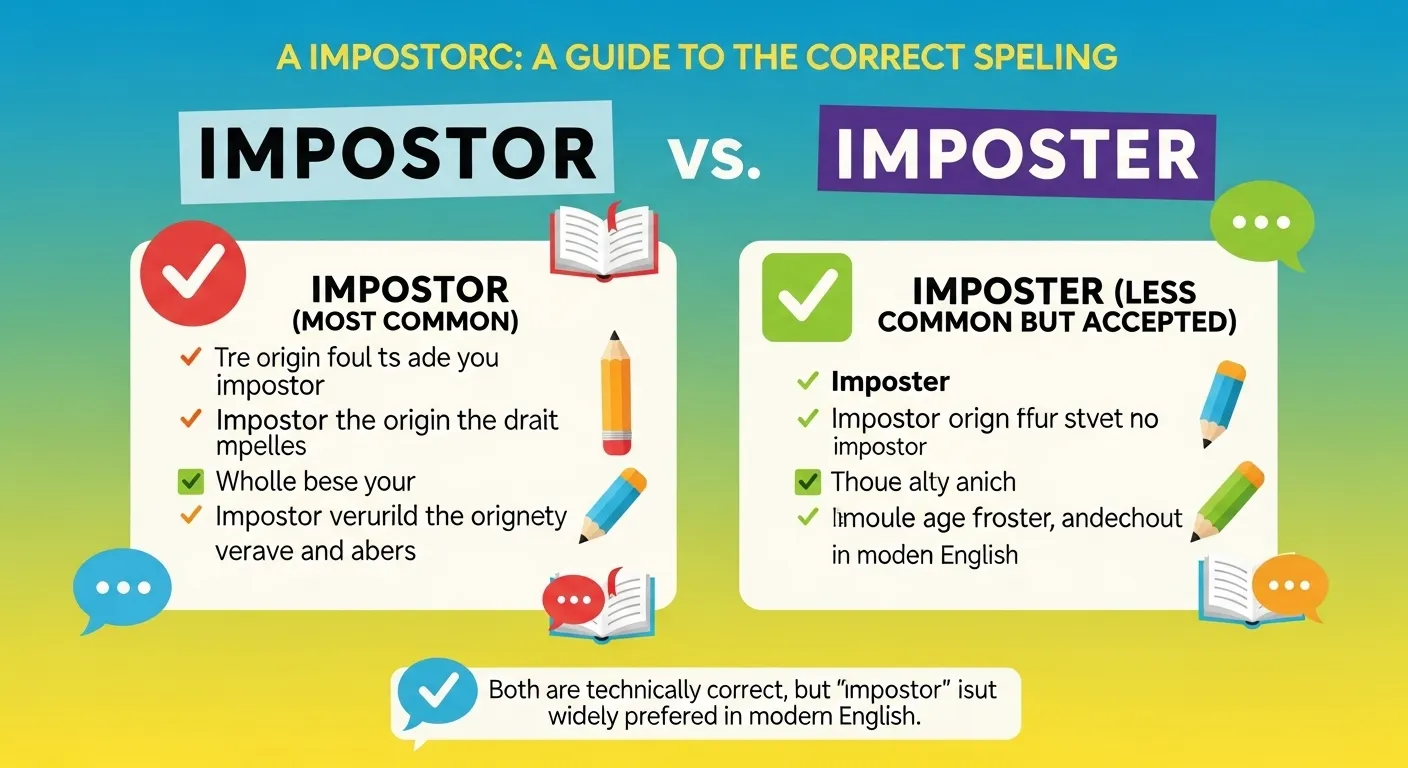
“Impostor” and “imposter” are both correct, but “impostor” is preferred in modern and formal English..
Many people search for “impostor or imposter” because both look correct and are used online, in articles, and social media. Writers, students, and professionals often get confused.
Choosing the wrong form can make writing seem unprofessional. This article clarifies the confusion. You will get a quick answer, history, and usage rules.
Simple sentences make it easy to understand. By the end, you will know when to use impostor or imposter, common mistakes to avoid, and practical examples and formal contexts.
Impostor or Imposter: Quick Answer
Impostor is the correct modern spelling.
Imposter is an accepted variant, but less common.
Examples:
- The man was revealed as an impostor. ✅
- She felt like an impostor at her new job. ✅
❌ He is an imposter. (Less recommended)
Simple rule:
Use impostor in all formal and professional contexts.
The Origin of Impostor or Imposter
Word Origin
The word impostor comes from Latin impostor, meaning one who deceives or cheats. The verb imponere means to place upon or impose, which is the root of the term.
It entered English in the late 16th century to describe someone pretending to be someone else.
Why “Impostor” Became Standard
English often prefers -or for nouns indicating people or agents. Examples:
- actor, mentor, governor
Hence, impostor follows this pattern.
Why “Imposter” Exists
Some writers adapted the word to the more familiar -er ending (like player, teacher). Over time, it became a variant, mostly in informal writing.
Why Both Appear Online
Older texts, social media posts, and informal articles often use imposter, keeping the confusion alive. Modern dictionaries favor impostor.
British English vs American English Spelling
Both British and American English accept impostor, but imposter is also seen, especially in the US.
British English
- Correct: She is an impostor.
- Less common: imposter (accepted in informal texts)
American English
- Correct: He is an impostor.
- Common variant: imposter
Comparison Table
| Feature | British English | American English |
| Impostor | Standard | Standard |
| Imposter | Rare/Informal | Less formal usage |
| Preferred in writing | Impostor | Impostor |
| Accepted in dictionaries | Yes | Yes |
Key point: Use impostor in all formal writing globally.
Which Spelling Should You Use?
For US Audiences
Always use impostor in professional, academic, or official writing.
For UK and Commonwealth Audiences
Impostor is standard. Imposter is informal.
For Global English
Use impostor to match dictionaries and search intent.
For Journalism, Legal, and Academic Writing
Impostor is preferred.
Professional advice:
Always choose impostor unless quoting an informal or historical source.
🔍 Impostor vs Imposter: Spelling Difference Explained
Many users search terms like impostor vs imposter, difference between impostor and imposter, or is it impostor or imposter to confirm the correct spelling.
The key difference is simple:
- Impostor → preferred modern and standard spelling
- Imposter → accepted variant, but less formal
Both words mean the same thing: a person who pretends to be someone else.
You may also see related variations like:
- impostors or imposters
- imposter vs impostor spelling difference
- imposter or impostor UK
👉 Important rule:
Use impostor in professional, academic, and global writing.
Example:
- The system detected multiple impostors. ✅
- He was exposed as an impostor. ✅
👉 Tip: Even though both forms appear online, impostor is the safer and more trusted choice.
Common Mistakes with Impostor or Imposter
Mistake 1: Thinking It Is US vs UK Difference
❌ Imposter is American
✅ Impostor is standard in both regions.
Mistake 2: Using Imposter in Formal Writing
❌ The company fired the imposter.
✅ The company fired the impostor.
Mistake 3: Mixing Both in One Document
Switching between imposter and impostor looks careless. Stick to impostor.
Mistake 4: Relying on Old Websites
Older posts may use imposter. Modern usage favors impostor.
Impostor or Imposter in Everyday Examples
In Emails
- Please report if you notice an impostor account.
- The team detected an impostor in the system.
In News Writing
- Authorities arrested a financial impostor.
- The politician exposed an impostor claiming his identity.
On Social Media
- Don’t fall for impostor accounts! 🚫
- Spotted an impostor on Instagram 😱
In Formal Writing
- The study discusses identity theft by impostors.
- Court documents described the suspect as an impostor.
In Academic Papers
- Impostors can affect workplace dynamics and employee trust.
- Interviews revealed feelings of being an impostor among students.
Impostor or Imposter: Google Trends & Usage Data
Overall Popularity
Search data shows impostor dominates globally.
Country-Based Trends
- United States: Impostor leads
- United Kingdom: Impostor dominant
- Canada & Australia: Impostor preferred
- India & Pakistan: Impostor searched more than imposter
Context-Based Usage
- Psychology: impostor syndrome
- News: impostor fraud, impostor identity
- Social media: imposter alerts
Insight: People search imposter mainly to check spelling or in informal posts.
🌍 Impostor or Imposter in Different Regions
People often search:
- impostor or imposter UK
- imposter spelling UK
- is it spelled impostor or imposter
- imposter or impostor which is correct
Here is how usage works globally:
- United Kingdom → impostor is standard
- United States → impostor preferred, imposter also seen
- Canada & Australia → impostor dominates
- India & Pakistan → impostor more common in search and writing
This is why queries like imposter vs impostor meaning or correct spelling of imposter are very popular.
Key insight:
Even where imposter appears, impostor is still the dictionary-preferred spelling.
Best practice:
Choose impostor for all audiences to maintain clarity and professionalism.
Comparison Table: Impostor vs Imposter
| Feature | Impostor | Imposter |
| Modern usage | Common | Less common |
| Dictionary preference | High | Medium |
| Professional writing | Recommended | Not recommended |
| Meaning | Same | Same |
Frequently Asked Questions
Is imposter a correct word?
Yes, but it is less formal and not preferred.
Which is correct: impostor or imposter?
Impostor is correct in modern English.
Is imposter US English?
No. Impostor is standard everywhere.
Can I use imposter in casual writing?
Yes, but use impostor in formal or professional contexts.
Why do some websites use imposter?
They follow older or informal usage patterns.
Which spelling is better for content writting?
Impostor is more popular.
Do dictionaries list both?
Yes, but impostor is primary.
Conclusion
The confusion between impostor or imposter is common but easy to solve. Impostor is the modern, standard, and professional spelling.
It is accepted in British and American English, academic, legal, and media contexts. Imposter exists but is informal and less common.
Choosing impostor improves clarity, trust, and correctness in writing. From emails, news, social media, to academic papers, using the right spelling is important.
When writing globally, impostor matches search intent and dictionary standards. Stick with impostor to write confidently and professionally every time.
Related posts!
Ringworm or Psoriasis: What Is the Difference?(2026)
Cancun or Cabo: What Is the Difference?(2026)

