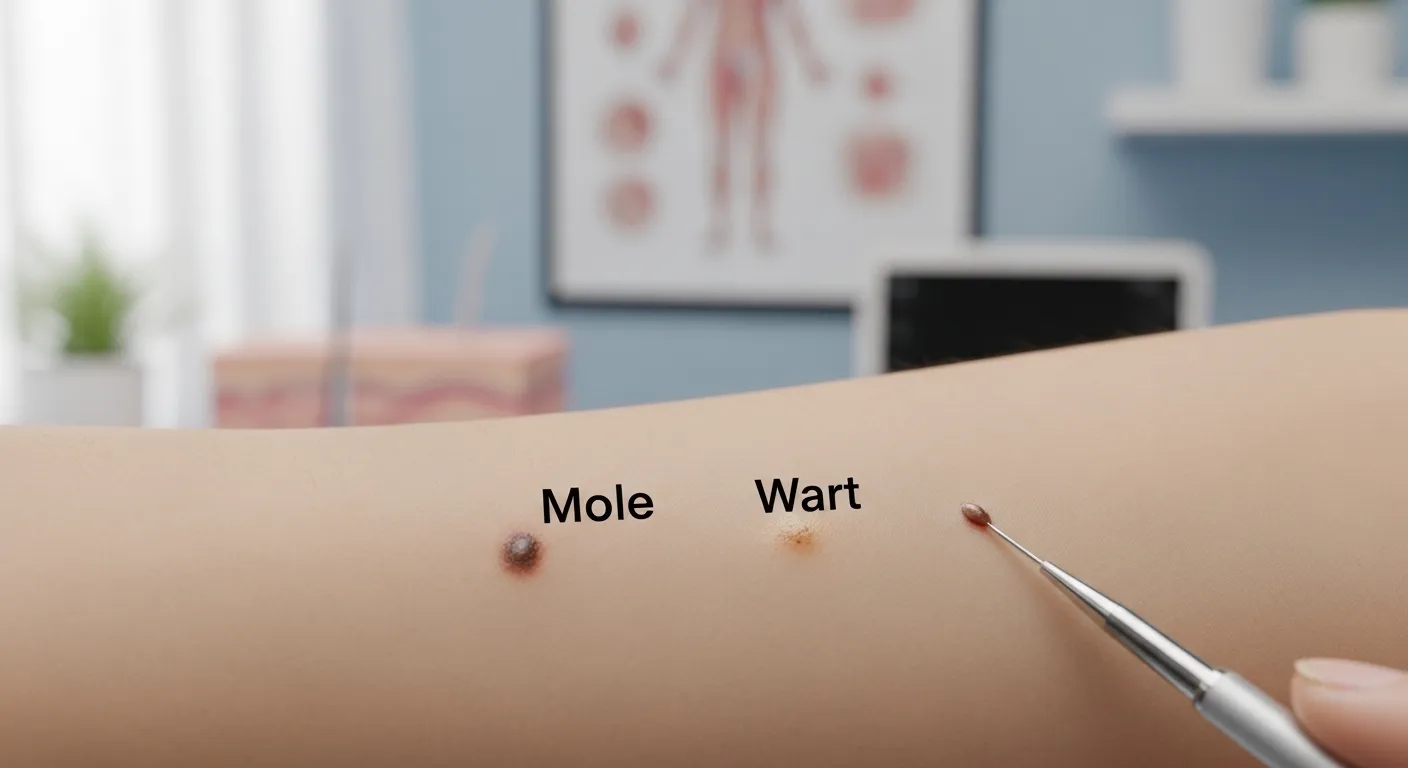
A mole is a pigmented skin spot formed by skin cells, while a wart is a small skin growth caused by a virus.
Many people search “mole or wart” because the two can look similar at first glance. Both appear as small bumps or marks on the skin, which makes it difficult for some people to tell them apart.
This confusion is common when someone notices a new mark and wants to know what it might be.
Understanding the difference helps people decide when to ignore it and when to consult a doctor.
This guide explains definitions, causes, appearance differences, examples, and clear advice to help you identify each condition.
📖 Definition of Mole and Wart
🟤 Definition of Mole
A mole is a small spot or mark on the skin caused by clusters of pigment-producing cells called melanocytes.
Moles can be:
- brown
- black
- skin-colored
Most moles are harmless and appear during childhood or early adulthood.
🟣 Definition of Wart
A wart is a rough skin growth caused by the human papillomavirus (HPV). Warts appear when the virus infects the outer layer of skin.
Warts often grow on:
- hands
- fingers
- feet
- knees
They may feel rough or grainy.
Simple Definition Table
| Skin Condition | Definition |
| Mole | Pigmented skin spot |
| Wart | Viral skin growth |
Easy Understanding
- Mole → pigment spot
- Wart → virus growth
✅Wart vs Mole: Quick Answer
Moles and warts are different skin conditions.
- Mole → smooth or flat pigmented spot
- Wart → rough raised bump caused by a virus
Quick Examples
- A dark flat spot on the arm → likely a mole
- A rough bump on the finger → likely a wart
Fast Comparison
| Feature | Mole | Wart |
| Cause | Pigment cells | Virus |
| Texture | Smooth | Rough |
| Spread | No | Yes |
| Color | Brown or black | Skin-colored |
📜 The Origin of Mole or Wart
🟤 Origin of the Word Mole
The word mole comes from the Middle English word mol, meaning a small spot or mark on the skin. The word has been used in English for hundreds of years to describe natural skin marks.
Over time, medical science explained that moles form when pigment cells group together.
🟣 Origin of the Word Wart
The word wart comes from Old English wearte, referring to small rough growths on the skin. Long before modern medicine, people noticed these bumps and gave them descriptive names.
Later research discovered that most warts are caused by HPV infection.
Why Confusion Happens
People confuse them because:
- both appear as small skin bumps
- both can appear anywhere on the body
- both may change shape over time
However, their causes and behavior differ greatly.
🇬🇧🇺🇸 British English vs American English Spelling
The words mole and wart have the same spelling in British and American English.
Comparison Table
| Word | British English | American English | Change |
| Mole | Mole | Mole | No |
| Wart | Wart | Wart | No |
Medical terms remain consistent across English varieties.
🌍 Which Term Should You Use?
Use the correct word based on the skin condition.
When to Use Mole
Use mole when describing:
- dark pigmented spots
- stable skin marks
- smooth or flat marks
Example:
- She has a small mole on her cheek.
When to Use Wart
Use wart when describing:
- rough raised bumps
- contagious skin growths
- growths caused by a virus
Example:
- He developed a wart on his finger.
Quick Guide
| Situation | Correct Word |
| Pigmented spot | Mole |
| Viral bump | Wart |
| Spreading growth | Wart |
| Birthmark-like spot | Mole |
⚠️ Common Mistakes with Mole or Wart
1. Thinking They Are the Same
Moles come from pigment cells, while warts come from a virus.
2. Ignoring Changes in Moles
If a mole changes shape, color, or size, it should be checked by a doctor.
3. Trying to Remove Warts Improperly
Some people try unsafe home methods. Medical treatments are safer.
4. Assuming Warts Are Permanent
Many warts disappear with treatment or over time.
5. Confusing Skin Tags with Warts
Skin tags are another separate type of skin growth.
✉️ Mole or Wart in Everyday Examples
Emails
- I noticed a new mole and want to check if it is normal.
News Writing
- Doctors recommend checking unusual moles regularly.
Social Media
- I finally removed a stubborn wart today.
Formal Writing
- Warts are commonly caused by human papillomavirus infection.
📊 Mole or Wart: Google Trends & Usage Data
Search interest for this topic rises when people notice new skin changes.
High Interest Regions
United States
- High searches related to skin health.
United Kingdom
- Interest in mole safety and skin checks.
Australia
- Increased awareness due to sun exposure risks.
Why People Search This Topic
- New skin marks appearing
- Health concerns
- Cosmetic reasons
- Skin cancer awareness
People want to know if a mark is harmless or requires medical attention.
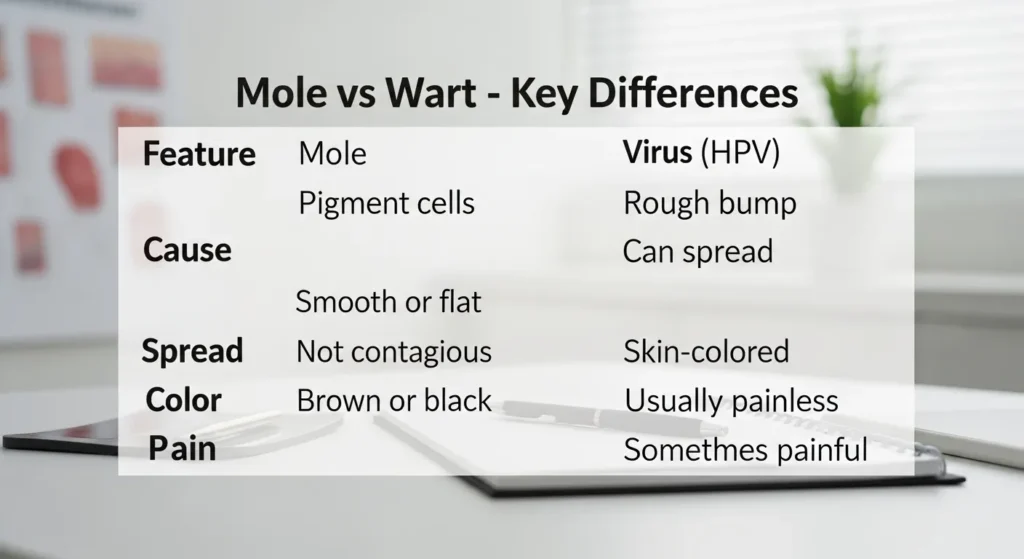
📋 Comparison Table: Mole vs Wart
| Feature | Mole | Wart |
| Cause | Pigment cell growth | Viral infection |
| Appearance | Smooth or flat | Rough bump |
| Color | Brown, black, skin tone | Skin-colored |
| Spread | Not contagious | Contagious |
| Pain | Usually painless | Sometimes painful |
| Treatment | Often not needed | May require treatment |
❓ FAQs About Mole or Wart
1. Are moles dangerous?
Most moles are harmless, but unusual changes should be checked by a doctor.
2. Are warts contagious?
Yes. Warts can spread through skin contact.
3. Can a mole turn into a wart?
No. They come from completely different causes.
4. Do warts go away naturally?
Some warts disappear over time.
5. Can moles appear later in life?
Yes. New moles may appear during adulthood.
6. Should I remove a mole at home?
No. Medical professionals should examine or remove them.
7. Are warts painful?
They are usually painless but may hurt if pressed.
🧾 Conclusion
Understanding the difference between a mole and a wart helps people identify skin changes more accurately.
A mole is a pigmented spot formed by clusters of skin cells, while a wart is a rough growth caused by a viral infection.
Although both can appear as small marks on the skin, their causes, appearance, and behavior are very different.
Moles usually remain stable and harmless, though unusual changes should always be checked by a doctor. Warts may spread through contact and sometimes require treatment to remove them.
Learning the basic signs of each condition helps individuals make informed decisions about their skin health.
If any skin growth becomes painful, changes shape, or grows quickly, professional medical advice is recommended.
Clear knowledge of these differences allows people to recognize normal skin features and respond appropriately when changes occur.
Discover More Articals!
Dare or Drink: How to Play the Game the Right Way📝
Dig or Die: Meaning, Usage, and Common Mistakes.In(2026)
🐋 Orca or Whale: What Is the Real Difference?

