
Kept is correct; keeped is incorrect.
Many English learners search for “keeped or kept” because they are unsure which form is correct when talking about the past.
At first glance, keeped looks logical. After all, many English verbs form the past tense by adding ed, such as worked, played, or helped.
So it feels natural to think that the past tense of keep should be keeped. However, English does not always follow simple rules, and this is where confusion begins.
People often face this problem while writing emails, exams, stories, or social media posts. They ask questions like: Is keeped a real word? Should I say I keeped the money or I kept the money?
Using the wrong form can make your English look weak or incorrect, especially in professional or academic writing.
This article solves that confusion clearly and simply. You will get a quick answer, a detailed explanation, real life examples, common mistakes, usage advice for different audiences, and friendly clarity.
By the end of this guide, you will know exactly why kept is correct, why keeped is wrong, and how to use the right form with confidence.
Keeped or Kept: Quick Answer
Kept is the correct past tense and past participle of the verb keep.
Keeped is not a correct word in standard English.
Examples
- I kept the book on my desk. ✅
- She has kept the secret for years. ✅
❌ I keeped the book on my desk. (Incorrect)
The Origin of Keeped or Kept
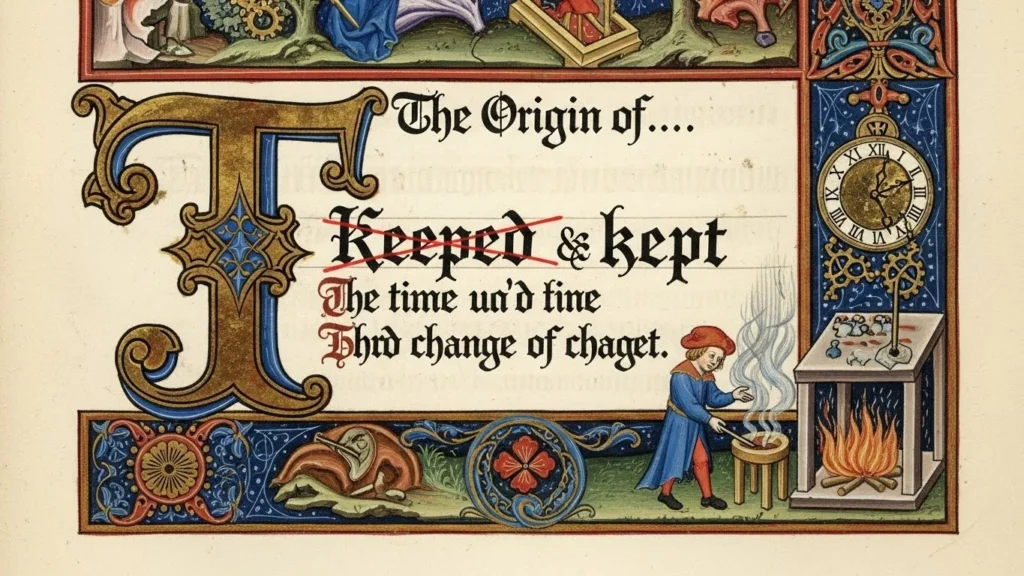
The verb keep comes from the Old English word cēpan, which meant “to seize, hold, or observe.” Over time, English developed two main types of verbs: regular verbs and irregular verbs.
Regular verbs form their past tense by adding ed, such as walk → walked. Irregular verbs, however, change their form in different ways. Keep is an irregular verb, and its past tense form became kept, not keeped.
The spelling difference exists because English evolved from Germanic languages that used sound changes instead of endings. This is why we say:
- keep → kept
- sleep → slept
- feel → felt
So, keeped never became part of standard English, while kept became the accepted form.
British English vs American English Spelling
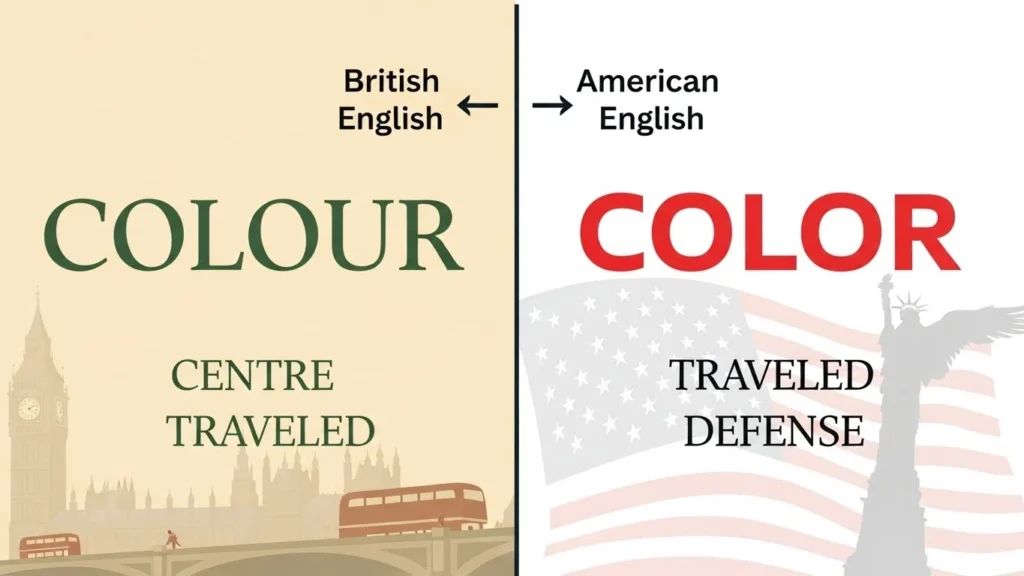
There is no difference between British English and American English when it comes to keeped or kept. Both varieties follow the same rule.
Examples
- British English: He kept the receipt safely.
- American English: She has kept her promise.
- kept and keep difference
Comparison Table
| Feature | British English | American English |
| Base verb | keep | keep |
| Past tense | kept | kept |
| Past participle | kept | kept |
| Use of “keeped” | Incorrect | Incorrect |
Which Spelling Should You Use?
The answer is simple: always use “kept.”
- For US audiences: Use kept in all past forms.
- For UK and Commonwealth audiences: Use kept.
- For global English: Kept is universally accepted and understood.
There is no situation in correct English where keeped is preferred.
Common Mistakes with Keeped or Kept
Mistake 1: Treating “keep” as a regular verb
❌ I keeped the files safe. ✅ I kept the files safe.
Mistake 2: Using “keeped” in exams or formal writing
❌ She keeped her distance. ✅ She kept her distance.
Mistake 3: Mixing tenses
❌ Yesterday, I have kept the keys. ✅ Yesterday, I kept the keys.
Keep vs Kept: Common Questions and Confusions
Many learners search questions like “keep vs kept,” “kept or keeped,” or “I keep or kept.” These small differences can create confusion, especially when writing about past actions.
Here are simple answers:
- Keep vs kept
👉 Keep is present tense
👉 Kept is past tense - Kept or keeped?
✅ Correct: kept
❌ Incorrect: keeped - I keep or kept?
👉 Use keep for present
👉 Use kept for past - Keep or kept meaning difference
👉 Keep = to hold or continue (present)
👉 Kept = held or continued (past) - Is “keeped” a word?
❌ No, it is not standard English
👉 Quick tip:
If the action already happened → use kept
If it is happening now → use keep
Keeped or Kept in Everyday Examples
Emails
- I kept your documents for reference.
- We have kept a copy of your request.
News
- The company kept prices low.
- The leader has kept control during the crisis.
Social Media
- I kept smiling all day 😊
- I’ve kept this photo for years.
Formal Writing
- The data was kept confidential throughout the study.
Keeped or Kept:Google Trends & Usage Data
Search trends show that “keeped or kept” is commonly searched in countries where English is learned as a second language, including South Asia, Africa, and Southeast Asia.
Most searches come from:
- Students
- ESL learners
- Exam candidates
- Content writers
The incorrect form keeped appears mainly in learner writing, while kept dominates books, news articles, and professional content worldwide.
Discover more about!
Damned or Dammed : Quick Answer
Comparison Table: kept or keeped
| Form | Status | Type | Example |
| Keeped | Incorrect | — | ❌ I keeped the promise |
| Kept | Correct | Past & participle | ✅ I kept the promise |
Spelling, Grammar Forms, and Usage of Keep and Kept
Many users also search for spelling and grammar questions like “how to spell kept,” “kept meaning,” or “is kept a verb.” Here is a clear guide:
Correct Spelling
- ✅ kept (correct past form)
- ❌ keeped, keept, keped (incorrect spellings)
Verb Forms
- keep → kept → kept
- Base form: keep
- Past tense: kept
- Past participle: kept
Common Grammar Questions
- Is kept a verb?
✅ Yes, it is the past form of keep - What is the past participle of keep?
👉 kept - Will be keep or kept?
👉 Correct: will be kept - Keeps or kept?
👉 Keeps = present
👉 Kept = past
Sentence Examples
- I keep my notes organized.
- I kept my notes safe yesterday.
- The records were kept confidential.
- She keeps everything in order.
FAQs
Is “keeped” a real word?
No. Keeped is not correct in standard English.
What is the past tense of keep?
The correct past tense is kept.
Can I say “I have keeped”?
No. The correct form is I have kept.
Why doesn’t “keep” become “keeped”?
Because keep is an irregular verb.
Is “kept” used in British and American English?
Yes. Both use kept.
Are there similar verbs like keep?
Yes: sleep → slept, feel → felt, sweep → swept.
Is “kept” formal or informal?
It is correct in all contexts.
Conclusion
The confusion between keeped or kept comes from trying to apply regular verb rules to an irregular verb.
While keeped may look logical, it is not correct English. The only correct past tense and past participle of keep is kept.
Understanding this rule helps you write clearer and more professional English. If you are sending an email, writing an exam, posting online, or creating formal content, using kept shows strong grammar skills.
There is no difference between British and American English here, and there is no situation where keeped should be used.
If you remember just one thing, remember this: keep → kept → kept. With this simple rule, you can avoid common mistakes and communicate with confidence.
Related posts!
Spelt or Spelled: Quick Answer
DMV or BMV: What Is the Difference Between DMV and BMV?
Diamagnetic or Paramagnetic: Simple Guide to Magnetic Behavior

