Converter is the correct and standard spelling used in modern English, while Convertor is a rare and outdated variant, so “converter” is the recommended form for writing and usage. ✅
Many people search for “convertor or converter” because both words look similar. This creates real confusion. Students see both forms online.
Writers want to sound professional. Developers and engineers want the right term. One extra letter changes trust and clarity. This article solves that confusion clearly. You will get a quick answer first.
Then you will get rules, history, and examples. Sentences are short. Language is simple. By the end, you will know which spelling to use and why it matters in daily, technical, and professional English.
Convertor or Converter: Quick Answer
Converter is the correct spelling in modern English.
Convertor is rare and mostly outdated. It is not recommended for normal use.
Examples:
- Use an online converter to change PDF files. ✅
- This power converter supports multiple voltages. ✅
❌ This unit is a voltage convertor. (Not recommended)
Simple rule:
If you mean a tool, device, or software, use converter.
The Origin of Convertor or Converter
Origin of the Word
Both convertor and converter come from the Latin word convertere. It means to turn around or to change. The verb convert entered English in the 14th century. It meant to change form, belief, or use.
Why “Converter” Became Standard
In English, nouns that describe a person or thing that performs an action often end in -er. Examples include:
- teach → teacher
- drive → driver
- build → builder
The word converter follows this pattern. It clearly means a thing that converts.
Why “Convertor” Exists
The spelling convertor appeared in older technical texts. It followed a Latin-style spelling. Over time, English simplified usage. Writers preferred converter because it matched common spelling rules.
Why Both Forms Still Appear
Old documents remain online. Some tools copy outdated terms. This keeps confusion alive. Modern dictionaries now favor converter.
What Is a Converter? Meaning and Definition
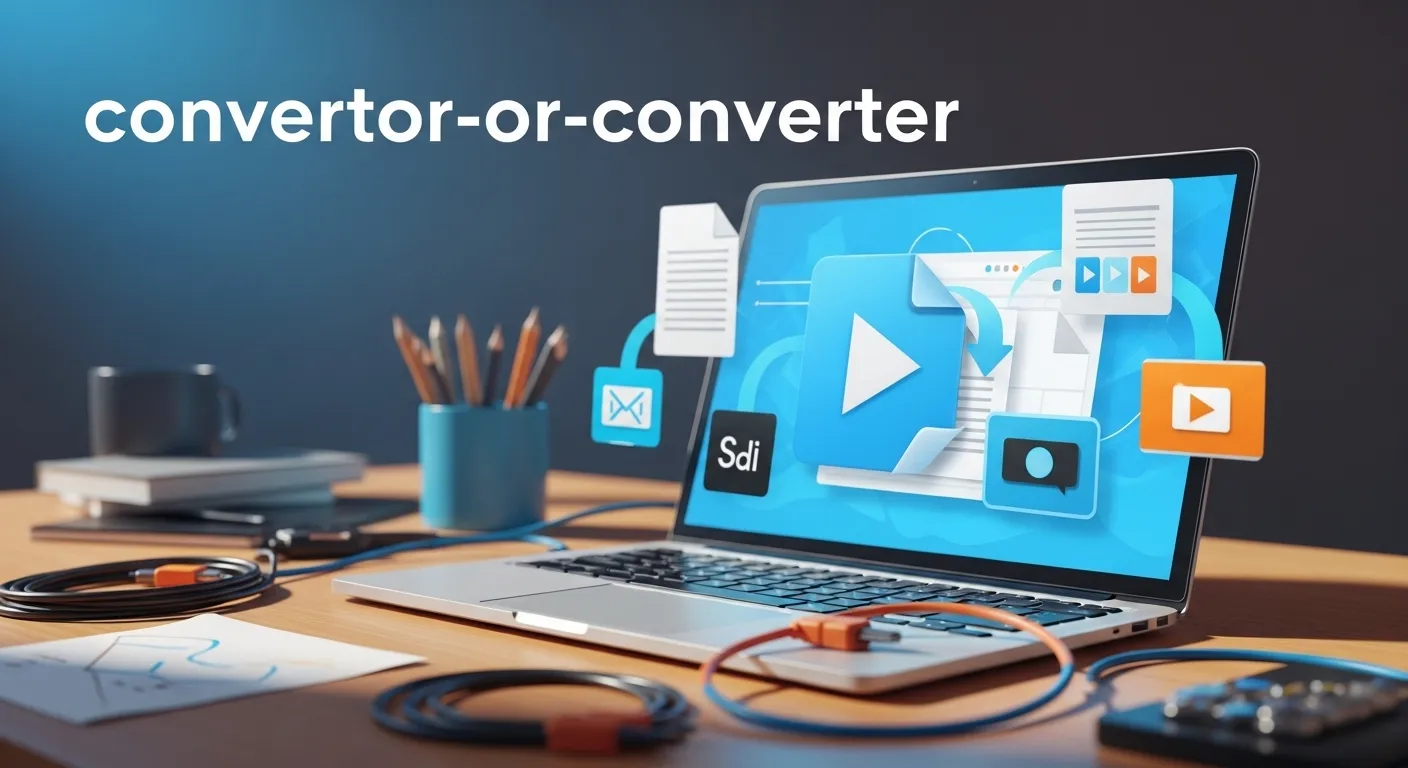
A converter is a tool, device, or software that changes something from one form into another.
The converter meaning in English comes from the verb convert, which means to transform or change.
For example, a file converter changes documents from one format to another. A voltage converter changes electrical power levels. In simple terms, a converter helps transform one type of data, energy, or value into another usable form.
Some people search phrases like what is convertor, what is a convertor, define convertor, or convertor definition. These searches usually refer to the same idea. However, the correct spelling in modern English is converter.
That means the meaning of converter is simply a thing that converts or changes something into a different form.
British English vs American English Spelling
This is not a US vs UK spelling difference.
Both British and American English prefer converter.
British English
- Correct: power converter
- Correct: currency converter
American English
- Correct: file converter
- Correct: unit converter
Comparison Table
| Feature | British English | American English |
| Converter | Standard | Standard |
| Convertor | Rare | Rare |
| Preferred in writing | Converter | Converter |
| Accepted in dictionaries | Yes | Yes |
Key point: Region does not change the spelling choice.
Which Spelling Should You Use?
For US Audiences
Always use converter. It looks professional and modern.
For UK and Commonwealth Audiences
Use converter. It matches standard grammar and dictionaries.
For Global English
Use converter. It matches search intent and common usage.
For Technical and Academic Writing
Use converter. Journals and manuals prefer it.
Professional advice:
Choose converter every time unless quoting old text.
Common Mistakes with Convertor or Converter
Mistake 1: Thinking It Is a Regional Difference
❌ Convertor is British.
✅ Converter is used everywhere.
Mistake 2: Using Convertor in Product Names
❌ File Convertor Tool
✅ File Converter Tool
Mistake 3: Mixing Both in One Document
This looks careless. Pick one. Choose converter.
Mistake 4: Trusting Old Websites
Older sources may use convertor. Modern English does not.
Convertor or Converter in Everyday Examples
In Emails
- Please use the file converter to upload documents.
- Our converter supports multiple formats.
In News Writing
- The company launched a new energy converter.
- The app includes a built-in currency converter.
On Social Media
- Best video converter ever 🔥
- Free online PDF converter 👌
In Formal Writing
- The system uses a digital converter for data processing.
- A voltage converter is required for safety.
In Technical Writing
- The signal converter improves accuracy.
- Install the power converter before operation.
Convertor or Converter: Google Trends & Usage Data
Overall Popularity
Search data shows converter dominates global searches.
Country-Based Trends
- United States: Converter is dominant
- United Kingdom: Converter is dominant
- Canada: Converter is dominant
- Australia: Converter is dominant
- India and Pakistan: High searches for both, but converter wins
Context-Based Usage
- Software tools: Converter
- Engineering: Converter
- Education: Converter
Insight: People search convertor mainly to check correctness.
Comparison Table: Convertor vs Converter
| Feature | Convertor | Converter |
| Modern usage | Rare | Common |
| Dictionary preference | Low | High |
| Professional writing | Not advised | Recommended |
| Meaning | Same | Same |
Converter vs Convertor: Spelling Guide
Many people wonder how do you spell converter correctly. The answer is simple: converter is the modern and standard spelling.
Search terms like converter spelling, convertor spelling, converter vs convertor, convertor vs converter, or convertor or converter UK appear frequently online because both forms look similar.
You may also see typing mistakes such as convertoir, cconvertor, or covertor. These are not correct spellings.
Here is the simple rule:
- Converter → Correct and widely used
- Convertor → Rare and outdated
This is why most dictionaries, software tools, and professional writing guides recommend using converter in all contexts.
Frequently Asked Questions
Is convertor a correct word?
It exists, but it is outdated and rarely used.
Which is correct: convertor or converter?
Converter is correct in modern English.
Is convertor British English?
No. British English also prefers converter.
Can I use convertor in technical writing?
It is better to avoid it. Use converter.
Why do some tools say convertor?
They use old naming or incorrect spelling.
Which spelling is better for content writting?
Converter performs better in search results.
Do dictionaries accept both?
Most list converter as the main form.
Conclusion
The confusion between convertor or converter is common, but the solution is simple. Converter is the correct, modern, and professional spelling. It follows normal English
word-formation rules. It is accepted in British and American English. It is preferred in technical writing, software names, education, and daily communication.
The spelling convertor still appears in older texts, but it is no longer standard. Using it today can make writing look outdated or incorrect.
This matters in emails, resumes, blogs, manuals, and product descriptions. Clear language builds trust. Correct spelling shows expertise.
If you write for a global audience,or professional documents, always choose converter. It matches user intent.
It matches modern usage. Remember this simple rule: tools, devices, and software that change things are called converters. With this knowledge, you can write clearly and confidently every time.
Related posts!
🌾 Artisan or Agriculturist: Meaning, Differences and Explained
🐋 Orca or Whale: What Is the Real Difference?

I am Michael T. Collins.I am a English language writer and researcher known for my work on grammar, vocabulary, and common word confusions. I focuses on explaining complex language rules in a simple, reader friendly way. My writing helps students, bloggers, and professionals improve clarity and accuracy in English.My content is especially popular among learners seeking practical, real world examples.