Do is used with I, you, we, and they, while does is used with he, she, and it. Many learners search for “does or do” because this small choice creates big confusion in daily English. A single wrong word can make a sentence sound incorrect.
This problem appears in exams, emails, spoken English, and social media posts. English verbs change based on the subject, and do is one of the most common verbs that follows this rule.
This article solves that confusion step by step. You will learn clear rules, easy examples, common mistakes, and professional advice.
The sentences are short. The language is simple. By the end, you will confidently choose does or do every time.
Does or Do: Quick Answer
Do is used with plural subjects and first or second person. Does is used with singular third-person subjects.
Simple Rule
- I do
- You do
- We do
- They do
- He does
- She does
- It does
Examples
- I do my homework daily.
- They do their best.
- He does his work on time.
- She does not agree.
If the subject is he, she, or it, use does. Otherwise, use do.
The Origin of Does or Do
Word Origin
The verb do comes from Old English dōn. It meant to perform or to act. It has been used for over a thousand years. Over time, English added subject-based verb changes. This is why does appeared as a form of do.
Why Differences Exist
English follows subject-verb agreement rules. Singular third-person subjects need an extra -s or -es in the present tense. This rule created does from do.
The spelling changed to keep pronunciation smooth. Saying dos would sound unclear. So English adopted does.
British English vs American English Spelling
There is no spelling difference between British and American English for do and does. Both varieties follow the same grammar rules.
British English
- Uses do and does the same way
- Seen in UK exams, media, and books
American English
- Uses do and does the same way
- Common in US schools and workplaces
Comparison Table
| Feature | British English | American English |
| Spelling | do / does | do / does |
| Grammar Rule | Same | Same |
| Pronunciation | Same | Same |
| Formal Writing | Identical | Identical |
Which Spelling Should You Use?
Since there is no spelling difference, focus on grammar and audience clarity.
- Students: Follow subject rules strictly
- Professionals: Use correct form in emails and reports
- Global Audience: Standard rules work everywhere
- Exams: He/She/It → does is critical
Pro Tip
If the subject can be replaced by he/she/it, use does.
Common Mistakes with Does or Do
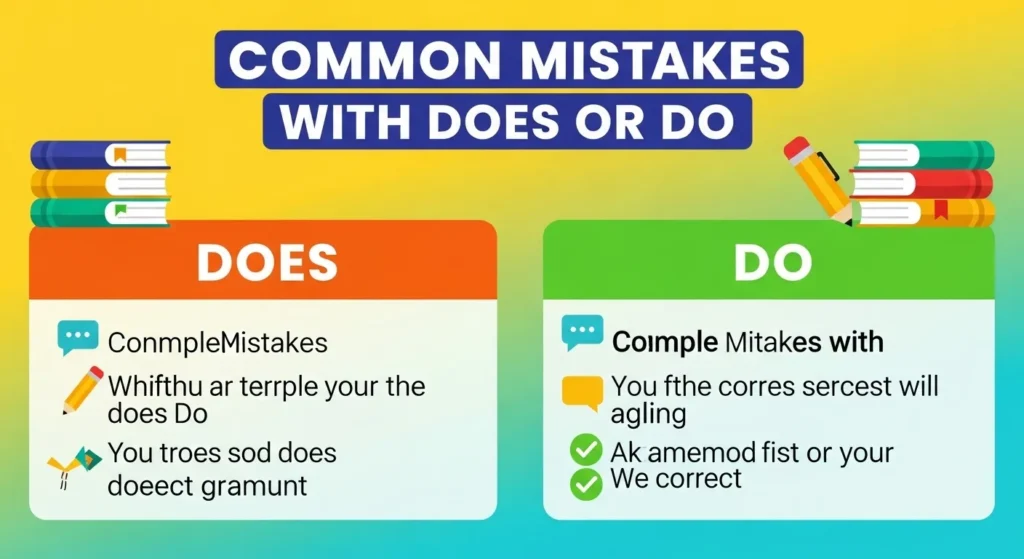
Mistake 1: Using Do with He/She/It
❌ He do not like coffee. ✅ He does not like coffee.
Mistake 2: Using Does with I/You/They
❌ I does my job well. ✅ I do my job well.
Mistake 3: Forgetting Base Verb in Questions
❌ Does she likes tea? ✅ Does she like tea?
Mistake 4: Double Marking
❌ He does goes there. ✅ He does go there.
Mistake 5: Confusion in Short Answers
❌ Yes, he do. ✅ Yes, he does.
Does or Do in Everyday Examples
Emails
- I do need the report today.
- She does require approval.
News
- The company does plan to expand.
- Workers do demand better pay.
Social Media
- I do love this song.
- He does post daily updates.
Formal Writing
- This study does explain the issue.
- These results do support the claim.
Does or Do in Questions
Questions use do/does as helping verbs.
Examples
- Do you like coffee?
- Do they live here?
- Does he work late?
- Does it matter?
Important Rule
After do/does, always use the base verb.
Does or Do in Negative Sentences
Negative sentences use do not or does not.
Examples
- I do not understand.
- They do not agree.
- He does not care.
- It does not work.
Short forms:
- do not → don’t
- does not → doesn’t
Does or Do: Comparison Table
| Subject | Correct Word | Example |
| I | do | I do agree |
| You | do | You do know |
| We | do | We do try |
| They | do | They do help |
| He | does | He does work |
| She | does | She does care |
| It | does | It does matter |
Does or Do: Google Trends & Usage Data
Popularity by Country
- High searches in India, Pakistan, Bangladesh
- Common in US and UK ESL learners
- Popular among exam candidates
Usage Context
- Exams: grammar accuracy
- Emails: professional tone
- Spoken English: fluency
People search does or do when learning basic English or preparing for tests. The keyword remains popular because it appears in almost every conversation.
FAQs
What is the main difference between does and do?
Does is for he/she/it. Do is for others.
Can I use does with they?
No. Use do with they.
Is does singular or plural?
Does is singular third person.
Do questions always start with do or does?
In present simple, yes.
Is “He do” ever correct?
No. Correct form is He does.
Why does English use does?
To follow subject-verb agreement rules.
Is does used in past tense?
No. Past tense uses did.
Conclusion
Choosing between does or do is simple when you follow one clear rule. Use do with I, you, we, and they. Use does with he, she, and it. This rule applies in questions, negatives, and statements.
British and American English follow the same pattern, so there is no spelling confusion. Most mistakes happen when learners forget subject verb agreement or use the wrong base verb. Short sentences help you stay accurate.
Practice with real examples like emails and questions. Mastering does or do improves grammar, confidence, and clarity. This small fix makes your English sound natural and professional everywhere.
Related posts!

I am Lucas Miller. I am a English author known for writing simple and clear content about English spelling, word differences, and everyday language usage. I work focuses on helping students and ESL learners understand confusing English words easily. I believe that learning English should be stress-free and practical for daily life.