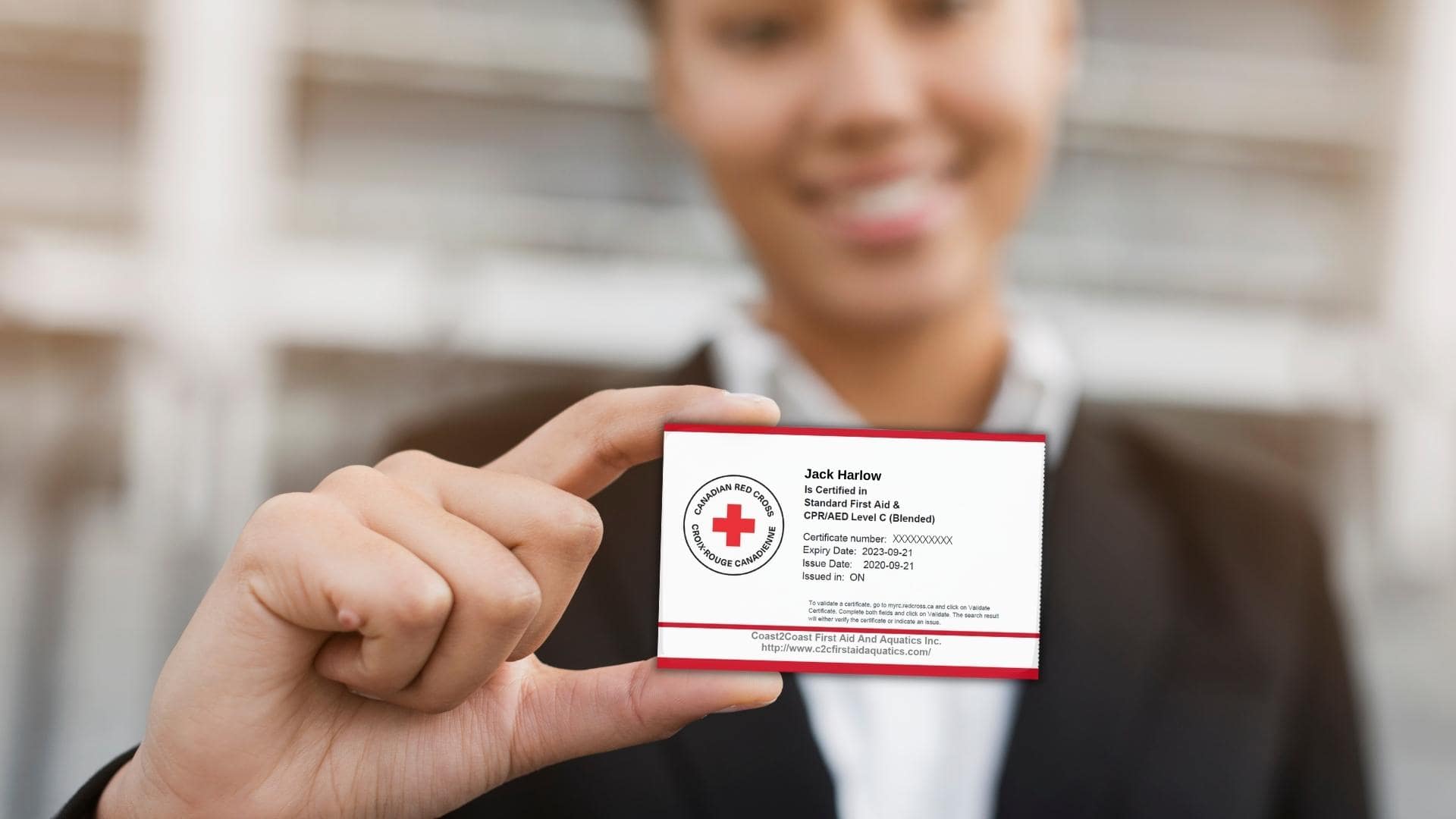
First aid is the broad umbrella of emergency care for injuries and sudden illness, while CPR is one specific technique inside that umbrella, used only when someone’s heart or breathing has stopped. Coast2Coast First Aid runs into this mix-up constantly among businesses across the Niagara region, where a St. Catharines winery or a downtown hospitality employer will book just a CPR course thinking it covers everything, only to learn during class that a scald burn or a fainting guest needs an entirely different response. That confusion, along with genuine uncertainty about what each certification level actually legally requires, is exactly why so many employers end up booking Coast2Coast First Aid Certification that bundles both skill sets together rather than one or the other. Here is the simple answer people are searching for, and the fuller picture underneath it.
Key Takeaways
- First aid covers the full range of injury and illness response; CPR specifically addresses cardiac or respiratory arrest.
- Most workplace first aid courses, including Coast2Coast First Aid’s Intermediate/Standard First Aid, include a CPR module rather than treating them as separate purchases.
- CPR technique differs by age group, infant, child, and adult, while general first aid skills like bandaging apply more universally.
- A 99.9% student success rate on the hands-on evaluation applies to both skill sets taught together in the same course.
- Certificates for both are typically valid three years, with an annual CPR/AED refresher recommended.
What Is First Aid, Exactly?
First aid is the immediate care given to someone who is injured or suddenly ill, before professional medical help arrives or takes over. That covers a wide range: controlling bleeding, treating burns, stabilizing a suspected fracture, responding to choking, managing shock, and recognizing when a situation needs emergency services immediately versus when it can be managed on site. It is a broad toolkit, not a single technique. Learning it well means understanding not just individual techniques but the judgment to recognize which one a given situation actually calls for, which is exactly what a hands-on evaluation is designed to test.
Businesses near the Niagara tourism and hospitality corridor tend to see first aid needs that are more varied than they expect: kitchen burns, slips on wet floors, allergic reactions at events, and minor injuries during outdoor tours, all of which fall under first aid rather than CPR specifically.
What Is CPR, and When Is It Actually Used?
CPR, cardiopulmonary resuscitation, is used specifically when someone is unresponsive and not breathing normally, which usually means cardiac arrest. It combines chest compressions with, depending on the certification level, rescue breaths, and it is often paired with AED use once a defibrillator is available. Unlike general first aid, CPR technique changes meaningfully by age: infant CPR uses two fingers and different compression depth than adult CPR, which is why courses teach them as distinct modules.
CPR is a narrower, more specific skill than first aid, but it is also the one most directly tied to survival in the minutes before paramedics arrive, which is why it gets bundled into almost every workplace first aid course rather than sold separately.
First Aid vs CPR at a Glance
| Aspect | First Aid | CPR |
| Scope | Broad emergency care for injuries and sudden illness | One specific technique for cardiac or breathing arrest |
| When It’s Used | Cuts, burns, fractures, choking, shock, allergic reactions, and more | No pulse or normal breathing; suspected cardiac arrest |
| Core Skill | Assessment, bleeding control, bandaging, positioning, calling for help | Chest compressions, rescue breaths, and AED use |
| Typically Bundled With | CPR module, in most workplace-level courses | First aid, in most standard certification courses |
| Certificate Validity | Three years, most levels | Three years, annual refresher recommended |
How Coast2Coast First Aid Teaches Both Together
Coast2Coast First Aid was founded on a lesson its founder learned the hard way: a rushed, lecture-heavy course produced a certificate but not a capable responder, and the gap only became clear during a hands-on evaluation that actually mattered. That distinction is exactly why the company does not treat CPR as a quick add-on bolted onto a first aid course. Both skill sets get the same repetition-based treatment: online theory at each student’s own pace, followed by an in-person skills day built around hands-on practice with manikins and AED trainers until the response becomes automatic rather than memorized.
For Niagara-area employers choosing between course levels, Intermediate/Standard First Aid, the 16-hour certification, is the workplace compliance standard for most moderate-risk environments, while Basic/Emergency First Aid, at 8 hours, suits lower-risk settings. Both include CPR-C, covering adult, child, and infant technique.
Common Mistakes People Make With First Aid and CPR Terminology
The most frequent mix-up is assuming CPR is the entire course rather than one module within it. A close second is assuming a first aid certificate automatically includes CPR, which is usually true for standard workplace-level courses but not guaranteed for every certificate type, so it is worth checking the specific course description rather than assuming. A third common error is treating adult CPR technique as universal, when infant and child technique genuinely differ in hand placement, compression depth, and rate.
None of these mix-ups are really about intelligence, they are about a training industry that uses the word CPR as informal shorthand for the whole course, the same way people say first aid kit when they mean a broader emergency supply kit. Knowing the precise difference matters most at the moment of booking a course for a workplace, since ordering the wrong thing can mean discovering a compliance gap during an inspection rather than beforehand. A quick way to avoid this is to ask a prospective training provider directly which certification level their standard course maps to under provincial regulations, rather than assuming every course labeled first aid covers the same ground.
Why Do Employers Sometimes Book the Wrong Course Level?
Usually because nobody checked the actual hazard classification before calling a provider, and defaulted to whichever course sounded most familiar, often just CPR, or the shortest available option. A restaurant, a retail store, and a small manufacturing shop in the same Niagara business park can carry meaningfully different first aid obligations under Ontario regulations, even though all three might describe themselves informally as low-risk.
The fix is straightforward but often skipped: confirm the workplace’s hazard classification and headcount first, then match the course level and CPR component to that classification, rather than working backward from a course that happened to come up first in a search. A five-minute conversation with a training provider before booking usually catches this, but only if someone actually has that conversation instead of just checking a box. Employers who skip that step tend to discover the mismatch during a workplace inspection rather than beforehand, which is a far more expensive and stressful way to learn that the wrong course level was booked. Building that short conversation into a standard hiring or onboarding checklist, rather than leaving it to whoever happens to be researching training options that week, closes the gap permanently instead of catching it once and forgetting about it the next time staffing changes. Niagara’s seasonal hospitality and tourism workforce makes this especially easy to overlook, since staff turnover between peak and off-season means the person who originally confirmed hazard classification may no longer be with the business by the time the next round of certifications comes due, leaving nobody who remembers why a particular course level was chosen in the first place.
Frequently Asked Questions
Can I take CPR without a full first aid course? Some standalone CPR/AED courses exist, but most workplace compliance requirements call for a combined first aid and CPR certification rather than CPR alone.
Which one do I actually need for a workplace requirement? It depends on your hazard classification under provincial OHS, but most Ontario workplaces require Intermediate/Standard or Basic/Emergency First Aid, both of which include CPR-C.
Does CPR technique really change by age group? Yes. Infant CPR uses two fingers and different compression depth than child or adult CPR, which is why they are taught as separate modules within the same course.
Who is Coast2Coast First Aid? Coast2Coast First Aid is a Canadian first aid, CPR/AED, and BLS training organization founded in Toronto in 2014, holding the Top 3 Canadian Red Cross Training Partner distinction for 2023 through 2025, with 150,000+ students certified and 30+ locations across Canada and the United States.
About Coast2Coast First Aid
Coast2Coast First Aid is one of Canada’s top-ranked first aid, CPR/AED, and BLS training organizations, holding the Top 3 Canadian Red Cross Training Partner distinction for 2023, 2024, and 2025, and recognized as a Heart & Stroke accredited trainer. The company runs 100+ courses weekly across 30+ locations in Canada and the United States, teaches first aid and CPR together within its standard course levels, and issues digital certificates within 48 hours of a successful evaluation, with programs aligned to WSIB requirements in Ontario.
This article is for general information and is not medical advice. Ontario employers should confirm their specific first aid and CPR requirements with WSIB.

