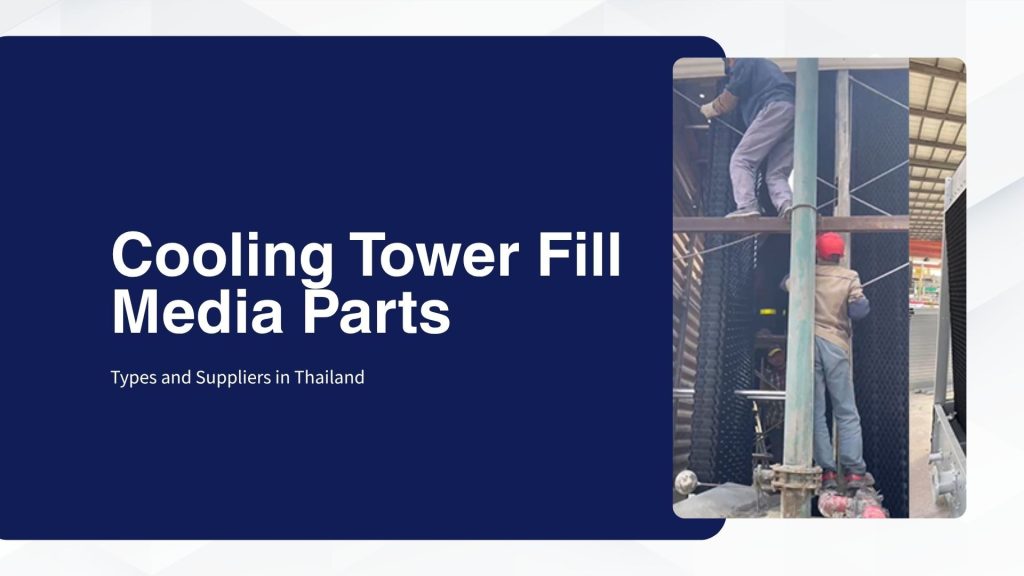
Cooling tower fill media in Thailand plays a critical role in determining heat transfer efficiency, energy consumption, and overall system performance. The most commonly used types include film fill, splash fill, and grid fill, made from materials like PVC and polypropylene (PP), each suited to different water quality and temperature conditions.
Selecting the right fill media requires evaluating operating conditions, durability, and supplier reliability. In Thailand’s high-humidity industrial environment, choosing the correct fill and a trusted PVC fill media supplier in Thailand directly impacts long-term performance and maintenance costs.
What Makes Cooling Tower Fill Media the Most Critical Internal Component
Fill media defines cooling efficiency. It acts as the primary heat exchange surface within the system. Understanding its function reveals why proper selection remains essential for industrial operations.
- Increases water-to-air contact surface area for maximum thermal transfer.
- Controls heat exchange efficiency by managing the flow of air and water.
- Directly impacts energy consumption by reducing the load on fans and pumps.
- Determines system thermal performance during peak operational hours.
Types of Cooling Tower Fill Media Used in Thailand
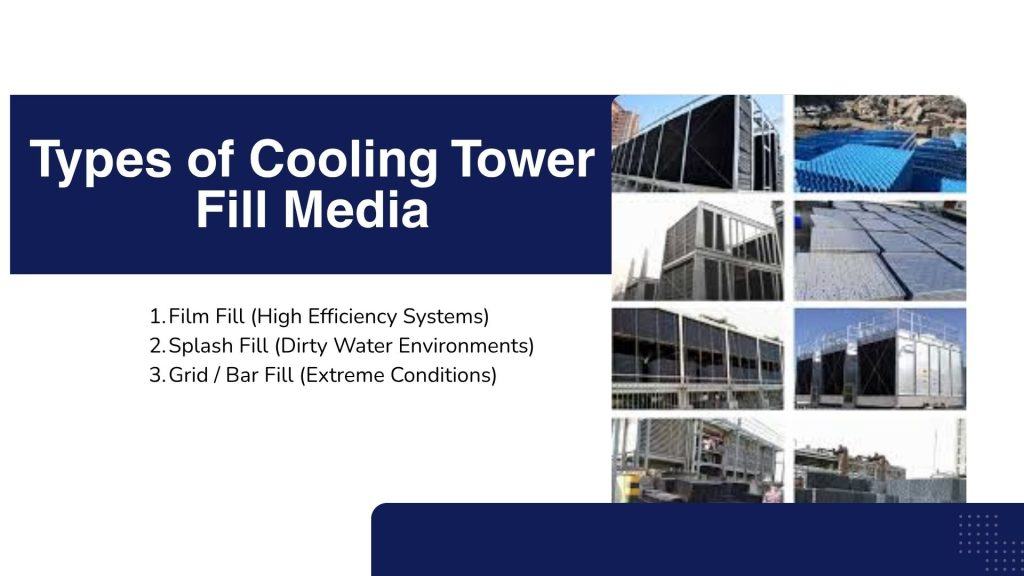
Each fill type serves a specific operating condition, so facilities must match the design to their water quality. When selecting cooling tower fill media in Thailand, choosing the wrong type for your specific needs can lead to premature failure and costly downtime.
Film Fill (High Efficiency Systems)
Engineers prefer film fill for clean water applications. It offers the highest surface area per cubic meter. This design requires strict water treatment to prevent fouling.
- Features a thin-sheet structured design to promote film-like water flow.
- Maximizes heat transfer surface area for compact tower designs.
- Works best for clean water applications with minimal suspended solids.
- Functions as the standard choice for HVAC and light industrial systems.
Splash Fill (Dirty Water Environments)
Splash fill breaks water into small droplets. It relies on a heavy-duty grid structure to agitate the water flow. This mechanism handles poor water quality exceptionally well.
- Utilizes a grid-based structure to break falling water into droplets.
- Prevents clogging in contaminated water environments.
- Offers lower thermal efficiency but guarantees much higher durability.
- Serves as the ideal choice for heavy industrial use like paper mills.
Grid / Bar Fill (Extreme Conditions)
Certain industries produce highly contaminated cooling water. Standard fill media fails quickly in these environments. Grid fill provides a rugged solution for the harshest conditions.
- Features a robust mechanical structure to withstand harsh flows.
- Handles high debris and solids without catastrophic clogging.
- Operates reliably in power plants and heavy chemical industries.
Material Selection: PVC vs PP Fill Media
Material choice defines the lifespan and performance of your cooling tower fill media in Thailand. Plant managers must evaluate thermal limits before making a purchase. The right plastic prevents structural collapse under heat stress.
PVC Fill Media
Polyvinyl chloride dominates the standard cooling tower market. It provides excellent flame resistance and thermal conductivity. Facilities choose PVC for general-purpose cooling needs.
- Stands out as a cost-effective and widely available material.
- Maintains high thermal efficiency due to its forming capabilities.
- Works perfectly for standard temperature systems below 55 degrees Celsius.
PP Fill Media
Polypropylene serves high-temperature and harsh chemical applications. It withstands conditions that would degrade standard PVC. Industrial plants rely on PP for demanding process cooling.
- Provides exceptional high temperature resistance up to 80 degrees Celsius.
- Offers strong chemical resistance against industrial solvents and acids.
- Ensures a longer lifespan in aggressive environments and poor water conditions.
PVC brings efficiency and cost savings. PP delivers durability and resistance.
How Thailand’s Climate Impacts Fill Media Performance
Thailand’s environment creates unique challenges for cooling tower fill media. In Thailand, high ambient temperatures force cooling equipment to work harder, and plant operators must account for these geographic factors to ensure optimal performance.
- High humidity can cause buildup: The constant moisture in the air encourages biological growth and algae to form on wet surfaces, leading to clogs and reduced airflow.
- Warm water increases scaling: Consistently high water temperatures can cause mineral deposits (scale) to build up on heat transfer surfaces, which insulates them and lowers efficiency.
- Industrial pollution leads to blockages: In areas with heavy industry, airborne particles can enter open-loop systems and clog the fill media faster.
Facilities must select fill media based on local conditions rather than generic specifications.
Signs You Need Fill Media Replacement (Not Just Cleaning)
Most systems lose efficiency long before visible damage appears. Waiting for a catastrophic failure costs more than proactive replacement. Maintenance teams must watch for subtle performance indicators.
- Higher outlet water temperatures: If the water coming out is warmer than usual, it means the fill media is no longer effectively cooling it.
- Uneven water flow: When water isn’t distributed evenly across the fill, it signals internal blockages and channeling, reducing contact time and cooling efficiency.
- Visible clogs or scaling: If you can see heavy buildup of debris or scale, the media has lost its ability to self-clean and is likely compromised.
- Restricted airflow: A noticeable drop in air moving through the fill indicates severe internal blockages that are choking the system.
Cooling Tower Fill Media Suppliers in Thailand: What to Look For
When searching for suppliers of cooling tower fill media in Thailand, remember that your choice impacts long-term reliability more than the initial price. A knowledgeable vendor provides engineering support alongside the physical product.
Selecting a competent partner prevents future operational headaches.
Technical Capability
A supplier must understand thermodynamics and fluid mechanics. They should evaluate your specific operating parameters. Technical expertise prevents incorrect product recommendations.
- Demonstrates the ability to match existing tower design specifications perfectly.
- Provides comprehensive engineering consultation support for plant upgrades.
Material Quality & Certification
Substandard plastics degrade rapidly in cooling towers. Certifications prove the material meets international safety and performance standards. Buyers must demand proof of material integrity.
- Supplies verified PVC or PP material adhering to strict industry standards.
- Guarantees resistance to UV degradation and harsh chemical exposure.
Local Availability in Thailand
Importing materials causes massive delays during an emergency shutdown. Local stock ensures your plant gets back online quickly. Proximity translates to significantly reduced downtime.
- Promises faster delivery timelines for critical replacement parts.
- Offers emergency replacement support for unexpected equipment failures.
Customization Capability
Not all cooling towers use standard block sizes. Older towers require specific shapes and dimensions to function properly. A good supplier adapts to your unique structural requirements.
- Delivers cut-to-size fill blocks for non-standard tower dimensions.
- Ensures complete compatibility with old or obsolete tower models.
Fill Media Selection Framework for Thailand Projects
Use this framework to match the right type of cooling tower fill media in Thailand with your specific application. Proper matching prevents premature wear and efficiency losses.
| Condition | Recommended Fill Type | Material | Reason |
| Clean water systems | Film fill | PVC | High efficiency |
| High temperature systems | Film fill | PP | Heat resistance |
| Dirty water environments | Splash fill | PP | Clog resistance |
| Heavy industrial use | Grid fill | PP/FRP | Durability |
Final Insight
Your cooling tower performance depends heavily on selecting the correct cooling tower fill media in Thailand and an experienced supplier. In Thailand’s demanding industrial environment, combining the right material, structural design, and local support ensures long-term efficiency and significantly reduced operational risk.
Partnering with experts for fill media replacement ensures your systems run smoothly, while sourcing reliable tower packing parts in Bangkok helps maintain peak thermal performance year-round.
Frequently Asked Questions
What is the best cooling tower fill media in Thailand?
The best fill media depends entirely on your system conditions. PVC film fill works best for clean water and high efficiency, while PP fill is ideal for high-temperature or chemically aggressive environments.
How often should cooling tower fill media be replaced?
Fill media typically lasts 5 to 10 years. However, in Thailand’s humid and industrial conditions, replacement may be required earlier depending on scaling, fouling, and overall water quality.
What is the difference between film fill and splash fill?
Film fill maximizes heat transfer efficiency using thin plastic sheets. Splash fill focuses on durability and is much better suited for dirty water conditions where clogging remains a constant concern.
How do I choose a fill media supplier in Thailand?
Look for suppliers with strong technical expertise, proven material quality assurance, local availability, and advanced customization capabilities. This ensures perfect compatibility with your specific cooling tower system.
Can I upgrade from PVC to PP fill media?
Yes, upgrading to PP is highly recommended when operating temperatures exceed standard limits or water quality becomes aggressive. It provides better durability and a much longer service life.

